Welcoming Mara Hoberman in a New Role
We are pleased to welcome Mara Hoberman as Project Manager of the Joan Mitchell ...

We are pleased to announce the recipients of the 2026 Joan Mitchell Fellowships: 15 US-based artists working in the evolving fields of painting and sculpture. The artists, who live and work in a wide range of communities across 12 states and whose ages span from 29 to 79, will each receive $60,000 in direct, unrestricted funding, distributed over five years alongside learning, peer engagement, and network-building opportunities.
The 2026 Joan Mitchell Fellows are:
Krista Clark, Atlanta, GA
Cameron Clayborn, Memphis, TN
Sarah Elizabeth Cornejo, Davidson, NC
Beatriz Cortez, Los Angeles and Davis, CA
Azza El Siddique, New Haven, CT
Sam Frésquez, Chicago, IL
Coulter Fussell, Water Valley, MS
vanessa german, Blue Ridge Mountains, NC
Porfirio Gutierrez, Ventura, CA
Roscoe Hall, Birmingham, AL
Janet Olivia Henry, Jamaica, NY
Erica Lord, Santa Fe, NM
Rob Rhee, Seattle, WA
Ruben Ulises Rodriguez Montoya, Sunland Park, NM
Dianna Settles, Lexington, KY
“We are thrilled to welcome the 2026 Joan Mitchell Fellows to the Foundation’s artist community, which ripples out from Joan Mitchell herself, whose legacy has now helped sustain the work of more than 1,300 artists nationwide,” said Christa Blatchford, Executive Director of the Joan Mitchell Foundation. “These 15 artists each demonstrate rigorous inquiry, astonishing creativity, and deep commitment to their work, and we are proud to support their practices. In this time of political and socio-economic uncertainty, as we witness ongoing cuts to the federal funding that supports regional arts communities, the continuity that the Fellowship’s multi-year funding structure provides directly to artists is more essential than ever.”
Artists in the 2026 cohort of Joan Mitchell Fellows reiterated the importance of the five-year financial award, with installation artist Azza El Siddique writing, “Being part of the Joan Mitchell Fellowship is both grounding and transformative—an affirmation of a practice that challenges norms of the art market and a foundation for sustaining it over time.” Sculptor Cameron Clayborn wrote, “This award will allow me to develop aspects of my practice that require longer-term support and materials that have often been out of reach. With the funding—and most importantly, the five years of funding—I can invest in a nearby studio space and take on larger-scale projects.”
These 15 artists each demonstrate rigorous inquiry, astonishing creativity, and deep commitment to their work, and we are proud to support their practices. In this time of political and socio-economic uncertainty, the continuity that the Fellowship’s multi-year funding structure provides directly to artists is more essential than ever.”
Christa Blatchford, Executive Director, Joan Mitchell Foundation
About the Fellowship Program & Selection Process
The Foundation launched the Joan Mitchell Fellowship in 2021, reenvisioning its previous grant offerings to create a five-year program that weaves sustained financial support together with other critical resources that artists need to sustain their practices over time. Now in its sixth year, the Fellowship is designed to offer both an individualized and collective experience. The Foundation's staff work with each artist to tailor professional development and the distribution of fellowship funds to best meet the artist’s particular needs. Recognizing that a strong and engaged community of peers is one of the most important and enduring resources for any artist, regular peer engagement opportunities, including virtual meetings, a self-organized book club, and annual in-person Fellowship Convenings, build connection and community among the Fellows.
“So many of the 2026 Fellows are doing extraordinary work in small towns and rural communities across the country—places that don't always come to mind as art centers, but where incredible work is happening all the same," noted Solana Chehtman, the Foundation's Director of Artist Programs. "What we continue hearing again and again is how much it means to these artists to connect with peers who are working through similar questions, wherever they're based. For artists charting their own path, connecting with others who understand that journey is everything. That's what we hope the Convenings and our ongoing virtual programming can offer: a place to find peers, in this cohort and across the wider Joan Mitchell community, who understand the work because they're doing it too. Advice, resources, introductions, a sense that you're not figuring this out alone—that's what carries an artist forward when there's no map to follow."
As 2026 Fellow Roscoe Hall wrote in his application, “The cohort model of this fellowship is compelling because it brings together artists across disciplines, generations, and stages of career.” Beatriz Cortez confirmed the value of peer connection through the Fellowship, writing: “I believe in the power of artists teaching other artists from their very diverse experiences.” Porfirio Gutierrez wrote, “I value community as a site of mutual transformation, and I see this fellowship as an opportunity to both contribute to and be changed by that collective energy.”
The cohort model of this fellowship is compelling because it brings together artists across disciplines, generations, and stages of career.”
2026 Fellow Roscoe Hall
To select artists for the Joan Mitchell Fellowship, the Foundation uses a nomination and jury process. Each spring, we invite a diverse group of artists and arts professionals from all corners of the United States to nominate artists who are making important contributions to artistic and cultural discourse, are deserving of greater national recognition, and would benefit from the resources provided by the Fellowship at this moment in their lives and practices. For 2026, the Foundation engaged 125 nominators hailing from 48 states, Puerto Rico, and Washington, D.C.—41% of whom identify as working artists—and received 169 nominations.
The nominated artists are then invited to submit online applications, which are evaluated by a jury of artists and arts professionals who select a final group of 15 Fellows.
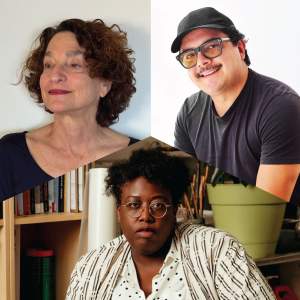
The jurors for the 2026 Fellows were:
“As a former grant recipient of the Joan Mitchell Foundation, it was especially meaningful to return—this time as a juror—and take part in selecting this year's cohort alongside an extraordinary panel,” reflected Juan William Chávez. “The Joan Mitchell Foundation team has created a jurying process that is both thoughtful and deeply rewarding, creating space for meaningful conversations as we deliberated over the many exceptional applications. I am proud to have contributed to the selection of a group of artists whose work resonates powerfully with the complexities and urgencies of our time.”
Daisy Nam further noted, “Among the applications we considered for the Joan Mitchell Fellowship, the range of practices, processes, materials, interests, geographies, and backgrounds was astounding. While it was a struggle to select only 15 artists, I am deeply inspired by the fierce drive, persistence, and courage of all the artists who applied. I will carry that with me in my work as a curator and arts worker.”
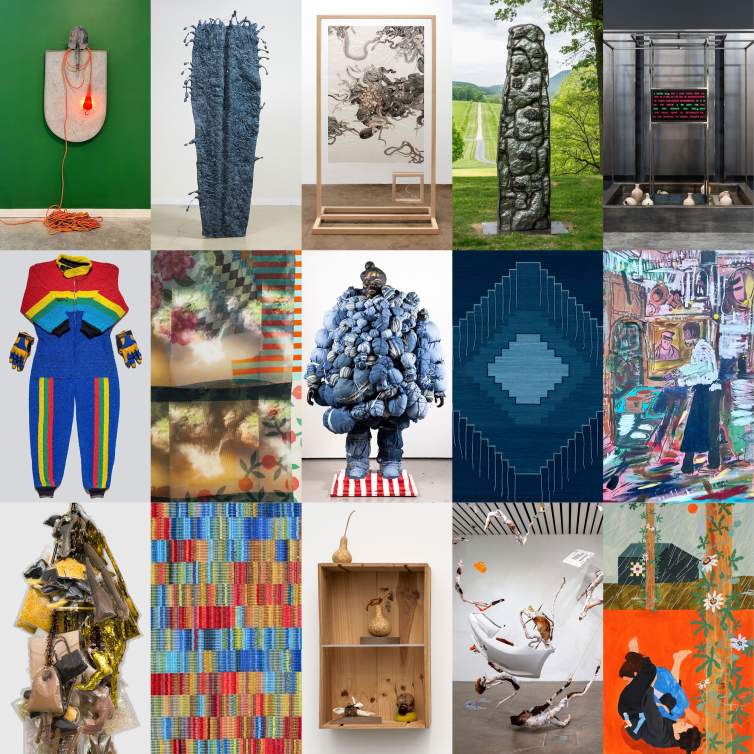
Krista Clark (Atlanta, GA; b. 1975) uses the visual language of architecture and the simple gestures of objects to create collaged drawings and site-responsive installations using new and repurposed building materials.
Cameron Clayborn (Memphis, TN; b. 1992) interprets family history through abstract figurative language and multi-media installations that explore grief, legacy, memory, and healing. Their recent works investigate the bodily capacity of materials—how surfaces sag, stretch, wrinkle, and as a result, have their own anatomy.
Sarah Elizabeth Cornejo (Davidson, NC; b. 1993) is an interdisciplinary artist whose drawings and sculptures examine the illusion of human exceptionalism and hypothesize about the urgency of humanity’s trajectory on Earth.
Beatriz Cortez (Los Angeles and Davis, CA; b. 1970) creates speculative monuments, geographies, and vessels in the form of welded steel sculptures. Through these pieces, Cortez explores memory, movement, and migration in the Americas as a means of envisioning possible futures.
Azza El Siddique (New Haven, CT; b. 1984) builds immersive sculptural structures that rely on the transformation of materials like steel, water, clay, and scent to examine how systems of power shape our understanding of death, memory, and belief.
Sam Frésquez (Chicago, IL; b. 1996) employs sculpture, video, and sound to investigate how every-day materials can carry deep emotional weight, functioning as quiet archives and conduits for memory. Frésquez’s sources include family memorabilia, NASCAR suits, and other references to the artist’s upbringing in the American Southwest.
Coulter Fussell (Water Valley, MS; b. 1977) integrates textile materials donated by friends and strangers in her small town with crowd-sourced video and photography to create dream-like objects that blur perspectives of love, violence, and place in a rural world.
vanessa german (Blue Ridge Mountains, NC; b. 1976) is a self-taught artist who makes sculptural “power figures” and interactive performances. german’s practice centers process while nourishing communal conversations around spiritual justice and the role of artists in a rapidly changing world.
Porfirio Gutierrez (Ventura, CA; b. 1978) creates large-scale installations, performances, textile sculptures, and woven works that engage with inherited knowledge, material practices, and contemporary artistic inquiry. Gutierrez includes references to monarch butterflies as metaphors for migration.
Roscoe Hall (Birmingham, AL; b. 1978) is a multidisciplinary artist and chef who sees food, memory, and material construction as interconnected systems of image making. In his painting practice, Hall uses acrylic, denim, paper towels, charcoal, wine, pastels, and food-based pigments to build compositions that carry layers of history.
Janet Olivia Henry (Jamaica, NY; b. 1947) utilizes dolls, miniature dioramas, beads, textiles, photography, and text to construct narrative tableaux. Rich with humor and art historical references, Henry’s visual storytelling produces incisive social commentary on gender, race, and class in American society.
Erica Lord (Santa Fe, NM; b. 1978) uses art to construct new, ambiguous, or challenging representations of Native identity as part of what she calls a process of reconciliation. Her recent work centers beaded straps and blankets that incorporate computer-generated genetic data patterns derived from diseases that disproportionately affect Indigenous communities.
Rob Rhee (Seattle, WA; b. 1982) is a sculptor whose work draws on the historical and formal connections of cultivated gourds as human surrogates to create sculptural assemblages and vignettes that incorporate lessons in resiliency and adaptability.
Ruben Ulises Rodriguez Montoya (Sunland Park, NM; b. 1989) constructs sculptures and installations from car parts, animal pelts, and other found materials that he describes as “beings born from the collective fears of Latinx communities—a mythological genesis of toxicity, assimilation, forced migration, land exploitation, poverty, and gendered violence.”
Dianna Settles (Lexington, KY; b. 1989) is a figurative painter whose compositions arrange portraits of both the living and the deceased to create imagined presents and futures. Through these tableaux, the artist explores questions around collective experience and what makes a life worth living.