In the Studio: Michael Arcega
“It's this kind of alchemical thing that happens when you abstract a word. It c...

Troy Montes Michie is an interdisciplinary painter and educator based in Los Angeles, and a 2025 Joan Mitchell Fellow. We interviewed him about his work and creative practice in March 2026. The following is excerpted and edited from the artist’s responses.
I am interested in the gaze. Who is looking, who is being looked at, and on whose terms. The communities I come from have been fetishized, erased, and spectacularized by systems that were never designed to grant them autonomy. My work moves against that. Through collage, assemblage, drawing, and archived histories, I am trying to disrupt those visual modes of consumption.
What motivates me is what has been left out. The silences in the public and personal archive. The blank pages. The images that were removed or never taken in the first place. I am motivated by the people and histories that dominant narratives decided weren't worth preserving, and by the question of what it means to tend to those absences, to insist on their presence even when the evidence is incomplete.
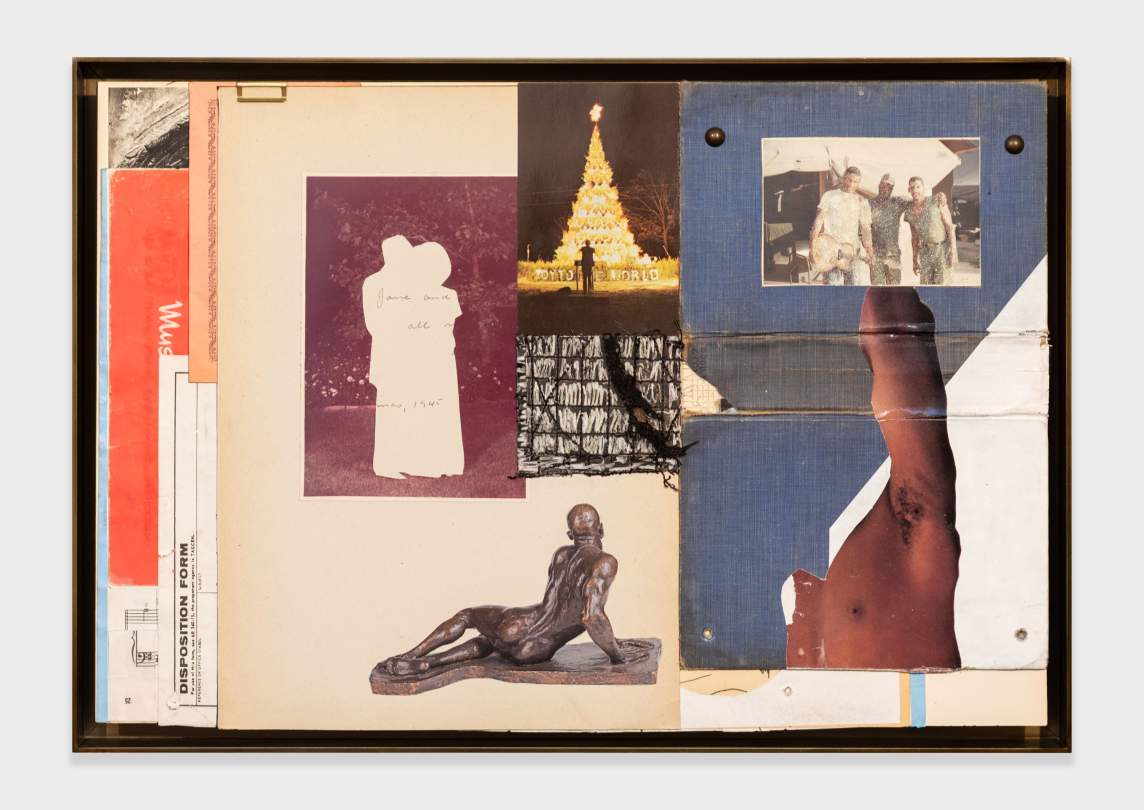
I keep returning to the space between the erotic and the elegiac, the way desire and mourning occupy the same territory, especially for Black and queer subjects. Images that were made to solicit desire for Black male bodies—how they circulated, who consumed them, on whose terms—carry a weight that demands a response. What does it mean to take those images back, to reclothe them, to redirect their force—not to sanitize or suppress the erotic charge but to refuse the terms under which it was originally organized? I am interested in what happens when the subject looks back.
![One nearly full photograph and fragments of illustrations are layered into a collage. Imagery includes the carved marble leg of a man above a partially visible caption reading “[Fr]ancesco da Sangallo, marble”; a pair of a man’s lower legs; and a black-and-white photograph of a Black man who has been given a pinstripe suit with white chalk over the photo. At the bottom center is a shallowly molded torso and genitals of a seated man.](https://www.joanmitchellfoundation.org/uploads/journal/_1144xAUTO_crop_center-center_65_none/ITS-Michie-3-ToKeep.jpg)
My newest body of work grows from an encounter with the fragmented archive of sculptor Richmond Barthé, a central figure of the Harlem Renaissance. In his incomplete scrapbook, I found a form that holds something I return to in my practice: the way people and histories can be simultaneously invisible and hypervisible, desired and erased.
There was a sadness in Barthé's scrapbooks, the particular grief of a life edited for survival—the story shaped around what the world is willing to receive—that made me think about the ways queer people cannot tell their true stories due to normative respectability politics. The photographs of clergy members and the church were a testament to his faith, but there were so many missing photographs. Only the mounting tabs remain, like landmarks or markers on the black page. There were sporadic photographs of dashing men. And then only a few pages where he laid sprawled and smiling against a Jamaican sky, confident in his speedo but solitary.
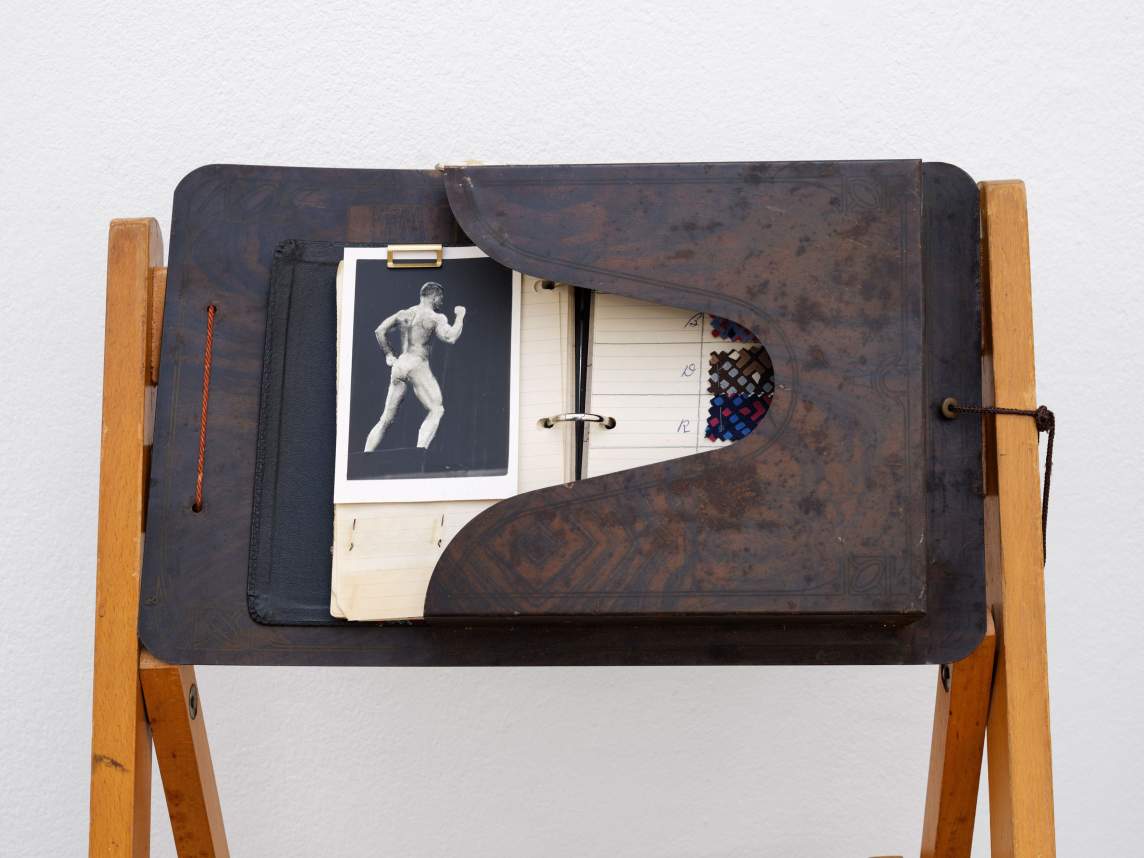
It is a fugitive document. Knowledge that survived despite institutional indifference. And it was a reminder of the continued downplaying of the abundant queer history of the Harlem Renaissance and an ongoing interest in the sociopolitical history of scrapbooking and collage as resistance.
There is a long tradition of the griot, the keeper of memory, the one who holds what institutions refuse to preserve. Black and Latino communities have always had to build their own counter-archives, their own ways of saying: We were here, we loved, we survived. The scrapbook, the family album, the keepsake. These are not just cultural objects. They are acts of resistance against forgetting.
Collage lives inside that tradition. From Dada to AIDS activism to zine culture, the cut has always been a form of critique and claim, a way of reordering who gets to tell the story and on whose terms. That lineage matters to me. I feel myself working inside of it and I feel accountable to it.
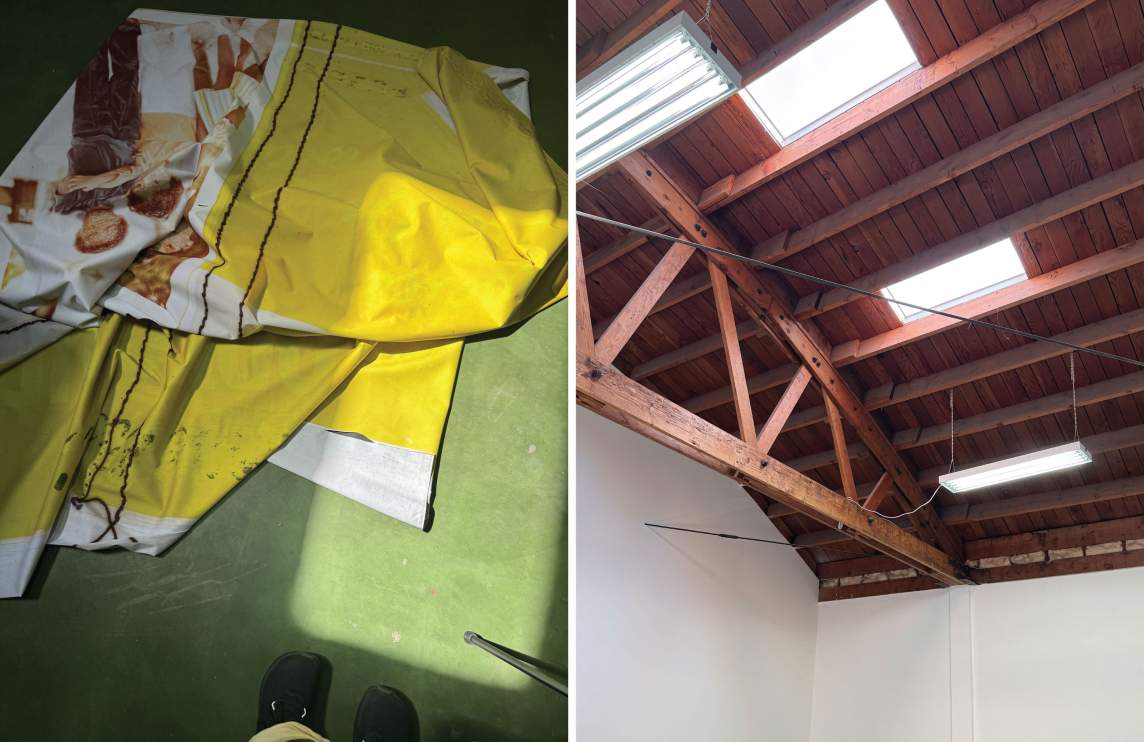
I recently landed in Los Angeles and have set up my studio in a renovated storefront that carries its own history. It has these dyed cement floors from the 70s that I am currently obsessed with. The color, the texture, the history embedded in them. There is something about being in a space that already carries a past life. The walls have memory. The floors have memory. That feels generative rather than distracting.
My process usually begins from a place of intuition and curiosity, but it is through literature and research that things become persistent. And that persistence almost always leads me to the archive. I spent a lot of time at the public library as a kid and that feeling never left me. Getting lost in whatever catches my eye. I am not typically beginning with a predetermined image or concept. I am building a counter narrative, drawing connections amongst varied histories, spending time with what is there and what is missing.
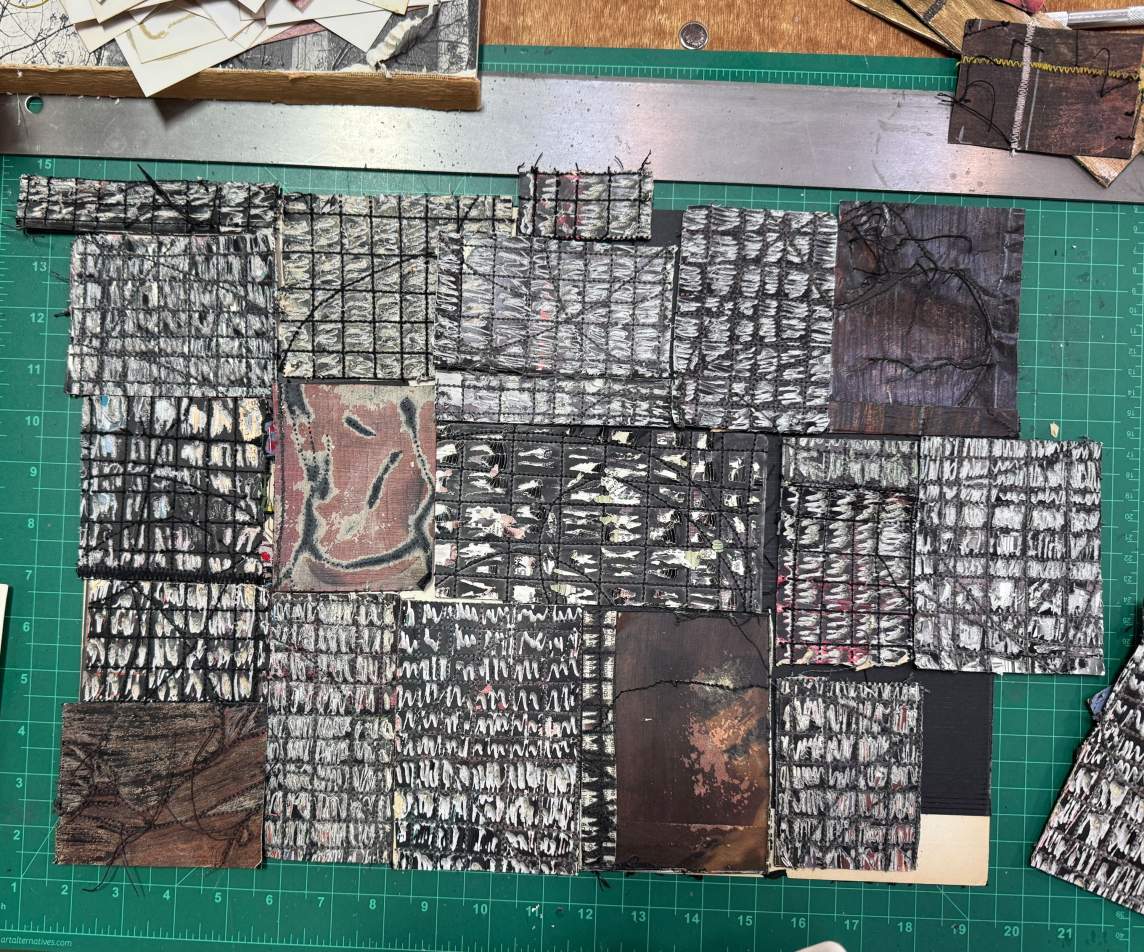
The surface is what draws me to collage. Material histories draw me to assemblage. And drawing is where the practice is most fundamentally rooted. Drawing feels like building. Surrendering to the commitment to find form. From there, the work moves between archival materials, found objects, print ephemera, and family photographs. Things that belong to institutions and things that belong to people.
Something usually catches. A photograph, a fragment of text, a handwritten correspondence. From there it becomes almost archaeological. I am excavating and editing simultaneously, deciding what to carry forward and what to leave behind.
Richmond Barthé's incomplete scrapbook was a good example of that. It wasn't just a source. It was a method. The gaps in his album became part of the structure and material of the work—not problems to solve but places to think inside of.
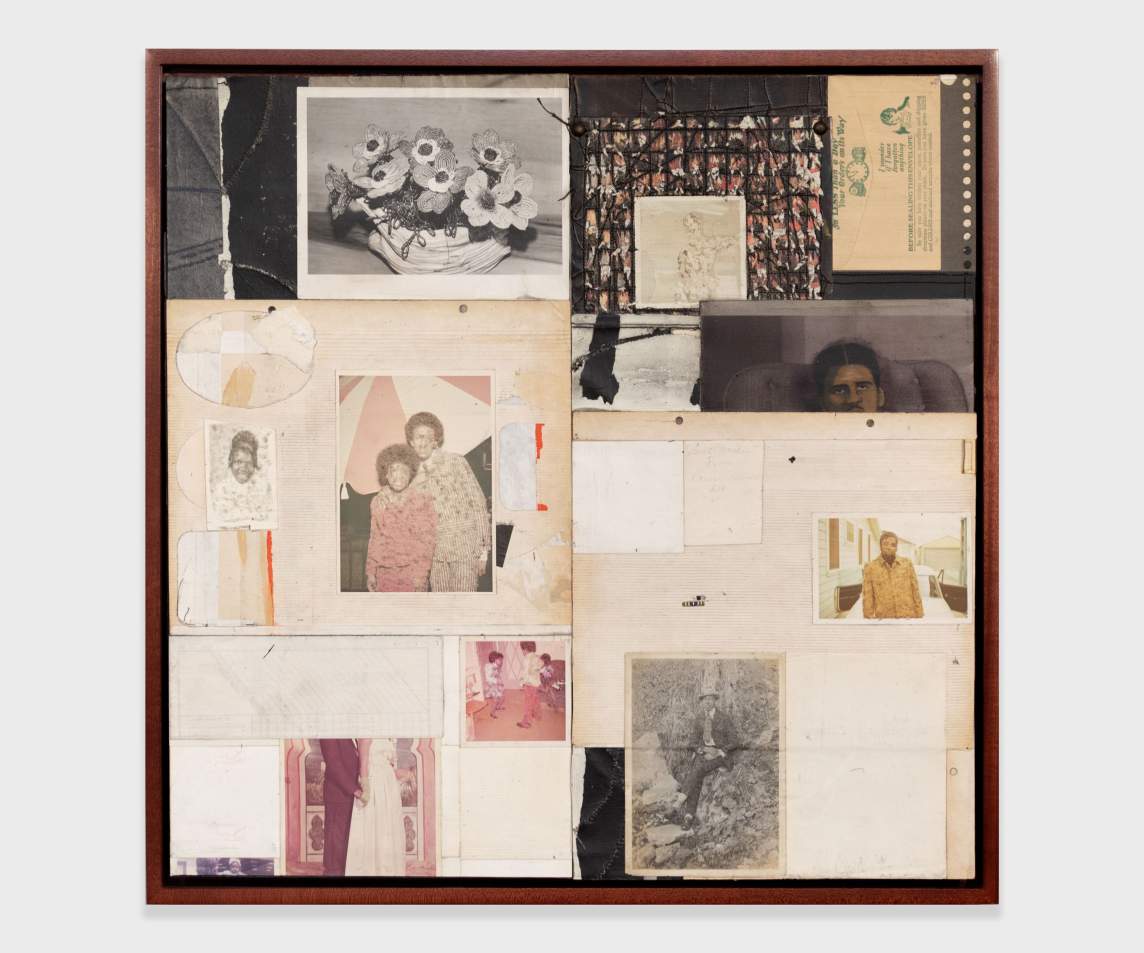
When interacting with my work, I want people to slow down. We are so trained to move through images quickly, to consume and scroll. My work asks you to stay, to notice what has been cut, what has been layered over, what is just barely visible beneath the surface. I want the viewer to feel like they have encountered something mysterious. I am more interested in what something might be than in the certainty of what it is.
In recent exhibitions at Company and Kunsthalle Basel, I found myself attentive to the space itself, to how certain architectural elements like windows and radiators could function as thresholds. The windows locate the viewer in the act of viewing and being viewed. Looking in or looking outward. Interior and exterior.
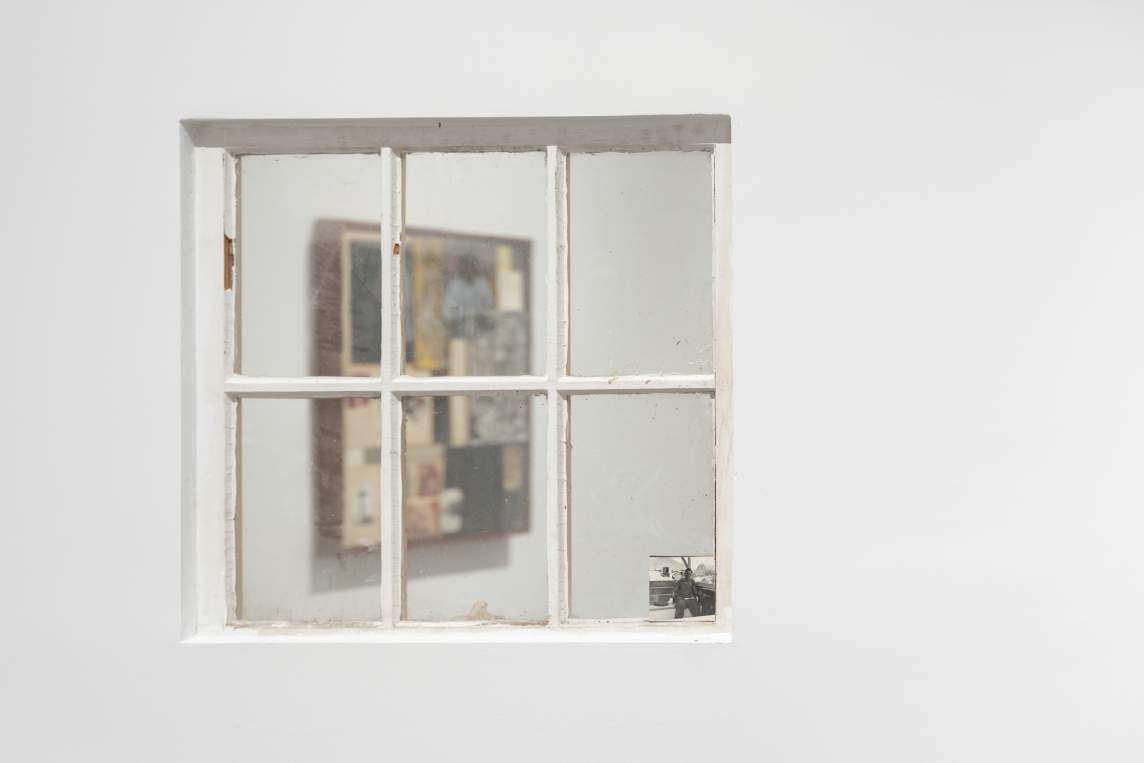
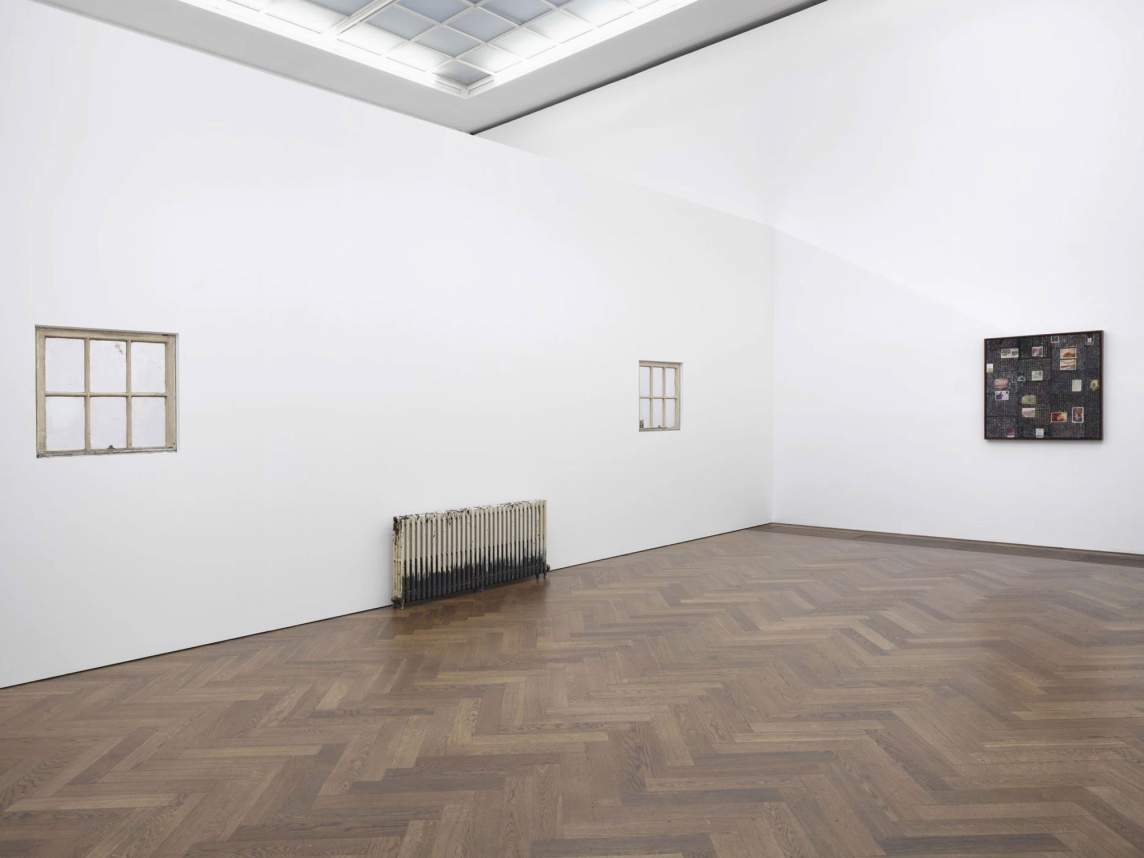
The radiators interested me differently, as impressions of temperature, objects that belong to another time and still hold the memory of heat. There is an interest in displacing the familiar subtly. Something internally psychological. Before the professionalization of the funeral industry, the living room was a funerary viewing space, a place where the dead were laid out and the community gathered to grieve. The room was eventually renamed the living room, a deliberate act of forgetting, an effort to move death out of the domestic and into the institutional. There must be something to liminality and waiting. To the threshold spaces where grief was once allowed to live.
Reflecting on the Kunsthalle Basel exhibition marks a significant shift in my practice. Working with the spatial vastness of the exhibition made me think about how the architecture of an exhibition can mirror the architecture of the collages themselves. The same logic of concealment and reveal. The viewer moving through the space the way the eye moves across a collage surface, approaching and retreating, catching glimpses, never getting the whole picture at once. I am left reflecting on the power of resonance, both spatially and in the capacity for the work to take up space despite its scale. I am looking forward to spending more time in the headspace of the archive until it is time to alchemize.
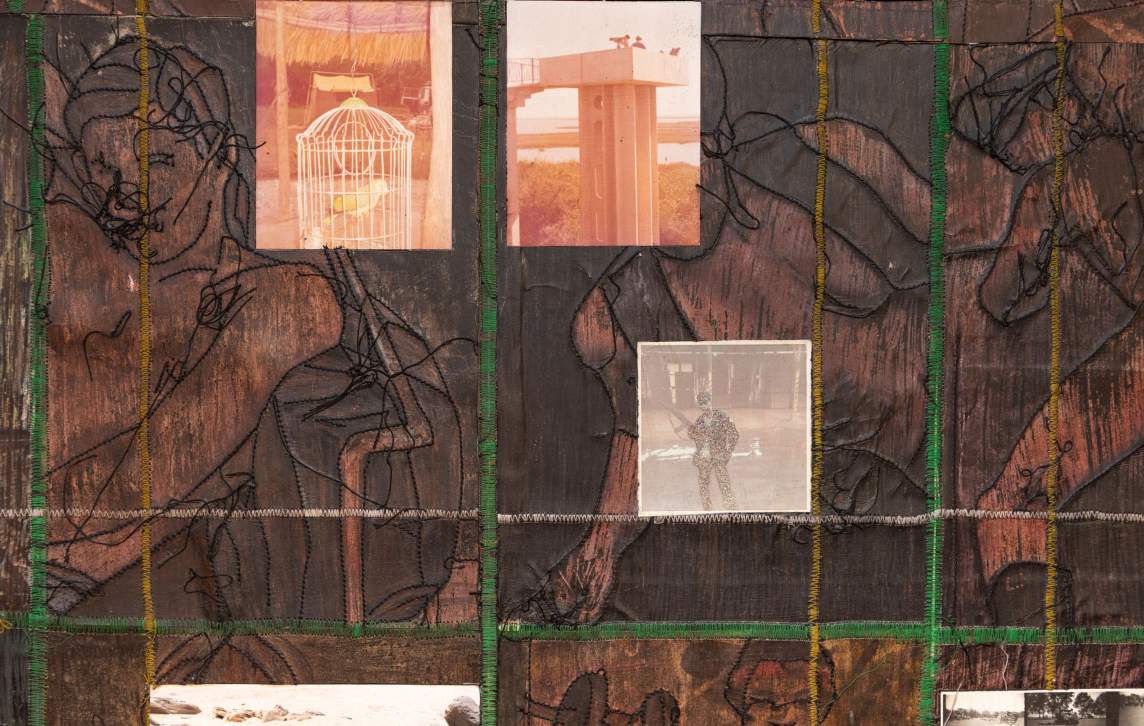
I hope people feel the weight of the silences in my work as much as the presence of the images. And I hope for recognition, that even if someone does not share the specific histories in the work, they feel something familiar in the structure of it. We have all had to navigate what gets remembered and what gets erased. We have all had to decide what to carry and what to put down.
What sustains the work is what sustains me: the continued necessity of preserving what might otherwise disappear. Preservation can be as simple as the act of remembering. The longing to know the lands, histories, and traditions my people come from. That longing sits inside what Aimé Césaire described as a cosmic anger. Not rage for its own sake but the fury of dispossession transformed into creativity. Transformation is how the narrative gets rewritten.
Community sustains me too. Other artists, writers, poets, and musicians, the people who show up to think alongside the work. And honestly, the work itself. There are days when making is the only thing that makes sense of everything else.
Interview and editing by Jenny Gill. Learn more about Troy Montes Michie’s work via Company gallery.