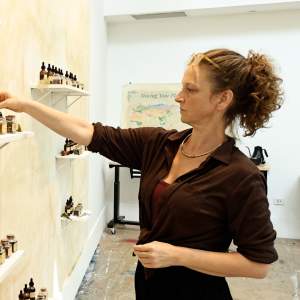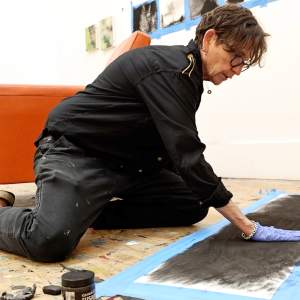
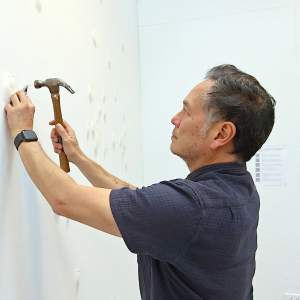
In the Studio: Michael Arcega
“It's this kind of alchemical thing that happens when you abstract a word. It c...
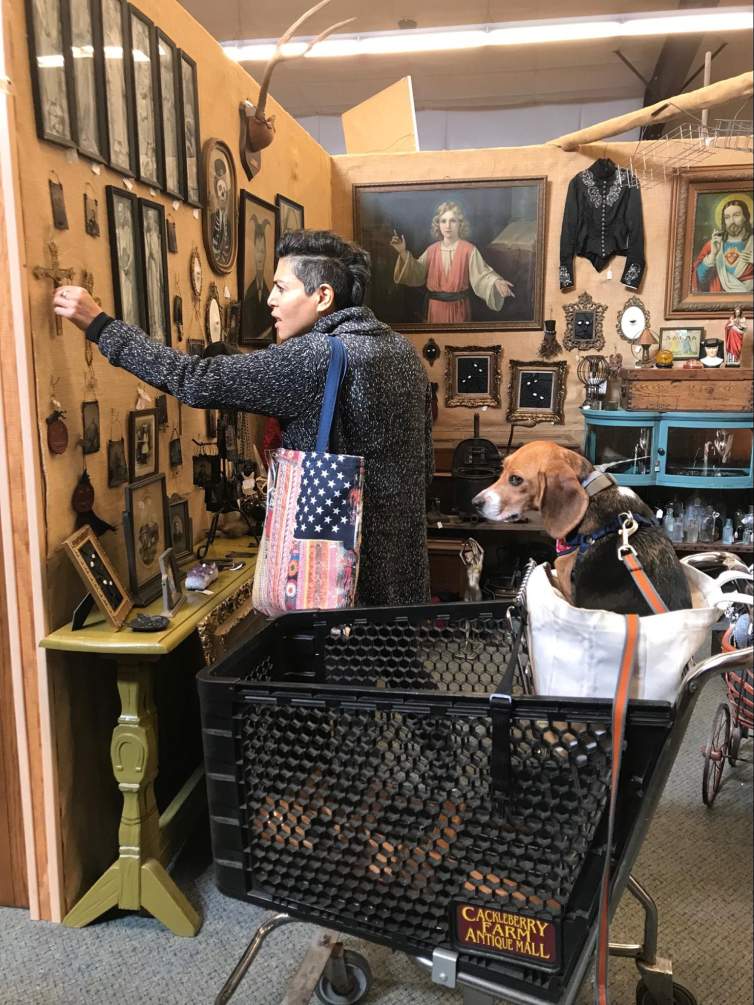
Sara Rahbar is a New York-based artist and a 2025 Joan Mitchell Fellow. We interviewed her about her work and creative practice in February 2026. The following is excerpted and edited from the artist’s responses.
I was born into chaos. The ground was never solid. The world arrived in pieces—so I learned to stand on shards. Everything—always—breaking into a million pieces around me. So I collect. Not gently. Not sentimentally. Obsessively. Relentlessly.
I gather the discarded, the broken, the abandoned. I rebuild what refuses to stay whole. I press fragments together until they hold. Until they quiet. Until something inside me settles. The act of assembling is a way of stabilizing something internal.
Assemblage is not decoration. It is containment. It is restraint. It is survival. I rebuild what has fallen apart because I am falling apart. It is the only way I know to keep from scattering.
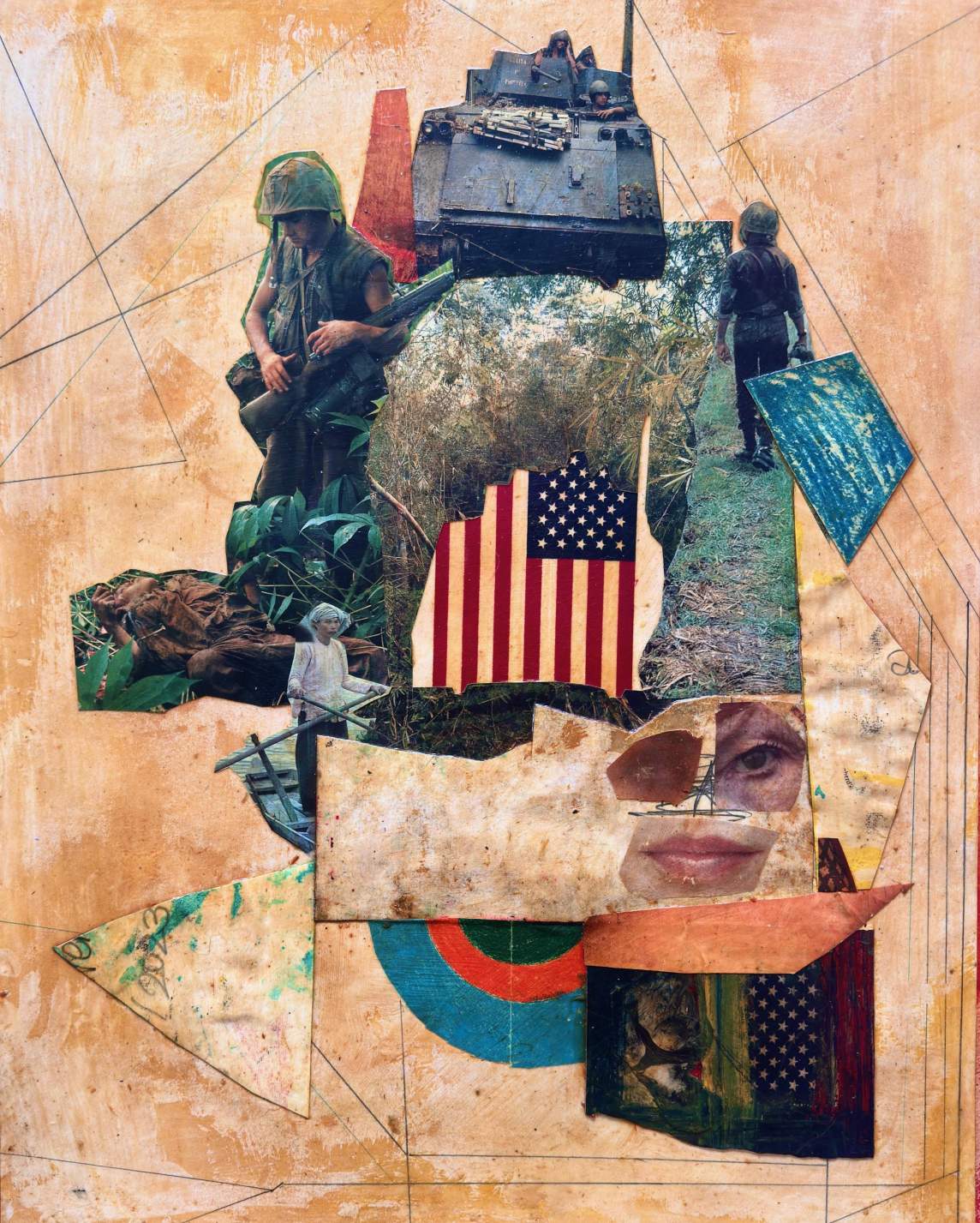
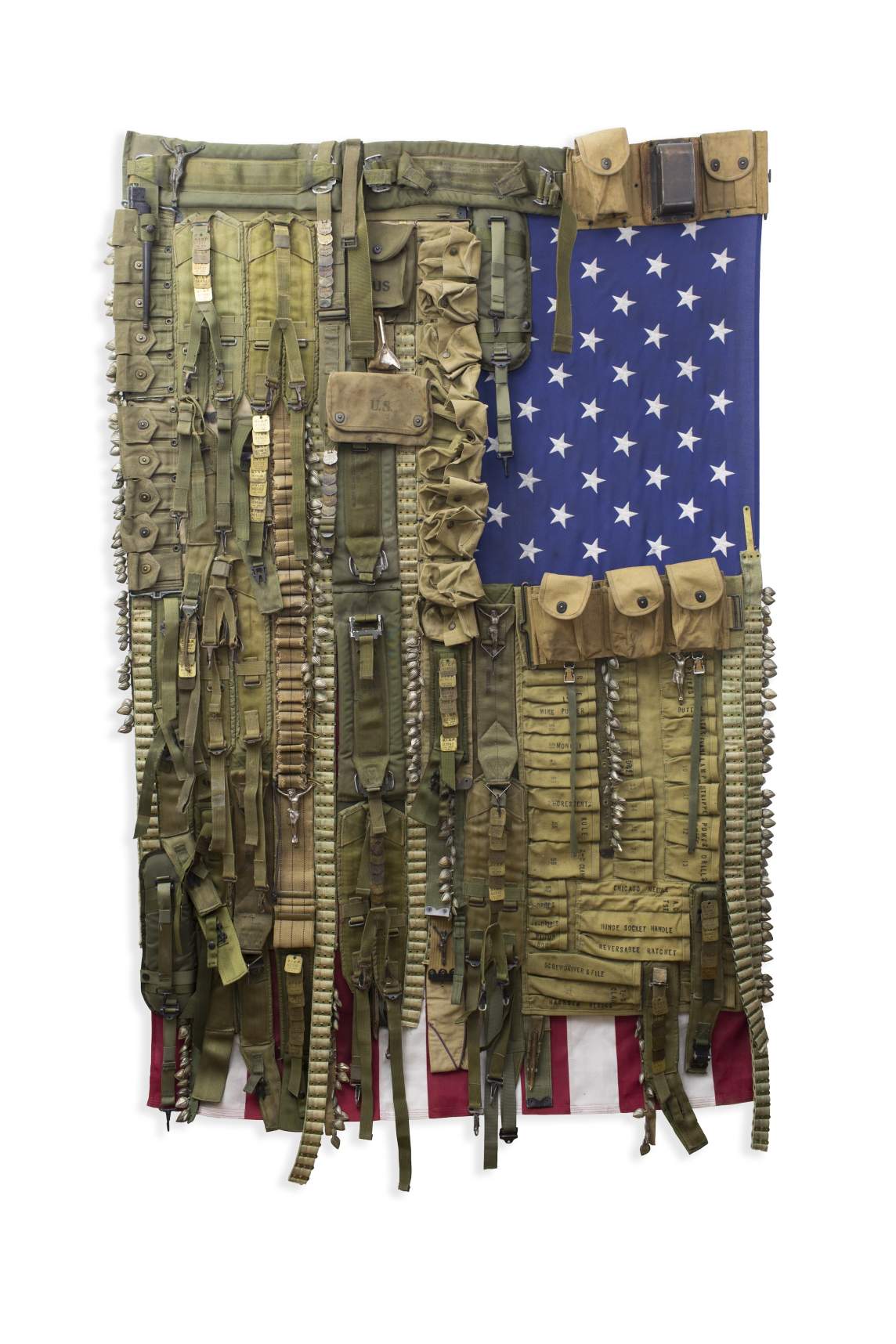
My work is born from fracture—of the body, of nationhood, of memory. I work with cast bronze limbs, war relics, archival photographs, military debris, and collected remnants to confront how violence is inherited, obscured, and normalized. The figures appear in parts—severed legs, grasping hands, collapsed feet—not as decoration, but as testimony. These fragments refuse the myth of wholeness; they embody survival in pieces.
My art practice is a compulsion. I make work because I have to. Because if I don’t, something inside me begins to rot.
I am drawn to remnants of war, labor, migration, state power, and the body itself. Bronze preserves what history attempts to discard; found objects retain the memory of use and misuse. My work is not about resolution, but about evidence—confrontation, and the refusal to sanitize pain. I do not aim to comfort. I make visible what has been buried, hidden, or erased.
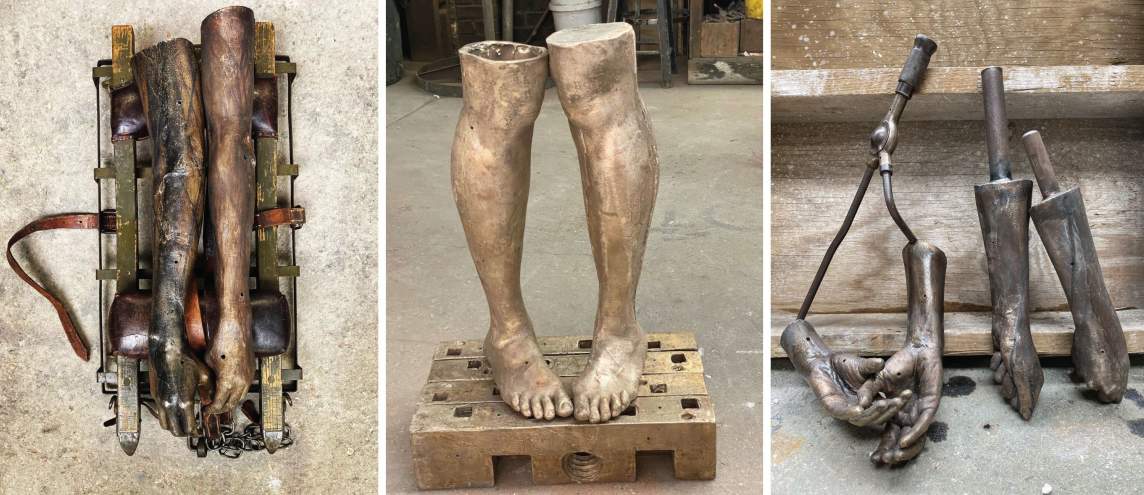
This practice is also an attempt to understand what it means to be alive—to wrestle with self and others in a world shaped by uncertainty. We grasp at nothing, desperate to hold onto something. The chaos can be deafening—crippling. We enter this world alone and leave alone, yet while we are here, we reach—desperately, tenderly—toward belonging: to someone, to something, to somewhere.
These assemblages are not answers, but monuments to what we carry and cannot fully release. The work lives between rupture and repair, asking how we might hold our histories without being consumed by them.
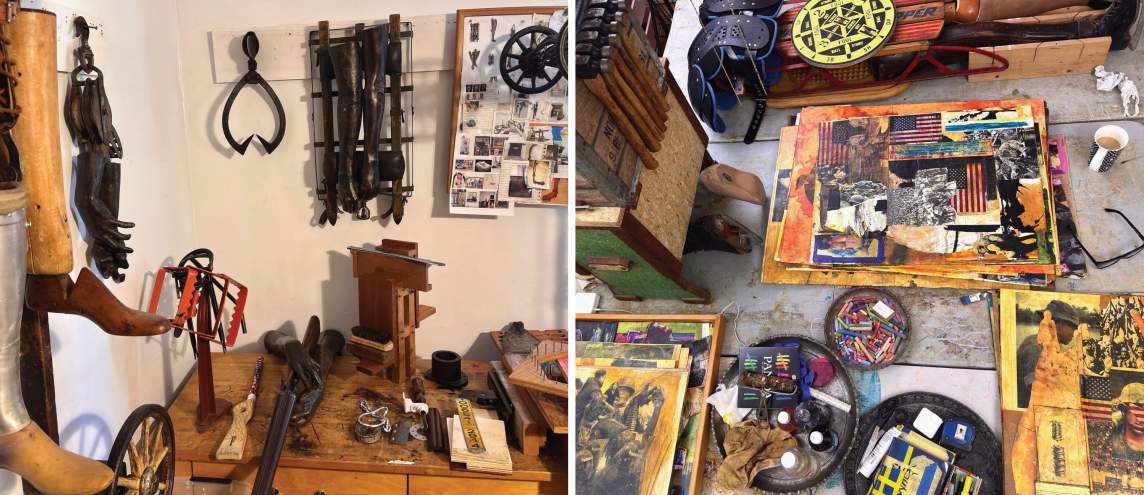
My studio is in my home. I have always lived and worked in the same place. I need to be near the work. I need to live with it—wake up to it, sit with it in silence.
The boundaries between life and practice dissolved a long time ago. There has never been a separation. This work is everything to me. Everything.
For my bronze works, I go to a foundry. But the pieces always return to my studio, where I continue to work on them. My studio is organized, yet chaotic. I don’t know where I would be without it. It grounds me. It sustains me. It keeps me alive.
It is always about the next piece—that deep internal drive to see what else can emerge, what else can be born. I need to destabilize myself. I am chasing the moment when something appears that I did not know I was capable of making. That pursuit sustains me. The magic. The uncertainty. Creation—the act of making something from nothing.
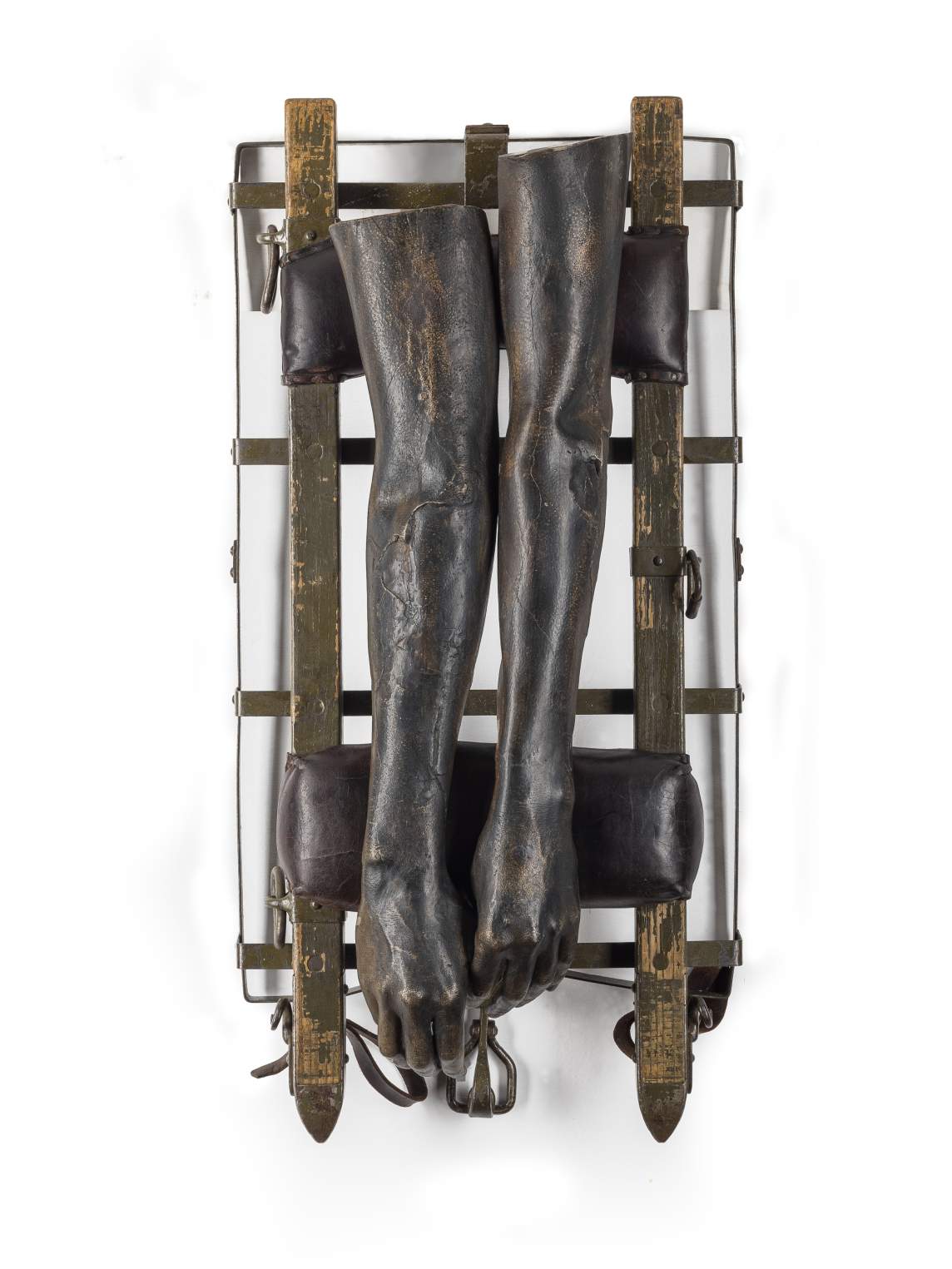
It can begin anywhere—a color, a title, a single object that feels charged. It always stems from life, and it’s never one fixed formula. The process shape-shifts. It grows and mutates as I work. It’s endless and never the same. The materials speak, and I respond.
There’s a dialogue between instinct and form. Instinct is the raw impulse—the hunger, the pull toward a material, a gesture, a title. Form is what contains it, what gives it structure so it can exist in the world. One without the other doesn’t interest me. Pure instinct is chaos. Pure form is lifeless.
The work happens in the tension between the two. I follow the instinct, but I control and shape it through composition, weight, balance, proportion. I let the materials speak, but I also push back. It’s a negotiation. A confrontation.
There are moments when the piece wants to collapse into chaos, and I have to hold it steady. Other times it feels too resolved, too polite, and I have to disrupt it—cut into it, rearrange it, bruise it a little. I’m not interested in harmony for its own sake. I’m interested in truth.
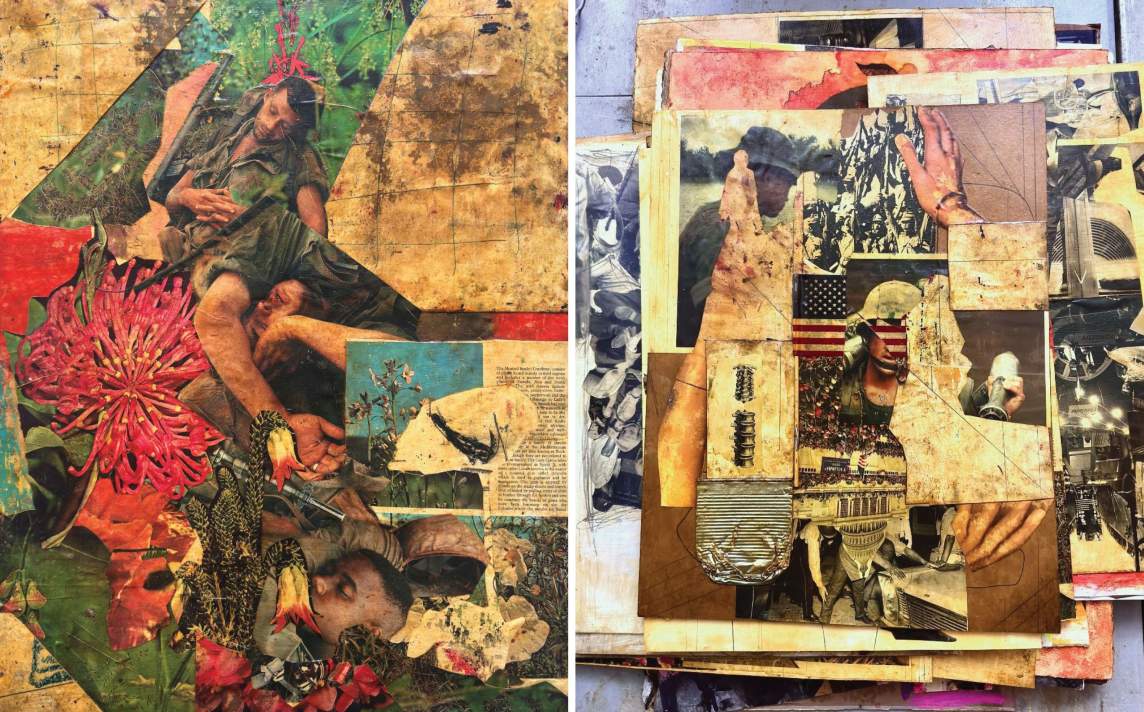
I am currently working on two bodies of work: Animals and The Nurturer and the Narcissist.
I’m thinking about duality—a kind of schizophrenic state—care and self-absorption, devotion and ego, softness and control. How these opposing forces inhabit the same body. The same home. The same country.
It’s my father.
It’s my mother.
It’s me.
It’s America.
This body of work is a deep dive. I need to cut to the bone. I am no longer interested in the surface—I want to see what lives underneath the skin. The work feels vulnerable, but also confrontational. There is tenderness in it, but it’s not sentimental.
It’s raw.
Brutal.
Unforgiving.
It doesn’t ask to be held—it grips your throat.
It peels back the skin.
It presses on the bruises.
I have a few group museum shows, artist talks, and books in the making.
But right now, I’m focused only on the work—on birthing it, making something that carries weight.
Once it leaves me, it belongs to whoever encounters it. Their experience is theirs.
I’m in a cocoon state—rot and rupture. The body breaking itself down to build something new. Quiet—but the kind of quiet that hums like a live wire about to snap. Internal—the old dissolving in acid, bones softening, the body unthreading from the inside out.
Not hiding.
Becoming.
And whatever needs to emerge—will claw its way out.
Interview and editing by Jenny Gill. Learn more about Sara Rahbar’s work at sararahbar.com.