In the Studio: Michael Arcega
“It's this kind of alchemical thing that happens when you abstract a word. It c...

Sammy Seung-min Lee is a Colorado-based artist and 2025 Joan Mitchell Fellow. We interviewed her about her work and creative practice in March 2026. The following is edited and excerpted from the artist’s responses.
I’m an interdisciplinary artist working primarily with sculpture and installation, often incorporating sound, video, and participatory elements. Through materials and objects, I explore migration, memory, and belonging. Having lived in Korea and the United States, I’m especially interested in that in-between space, where identity, language, and the idea of home are always shifting and sometimes refusing to settle down.
I’m motivated by questions that don’t have clear answers, especially around home and memory. Living in diaspora means you’re constantly negotiating where you belong. That tension can feel uncomfortable at times, but for me it’s also incredibly generative. Art gives me a way to sit inside that complexity and translate it into form.
Some of my works reflect memories of my mother and my own motherhood raising two sons. Others look at migration and journey, such as sculptural castings made from luggage contents. I’m also thinking about diasporic histories, and how materials, stories, and cultural practices travel across borders and evolve over time. Together, these works ask how identity is shaped by both inheritance and movement.
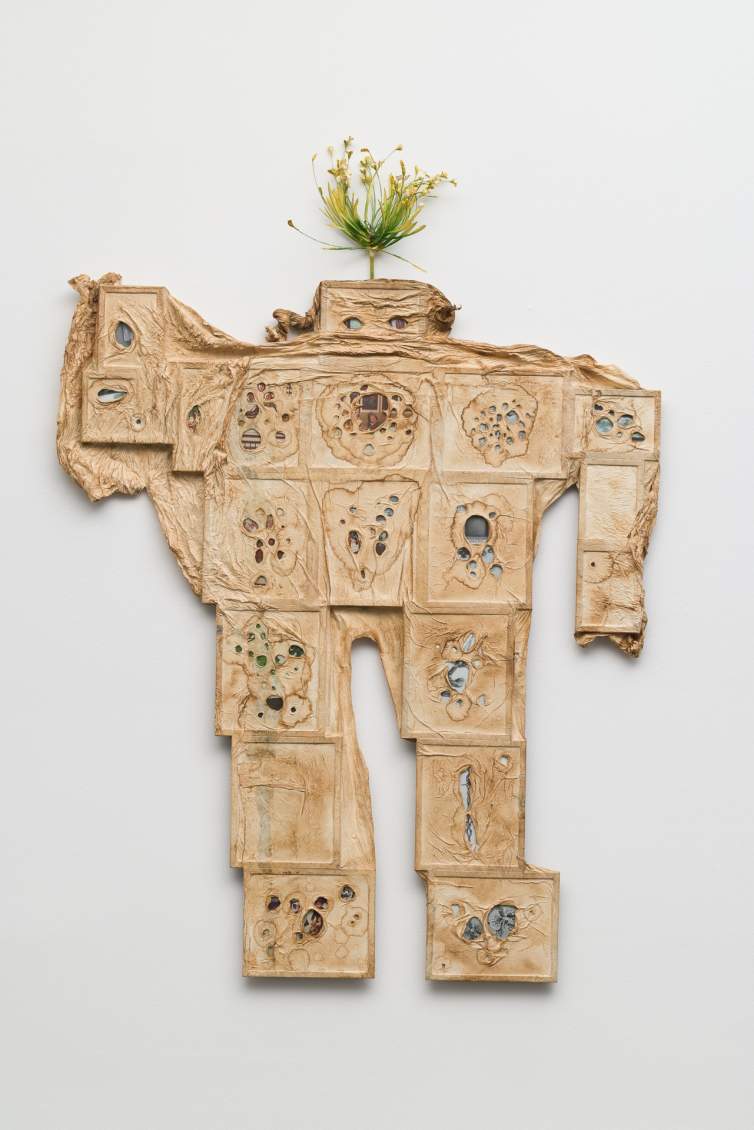
My process usually starts with a feeling or a question rather than a sketch. I begin by experimenting with materials and letting the form emerge through that interaction. Perhaps, because I studied architecture, it feels natural for me to choose various materials that fit each context, but I have a special connection to paper. Hanji (mulberry fiber paper) has a long history in Korea, and I’m interested in reinterpreting that tradition in contemporary ways. I developed a felting technique that transforms it into what I call “paper-skin,” a material that feels fragile but is actually very strong and resilient. It reflects so much of my personal history that it has kind of become my signature.
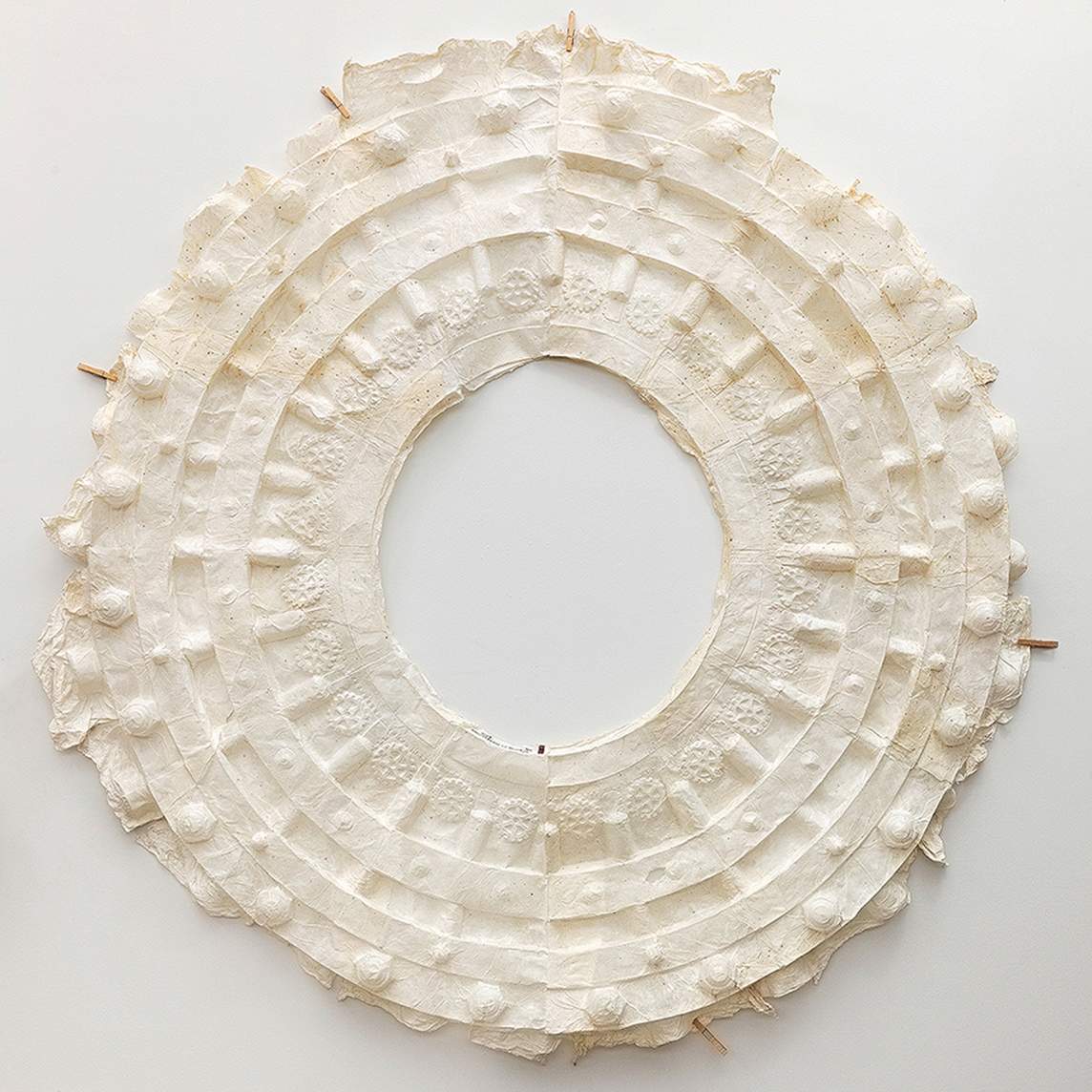
One project using this paper-skin takes the form of a lady’s petticoat. It looks very feminine and delicate, but it is actually cast from a bank vault door, something meant to be impenetrable. I’m drawn to that contradiction between appearance and material reality. Unless I varnish or seal it, I can dissolve the piece back into water and start again. That reversibility feels important to me, as nothing is ever completely fixed.
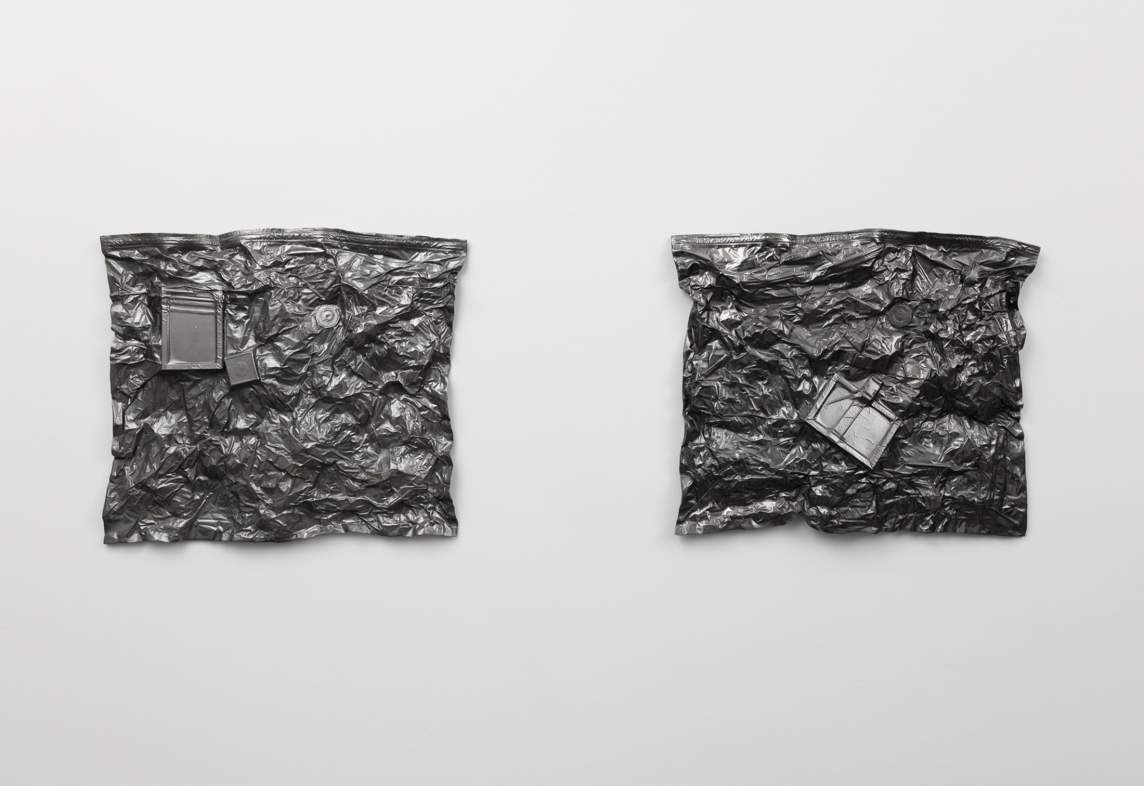
I became curious about what I chose to bring when I moved from Korea to the US 35 years ago. Those carefully edited selections, what you think you cannot live without, say a lot about who you are. In my aluminum sculptures, such as the 70 lb topography models, I vacuum-sealed personal belongings like clothes, shoes, and photographs, essentially the contents of my suitcase moving between Seoul and Denver. As the air disappears, the forms compress and begin to resemble landscapes or land masses. This shift from luggage to terrain became the conceptual framework.
In addition to sculpture, I am very interested in activations. This is a crucial part of my practice and also where I feel most vulnerable, because I am putting myself out there and negotiating authenticity in real time as an introvert. At the same time, it is where I learn the most. These interactions genuinely feed the work.
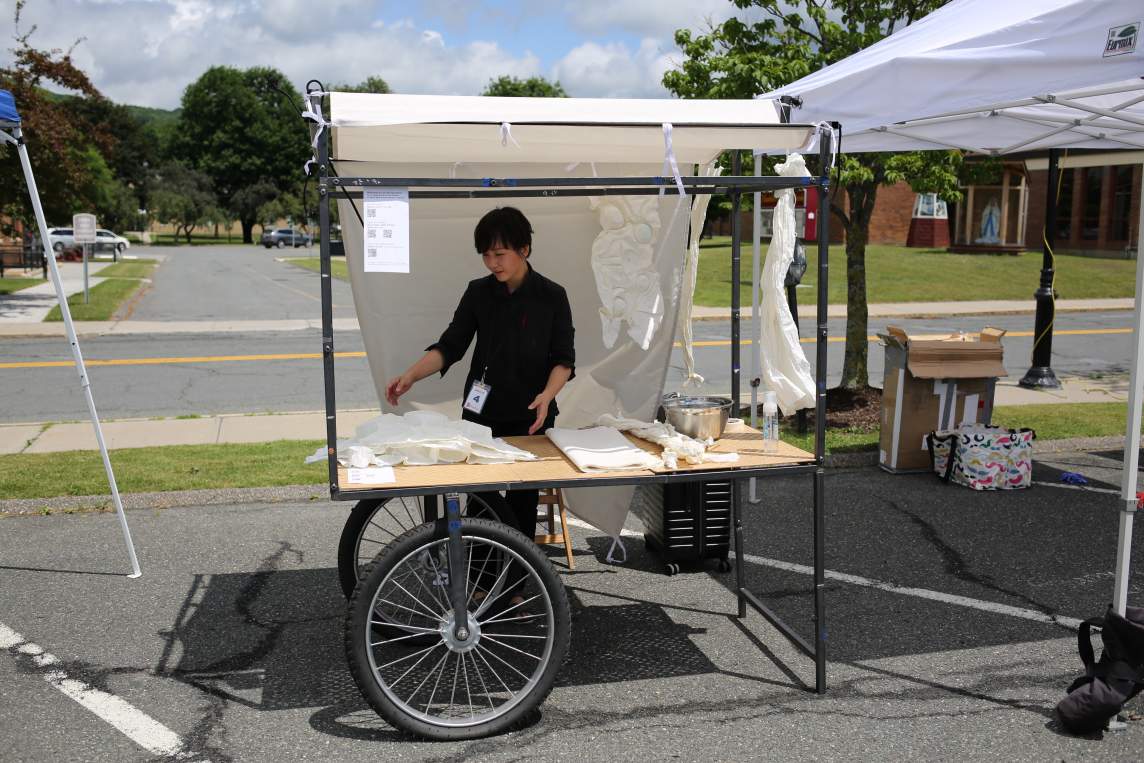
Street Art Cart is a mobile installation and activation project I’ve been developing since 2018. It fits into a medium-sized suitcase and can be assembled on site. Inspired by Asian street food carts, it’s a simple, modular structure that functions as a studio, gallery, and art fair booth on wheels. I have set up the Street Art Cart in diverse venues and neighborhoods, engaging with different communities through Very Proper Table Setting, a project that explores cultural identity and social interaction.
Most of these projects, like the Street Art Cart and Changing Station (which is a conveyor belt with baby onesies that talks about the commodification of intimate labor), tend to be one person's scale, like a cubicle size, ten by ten or eight by eight. I’m interested in intimate exchanges between two people. Those moments can then be documented and transformed into art forms.
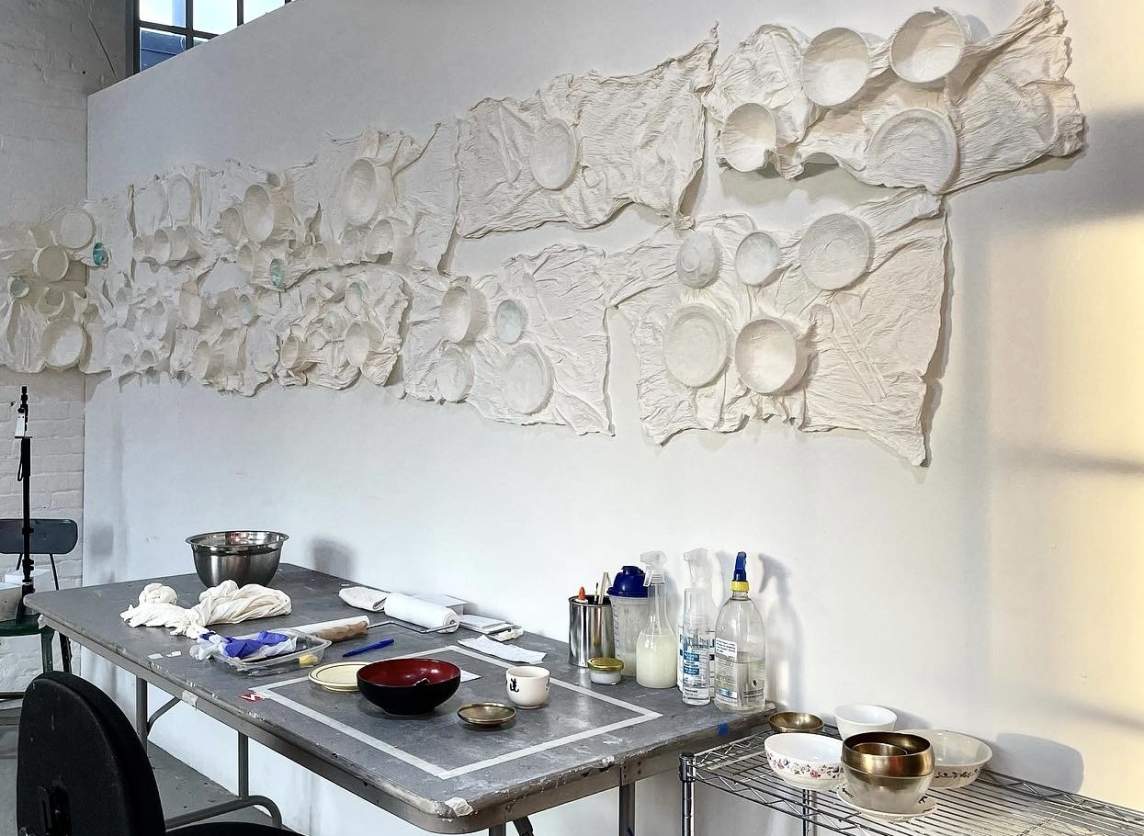
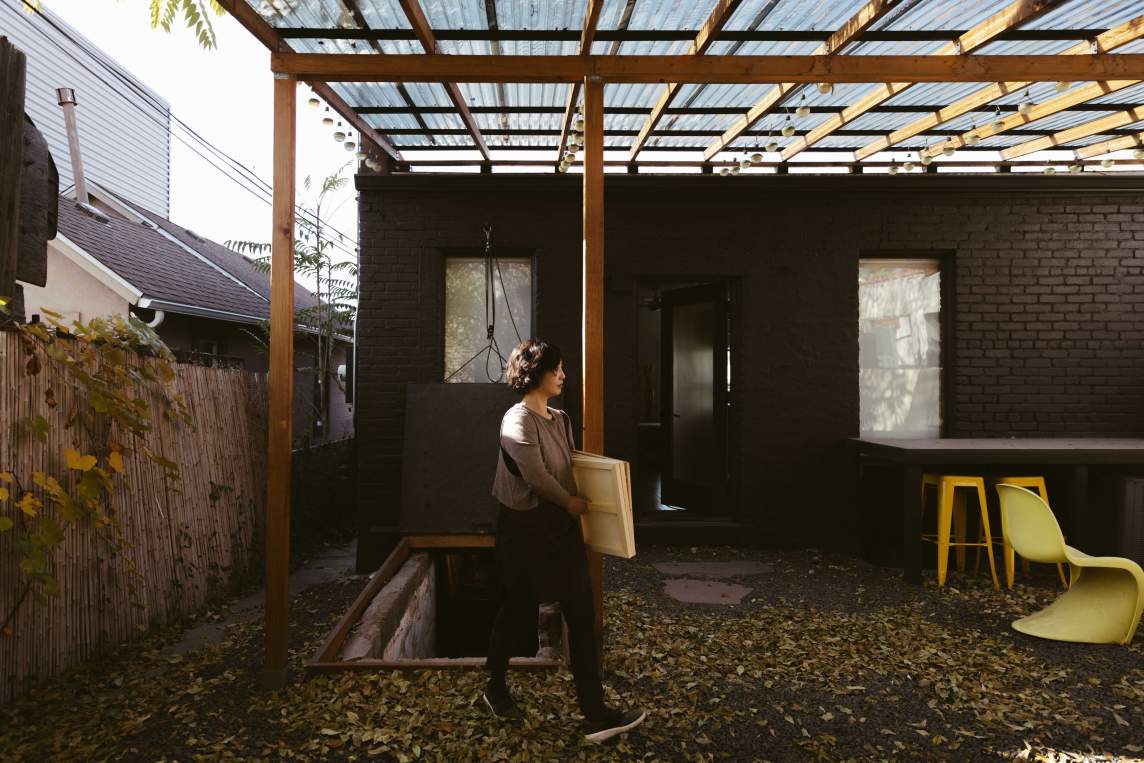
My main studio is in Denver’s Santa Fe Art District. It is a space that constantly shifts depending on what I am working on. Because I use so many materials, including paper, clay, silicone, textiles, and electronics, you might see paper-skins drying on racks, molds on the floor, or half-finished objects waiting to be cast. It is messy, but it is my favorite place in the world.
I also run Collective SML | k, a project space that supports Asian and Asian-American artists through residencies and community programming. I often collaborate with local institutions to host visiting artists and scholars, offering them a place to stay and a chance to connect more deeply with the Denver community. I also host dumpling parties, because some of the best artist talks happen over food rather than in formal settings.
I have a secondary studio in my basement with bookbinding equipment such as a guillotine, presses, and a printer. This is the less dusty side of my practice. It is also practical. With kids and unpredictable schedules, it allows me to keep working from home when needed.
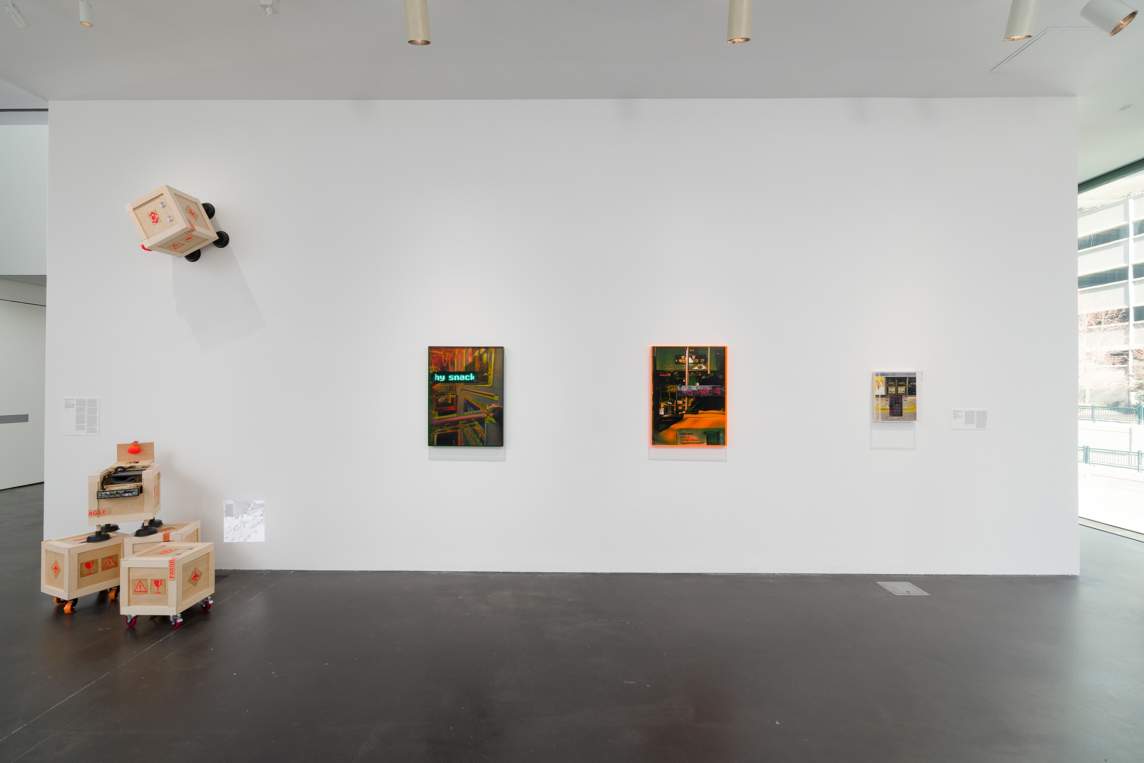
Right now, I’ve just opened Becoming Motherland at MCA Denver. The exhibition includes new work from my Fulbright year in Seoul, which was incredibly inspiring and also raised a lot of complicated questions. When we were planning the show, curator Leilani Lynch suggested that the title relate to “motherland.” In our conversations, I added “becoming,” which felt right because my identity has never been fully stable. In the US, I am often introduced as a Korean artist, which feels incomplete, and in Korea, I do not fully feel at home either. As a Korean American and a naturalized US citizen, my sense of belonging has shifted over time. After COVID and the rise in anti-Asian hate, that sense became even more fragile.
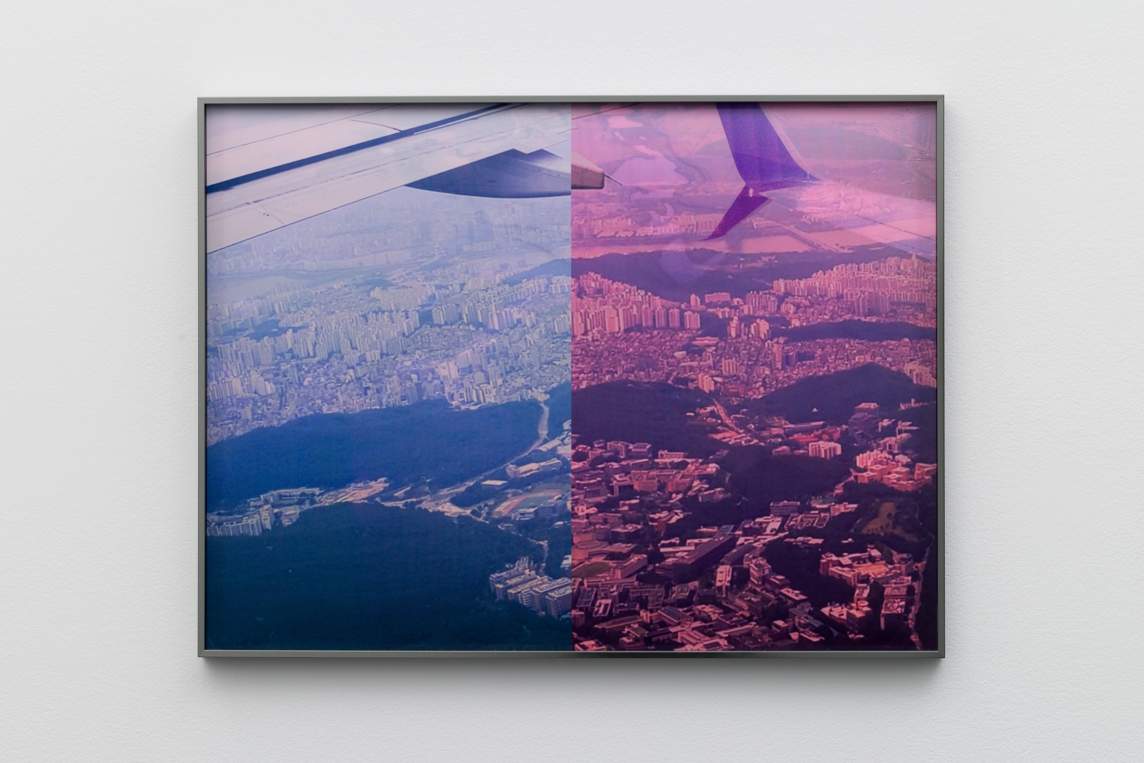
So that back-and-forth—being pushed and pulled between identities—creates an ongoing tension. “Becoming” feels active. It gives me agency. I’m not just defined by where I’m from; I’m shaping who I am through my choices and my work. The exhibition explores the difference between “motherland” as something inherited and “home” as something we create.
The Fulbright year was pivotal. It allowed me to reflect on my relationship to Korea while also thinking about it across generations, especially what “motherland” might mean for my two sons.
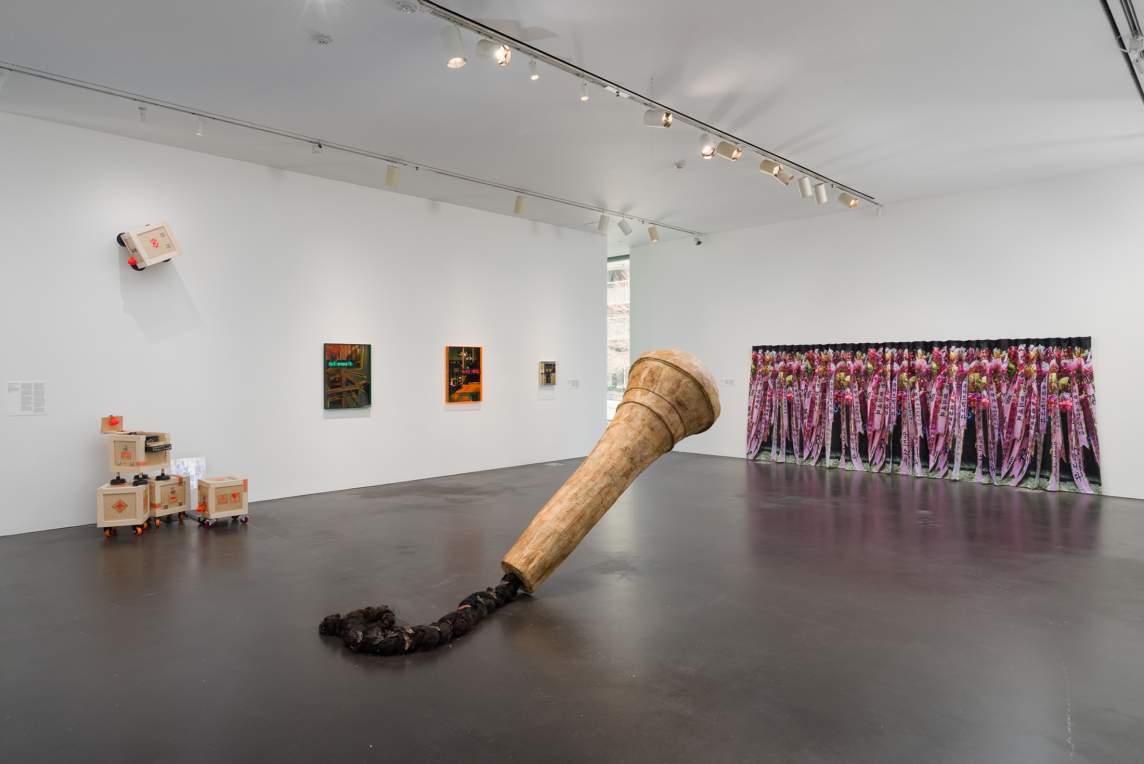
One of the pieces in the show is a big sculptural microphone that is titled Complex Silence. It’s kind of a reversal of how a microphone is supposed to amplify your voice, but it's actually emitting very faint soundscapes from Korea and some recorded self-reflections. It is kind of autobiographical, whispery, intimate, and personal, but it is nine feet tall, so it has a certain presence.
There’s also a karaoke installation with dual screens, one showing drives through Colorado, the other through Seoul. An airline seat becomes a karaoke station. The song is Moonlight on the Colorado, an American folk song from the 1930s that became popular in Korea, likely through US military presence. Because of this song, for my parents’ generation, Colorado became this almost mythical place, an imagined utopia.
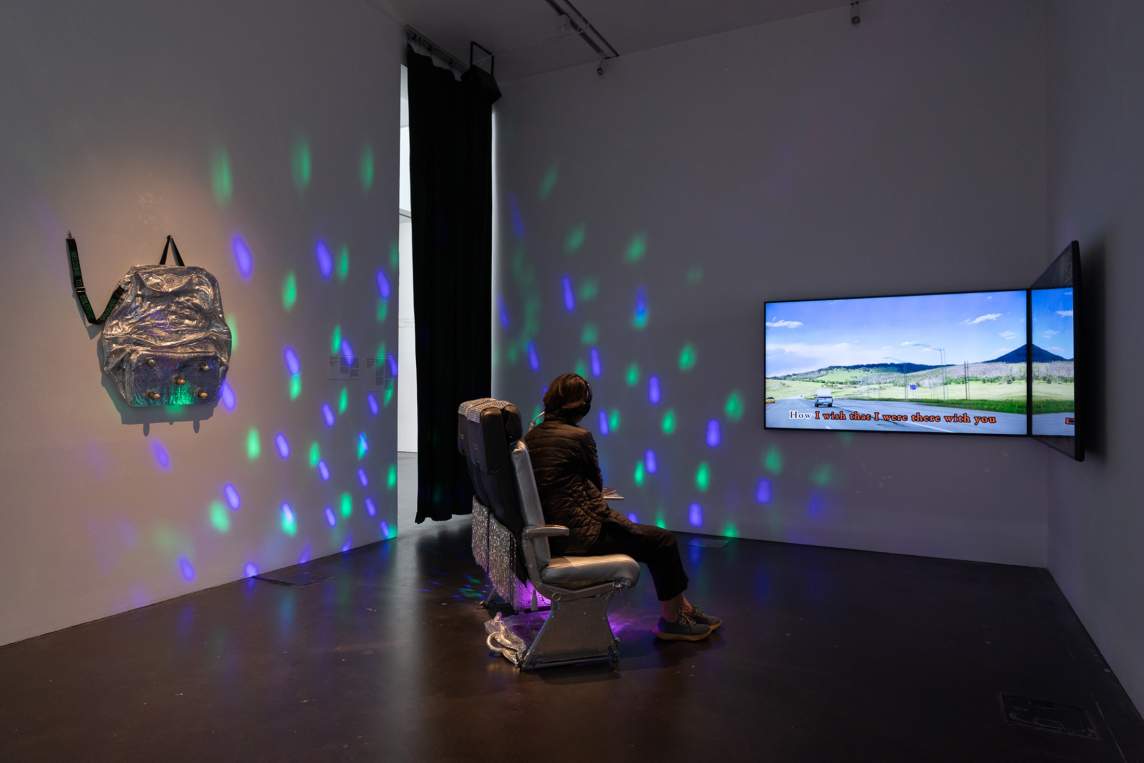
In the installation, I'm playing the original song and the Korean rendition of the song. You can see all the YouTube replies by Koreans writing how amazing Colorado is, how they long to be there, and someone specifically saying that they miss Colorado as if it's their hometown. So this piece really came out of asking the question, while I was in Korea, "Why am I living in Denver?" From my ironic perspective, it's like I fulfilled my mom's dream by living here, living in her utopia. In the installation, along with the sound piece in the airline seat, there are sensors that activate disco lights. It’s a fun piece.
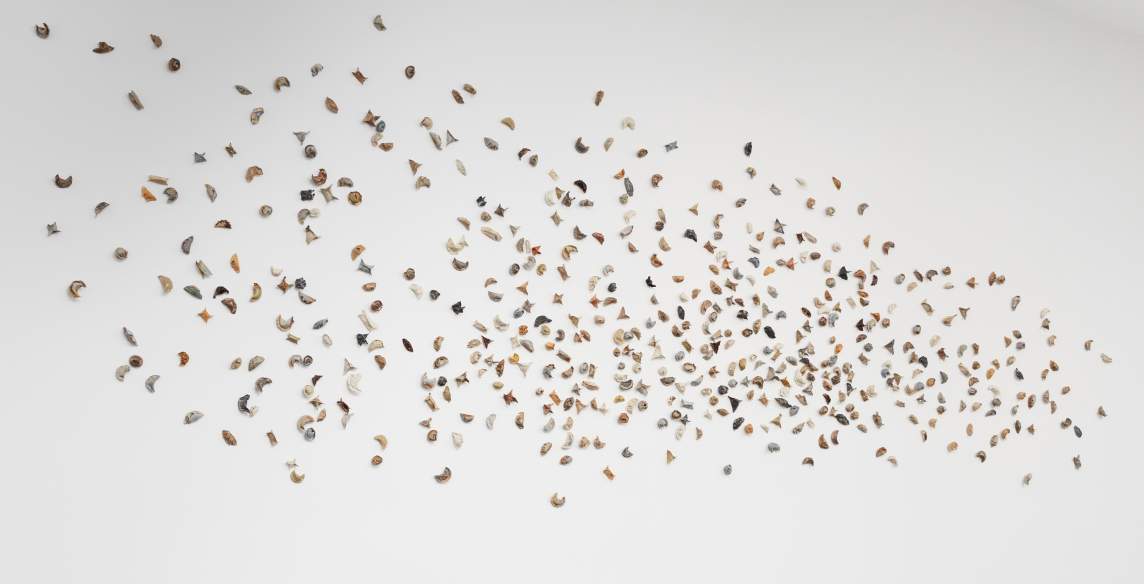
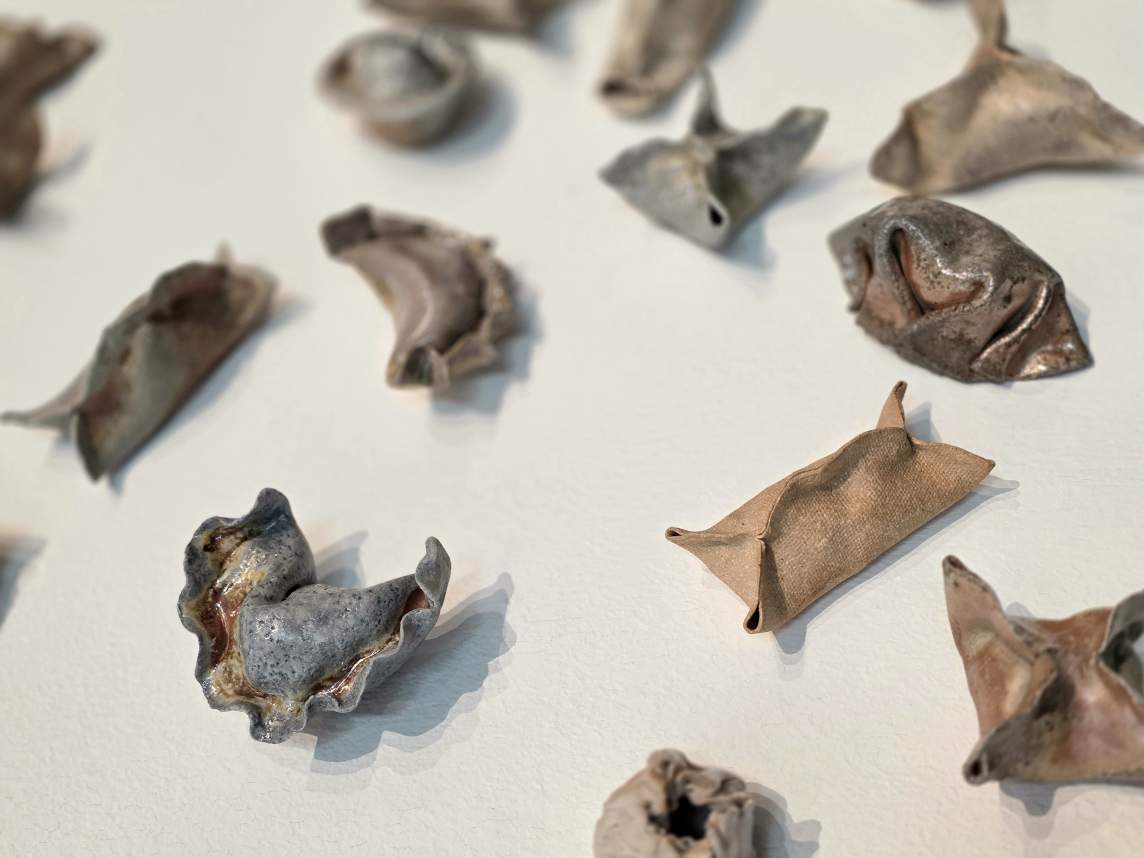
Another installation, Dumpling Diaspora, grew out of the dumpling dinners I host at my studio. Dumplings exist across many cultures, including Chinese, Korean, Japanese, Indian samosas, and Eastern European pierogies. The piece is a wall of clay dumplings that reflects migration and transformation across borders. It is also, quite simply, a lot of dumplings, which makes me happy.
With Becoming Motherland and my work more broadly, I hope it functions as both a mirror and a whisper, allowing people to see themselves reflected while also reconsidering their perspectives. For Korean American audiences, I hope it offers recognition with complexity. For other immigrant communities, I believe the emotional architecture, including longing, translation, misalignment, and humor, is widely shared. We all carry traces of somewhere else, and we are all, in our own ways, inventing home as we go.
Interview and editing by Jenny Gill. Learn more about Sammy Seung-Min Lee’s work at studiosmlk.com.