In the Studio: Michael Arcega
“It's this kind of alchemical thing that happens when you abstract a word. It c...

Sahar Khoury is an Oakland-based artist and 2025 Joan Mitchell Fellow. We interviewed her about her work and creative practice in March 2026. The following is edited and excerpted from a transcript of that conversation.
I'm a sculptor and installation artist who weaves in history through found materials, fabricated elements, arrangement, and context to create meaning. I think a lot about structural vulnerability in my work and my practice, because I initially became an artist outside of an art educational system. I was in anthropology for a long time and worked from within a cultural anthropologist lens.
For about 12 years, the research that I assisted with centered on this notion of structural vulnerability in populations or communities with liminal access. It's an interdependence of a lot of factors that come together to make someone vulnerable. And I think in many ways my sculptures involve a lot of different mediums that come together to fill in gaps. The materials may have formal qualities that provide inspiration, or cultural significance or meaning, and sometimes utility, but then come to be symbolic or surrealist in the constructions that I make.
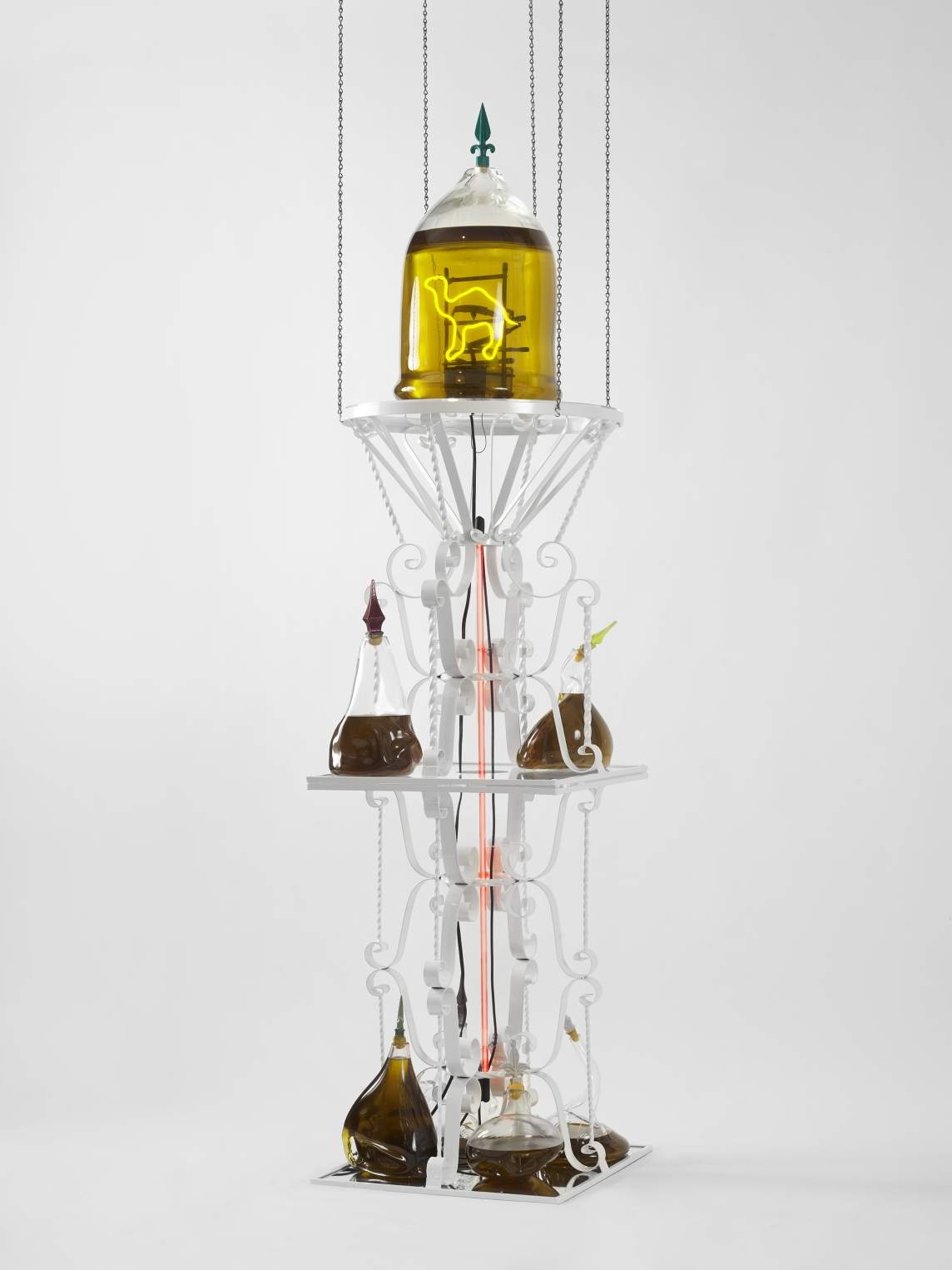
I build structures or arrangements from a very intuitive place and the process is iterative. The practice of making art is probably the most knowledgeable place I can be in terms of knowing and revealing the world to myself—but also revealing myself to myself. Making things with your hands has its own language, or like a way of getting somewhere unknown. It's like deep sea diving for a language that has no aim.
My process is very much call and response. Often it's a found object that creates a spark. Because there's so much unknown in terms of where I'm going to end up, it creates this beautiful place to exercise all your fears, in a way—by no means getting rid of fears, but constantly building that muscle to trust yourself.
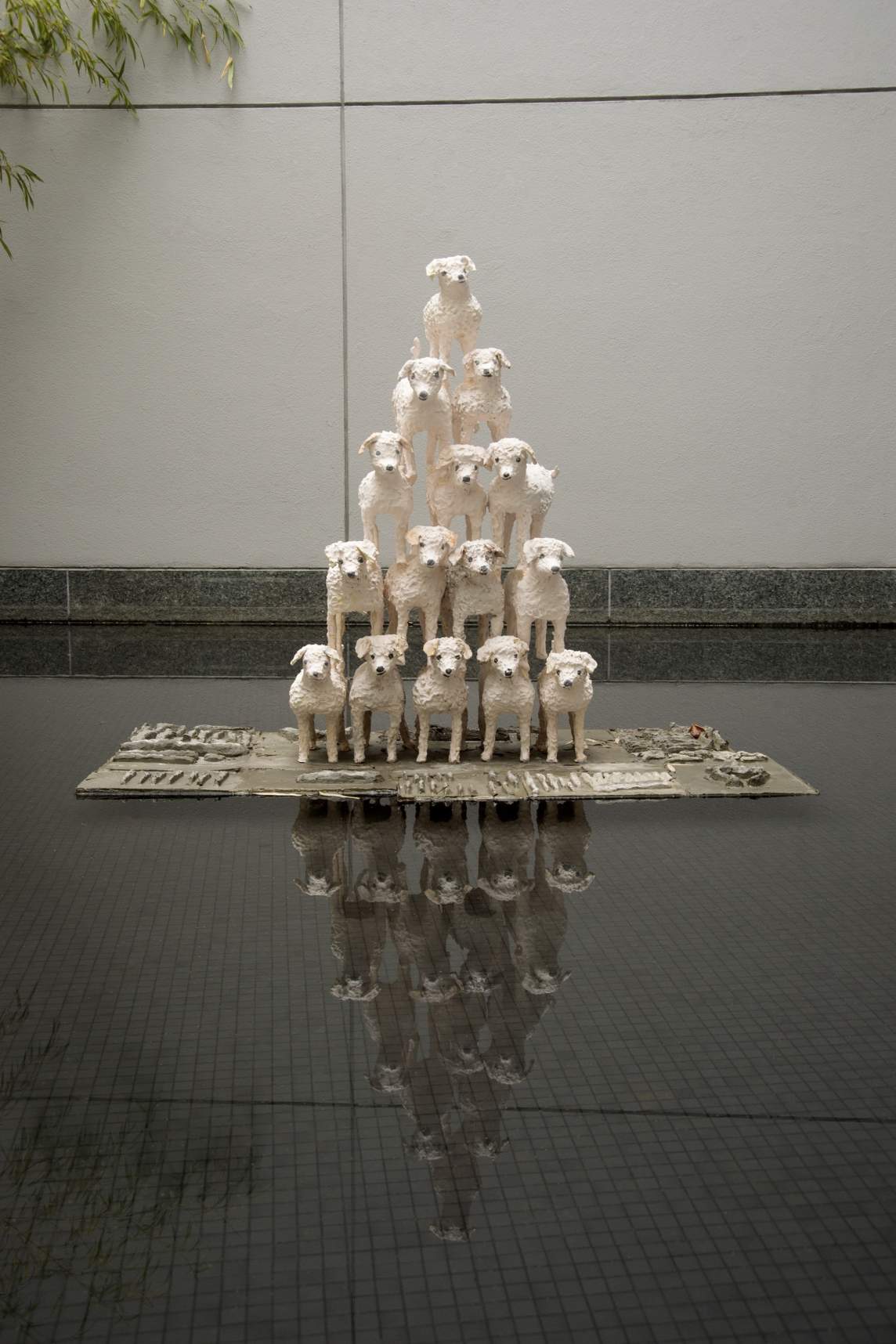
Because I studied anthropology and started my career in that field, I came to art late, in my late 20s. My first real art museum experience was seeing Eva Hesse and Louise Bourgeois in New York. I have an affinity for artists that work with materials that are not traditionally art materials, like assemblage artists. I love Robert Rauschenberg, and still return to him in a pretty deep way in terms of his sense of multiplicity, use of collage, and the discovery of a material leading the way, which really resonates with me.
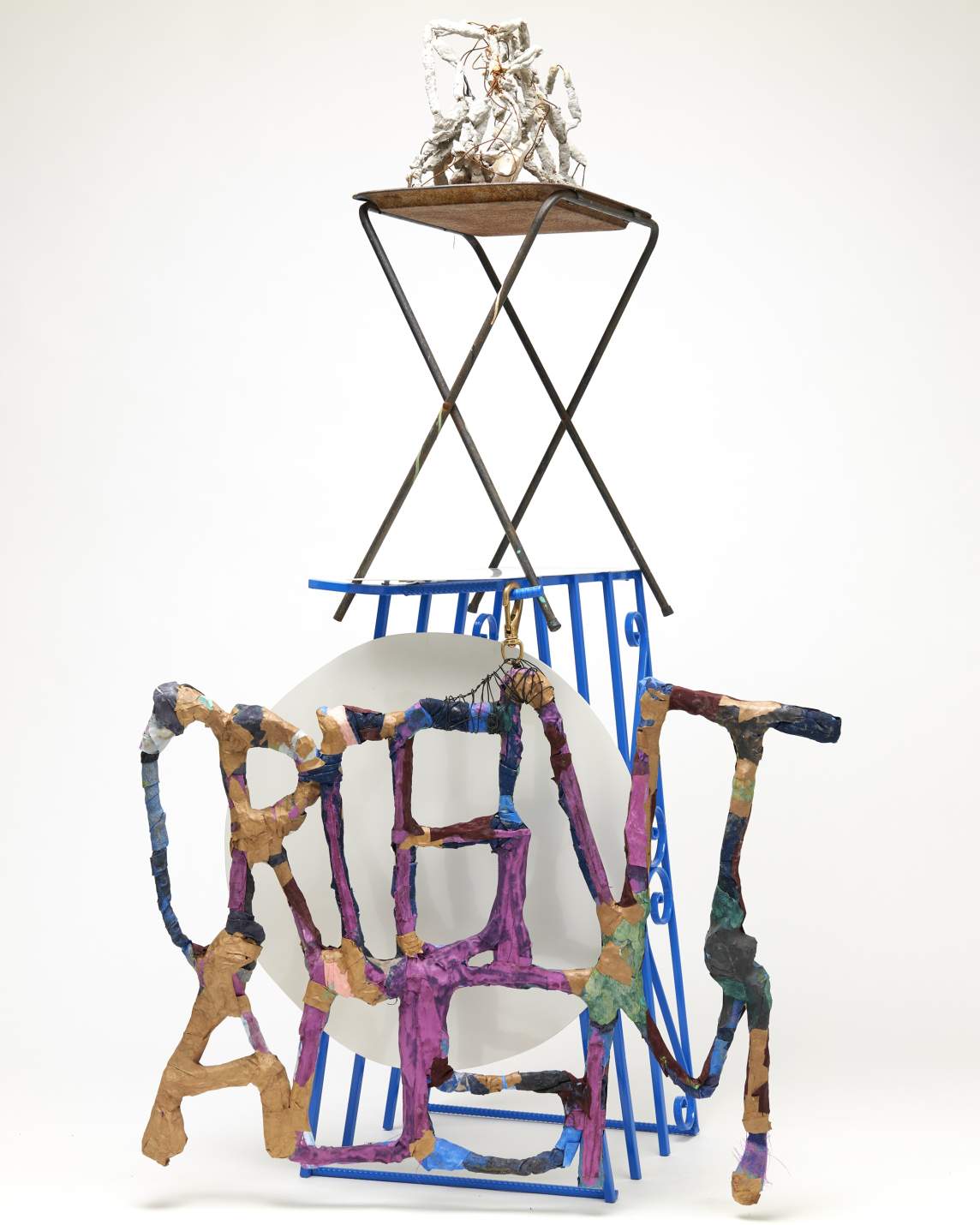
I began making art by learning screen printing in a community center, The Mission Cultural Center that recently closed its doors. My art practice really took root in my house—not in a formal studio, but with my partner, who is a painter. I was starting to work with paper and paper mache—all non-toxic materials with very minimal tools and without specific space needs. I love where one work doesn't stop but continues into another realm and moves into installation. I was working with these thriftstore bedsheets, screenprinting on them and using them as large canvases that could be hung, draped, cut up, whatever… I was painting on the walls in my apartment, until the difference between house and art was less visible. Even now, I’m really interested in artist-built environments as a way of making and being with the work, where it is not just for institutions, but it's very much a part of our lives—not separate.
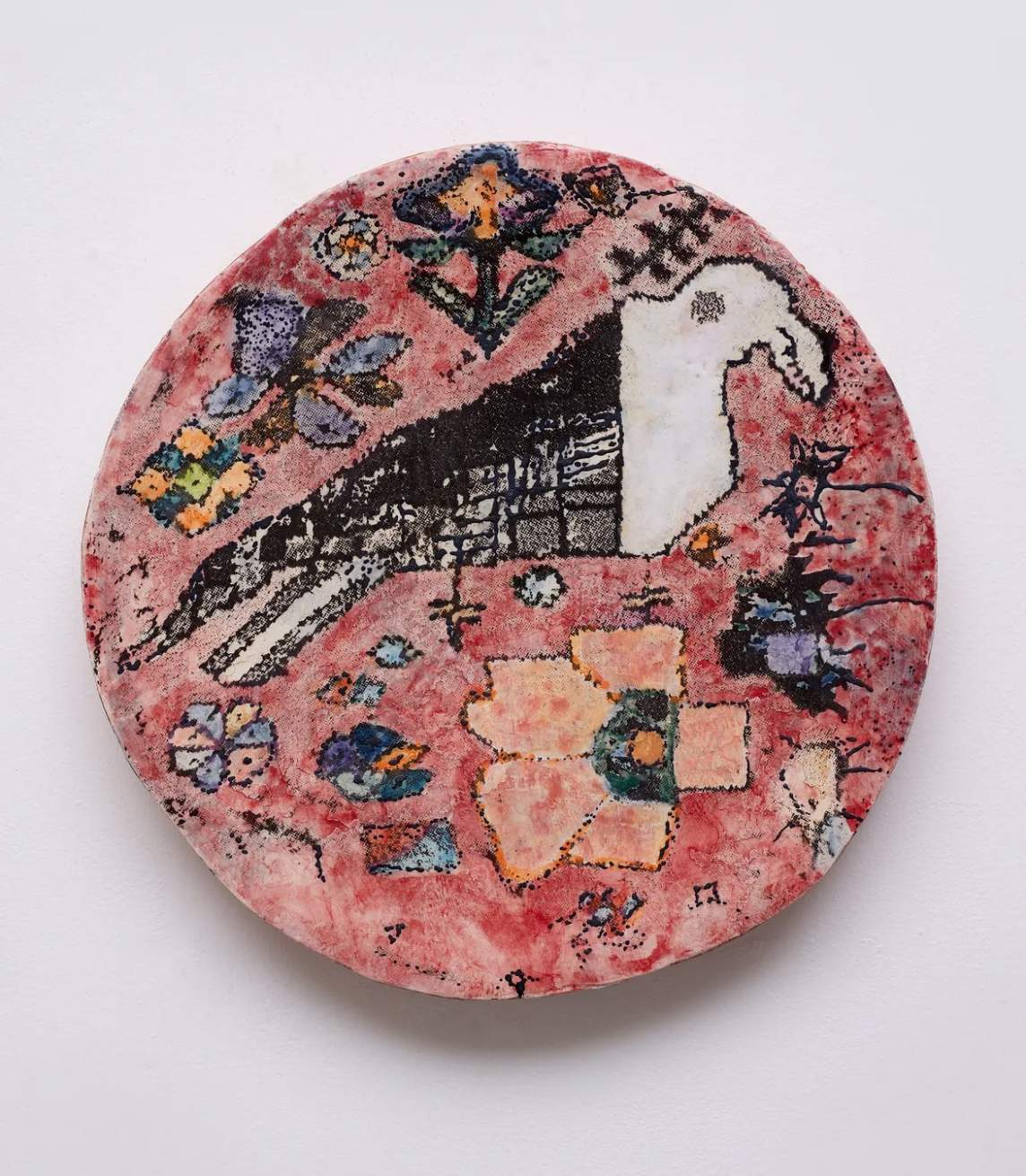
Being in the Bay Area and becoming queer in the late '90s and 2000s, I was part of a very prolific queer community. We were all in bands, we were all making art. There were people putting on plays, poetry readings, so many writers, and all of the things happened together with no boundaries of who was what. That time with friends allowed me a space to make work unmonitored and unjudged by some sort of art world gaze, and my work in anthropology gave me a community of people that cared about equity while also paying rent. So I had a really nice seven or eight formative years, really building that backbone for my practice, outside of school or galleries, to not be self conscious and do whatever felt necessary according to my standards.
I started earnestly making sculpture in 2003, after five years of printmaking. Then in 2007, my partner Alicia and I moved to a house in Oakland with a front and backyard. I started working with cement, paper mache, and found materials, while also incorporating old prints into sculptures. I was able to make a portfolio for grad school with these works. In 2013, with TA teaching funds, I hired someone to make a studio in the backyard out of an existing carport and started making everything in there. Through the SECA Award, I was able to get a kiln.
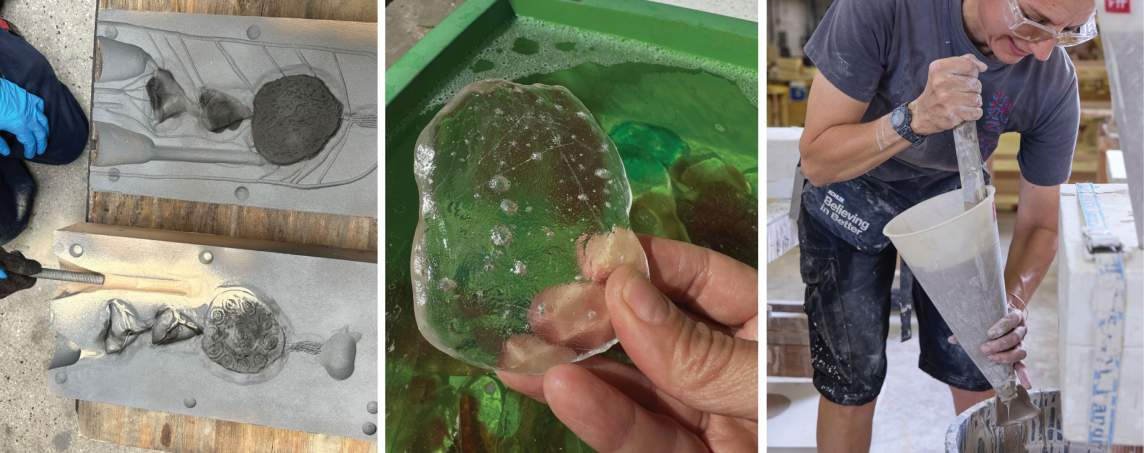
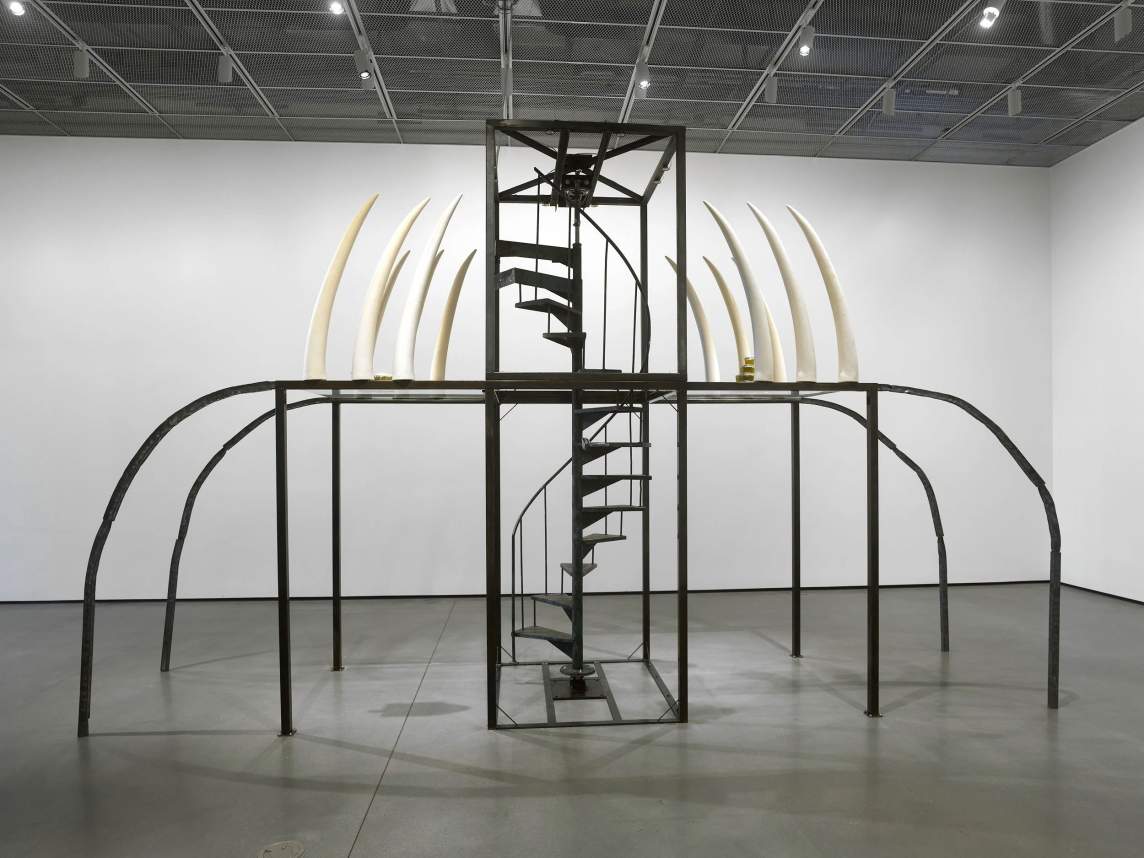
Community centers have been huge for me, in building skills and gaining access to processes and materials. The Crucible in Oakland is a place where I learned metalworking, furthered my welding, learned about casting. And then those sort of self-driven things led to residencies—the Headlands residency, the Recology residency, and then the Kohler residency—which have all been very formative for maintaining my practice.
Over the past five years, my work has been made across four to five different places. Projects come together and get assembled after, sometimes literally in the exhibition space. After doing the residency at Headlands and feeling what it was like to really have space, I had the ability to rent a small space about a mile from my house. I still do my ceramics in the backyard studio, and I do some work at UC Berkeley, where I teach, but a lot of the metal work and the sort of installation-y type construction things happen in this 800 square foot studio space, where I'm able to forge and weld and be loud. Thanks to Joan Mitchell, I can now really think of that as being my space, and I’m pretty excited to see what comes out of it.
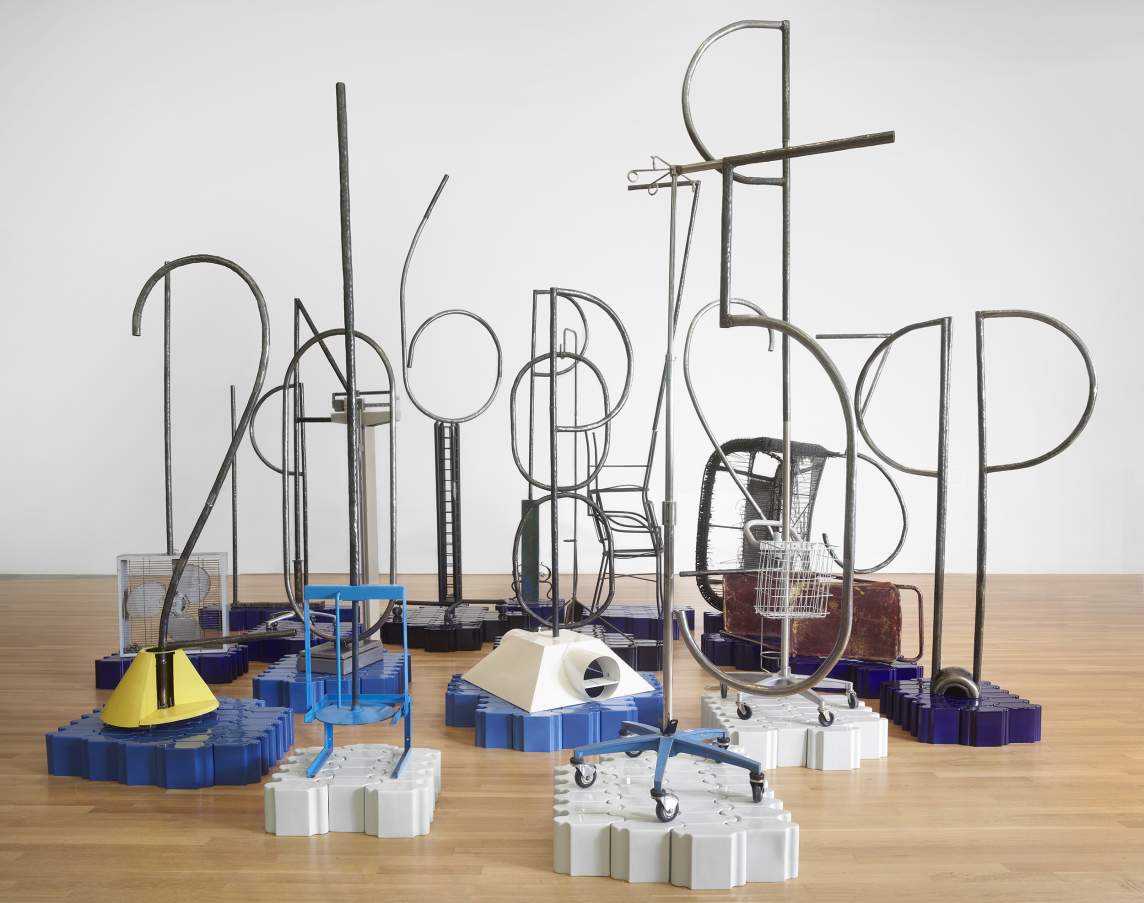
Installations allow me a lot of freedom to adjust and be inspired by the space, and I see the work coming together formally as a reaction to the conditions. When I got the show at the Wexner Center for the Arts, I had the opportunity to engage with a 25 foot tall ceiling lined by glass windows, and that drove the porous and vertical nature of the sculpture. The impetus for that show began with me getting access to some family videos of these huge parties that the Arab side of my family used to have when I was a kid. I'd been pretty distanced from that side of my family—just from life and miles. Coming out of COVID, when I got these videos, it was exciting to hear this collective singing that was very much a part of my upbringing.
In particular, this one aunt of mine would sing songs by this famous singer, Umm Kulthum, who is known throughout the Middle East. My father used to play her on cassette tapes and she was sort of this mythic figure. She was widely known and revered for her elliptical singing style and her concerts that were heard through national public radio for decades up until her death in the 70s. The concerts were hours long and my father would explain how every radio would broadcast those concerts through the streets. That, to me, was very exciting—that the party was happening in the street and involved so many communities across nations. Radio was this unifying and democratic object. Everybody was listening to it.
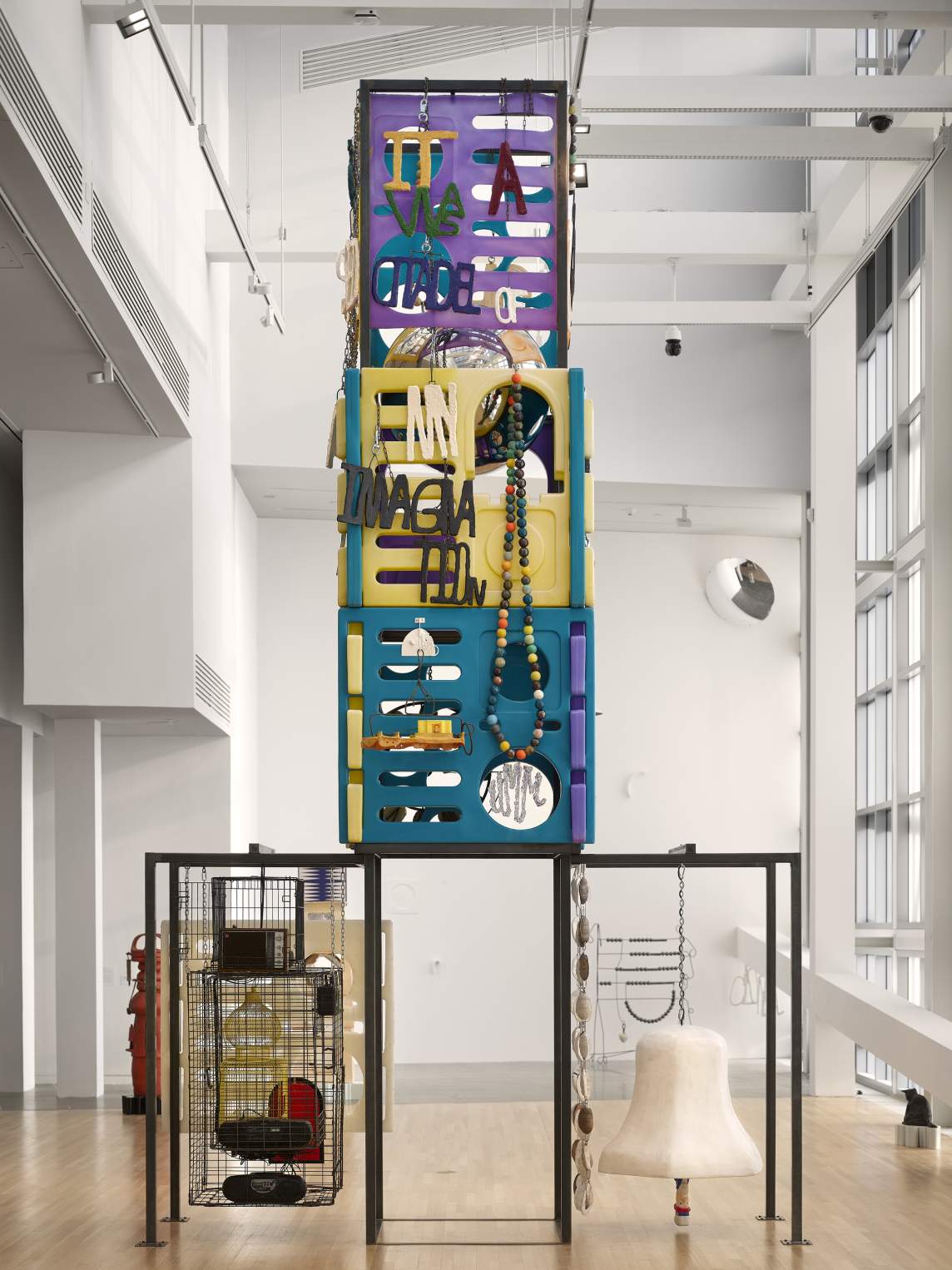
So I knew I wanted to do something around this notion of collective singing through the streets that I felt was so missing, with how much more siloed we were all becoming, in how we were listening to things and watching things. I got the residency at Recology, and part of their model is that artists have access to discarded materials. I was like, oh, I need a lot of radios. I wanted to find radios from different decades because her concerts crossed different decades. And so, the Recology residency allowed me to do that.
Then there are animal cages, which I’ve used in other work as well, and the radios are inside them. There’s this weird child activity gym that I found at Urban Ore, which is a beautiful place here that collects reused materials, where I often go when I’m trying to figure out the next step with a piece. I have no connection to this colorful tiny tike structure, or whatever it is—I don't have children—but formally, it was a material that seemed very interesting. It’s sort of modernist and cubist, its colors were muted from use, and I could lift the whole thing myself so I thought, oh, I could use this as a building block or armature.
So that's what I mean when I say art making. You don't even know the associations that are happening. If you follow the path of the material and the connection of these formal elements, even considerations that are really just about structural needs—getting the piece up and defying gravity—even those kinds of decisions also provide cultural meaning in some way.
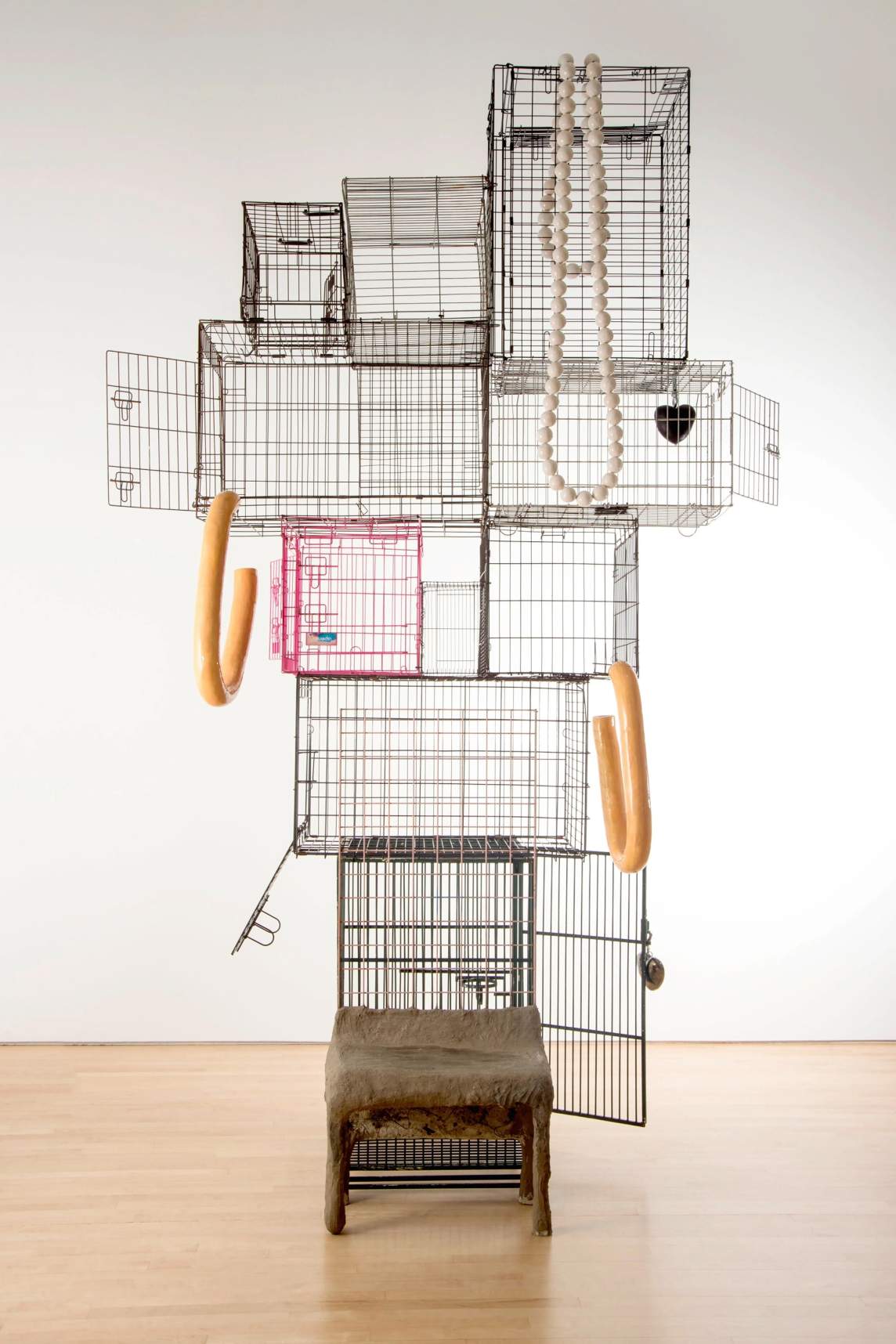
I try to make a few things undeniable to viewers—and I try to teach this to students, too. It's really great to have work that's open-ended, that could be read in a lot of different ways. There’s beauty in that—but through arrangement I try to make certain associations that do not require prescribed knowledge. So with the UMM radio tower, it's ok if the viewer doesn’t speak Arabic, but it's undeniable that you are listening to collective singing coming out of a radio—a device from the past that isn’t streamed—but it's also coming from within this structure of control and confinement and animalness. So it's important that viewers experience a collective group singing defiantly while being contained in a cage. I think in those arrangements, my anthropology background drives the work more than art history.
And then if you were, for example, to read the lyrics that circulate around the tower, then you would know that I am talking about a ruin, a destruction of something. And if you're Arabic and you recognize Umm Kulthum, you'll know that that's her song. You're accessing different levels of it. You'll know that those lyrics are an anthem for many, many uprisings. And I like that. In anthropology, there's so much didacticism, where it’s so important to articulate: what is the question, and this is the answer. With art, it's like, I don't have any answers. I just have many things that I'm seeing that are repetitive and that feel like they pertain to a lot of different communities and cultures. Elements of my work can be very specific, but at the same time, even the most specific thing can be very meta.
I love the art process because it's not just you alone. It's really you engaging with your life in that moment that led to that work. It’s like a conversation.
Right now, I’m really wanting to be in my studio now that I've gotten set up, and I’m so excited about getting to focus on making some work. I have a two-person show that opens soon in Milwaukee, and I’m also preparing for a show in San Francisco in Spring 2027 that’s part of the Further Triennial in the Bay Area. This summer, I’m going to be at Skowhegan as faculty, and my partner and I are doing the Fire Island residency. That's going to be a very interesting experience, because it's this mythic gay summer spot that neither of us have ever been to but have heard about. Alicia and I have no idea what we're going to do there, but we're very excited to not know.
Being in a community of artists and talking about what I’m doing has really sustained my practice over time. The conversations really provide oxygen to the daily fire I’m tending. My work in anthropology supported my practice at first, and now teaching does. It provides a paycheck, but it has also provided access to certain studios that helped further my practice—allowing me to learn to weld, allowing me to fire work in kilns before I had my own. So I really am so grateful to the people in those institutions, which have helped me tremendously along the way—as have community centers and residencies. And now, grants like the Joan Mitchell Fellowship have really helped sustain me. I always tell people, especially younger artists, that you have to be patient. You may be nominated and not get it the first time around. It can be a long, long road, and I don't wish that for you, but the slow incremental reveal was the perfect pace for me. Each step or experience changes me and the work, and that’s what I am grateful for.
Interview and editing by Jenny Gill. Learn more about Sahar Khoury’s work at sahar-khoury.com.