In the Studio: Michael Arcega
“It's this kind of alchemical thing that happens when you abstract a word. It c...

Linda Rotua Sormin is a New York-based artist and 2025 Joan Mitchell Fellow. We interviewed her about her work and creative practice in March 2026. The following is excerpted and edited from the artist’s responses.
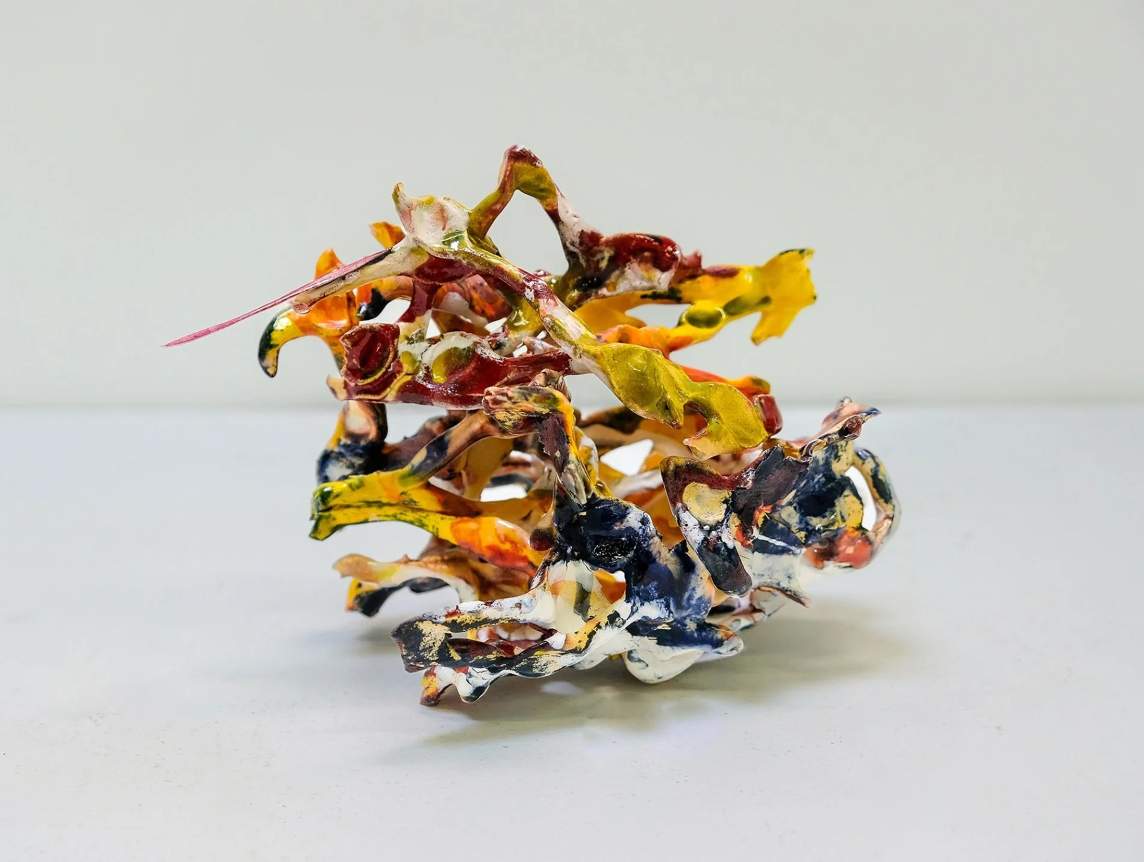
I hand-build porous clay tangles with an appetite for broken ceramic shards, fragments of paper, and other bits of found trash. Behaving more like weather than object, handfuls of pinched coils and hollow forms surge and fall, resist gravity, then soften and shift in firing. Traditional myths intertwine with my family’s history of shamanic and other spiritual practices—lineages severed by colonialism and christianization, and continually reshaped through diaspora.
My process begins with a sense of resonance or dissonance—something closer to sound than image. I grope toward forms that convey tension, and rather than starting with a fixed idea or sketch, I work directly with wet clay, following what emerges through touch and repetition.
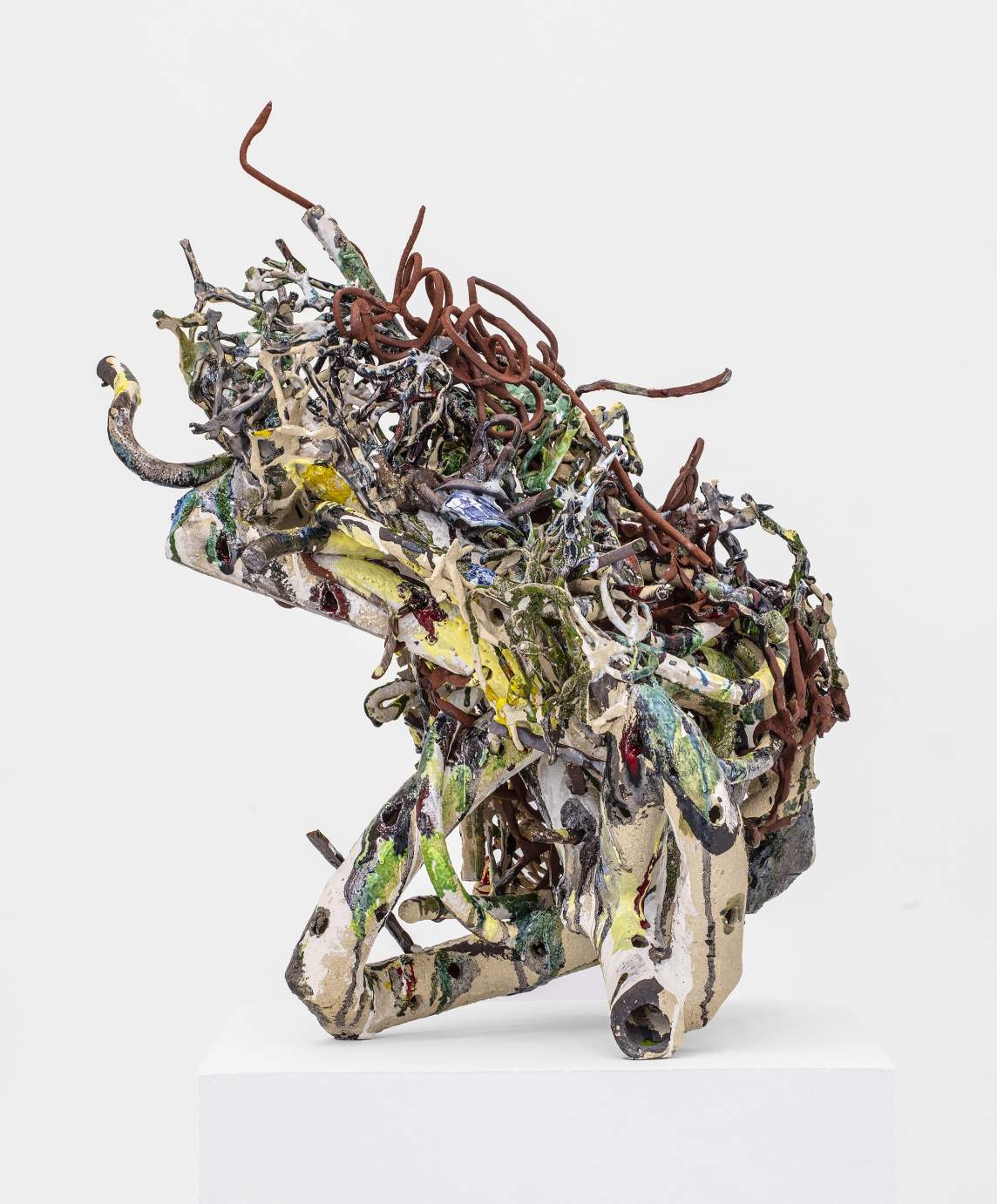
For over two decades, I understood this approach as intuitive or experimental. Through recent research into my family’s history in North Sumatra, I’ve come to see it differently: as a continuation of artistic and spiritual practices I didn’t consciously know I was carrying forward.
My lineage within the Batak people of Sumatra has led me to recognize how deeply ancestral images and ideas have shaped my work—often without my awareness. Figurines I’ve embedded in my sculptures for decades—tigers, roosters, dragons, birds—also appear in historic Batak texts I’ve only recently begun to study. Discovering this has been both startling and moving: the past feels active—reaching into the present to offer forms of knowledge I didn’t know I inherited.
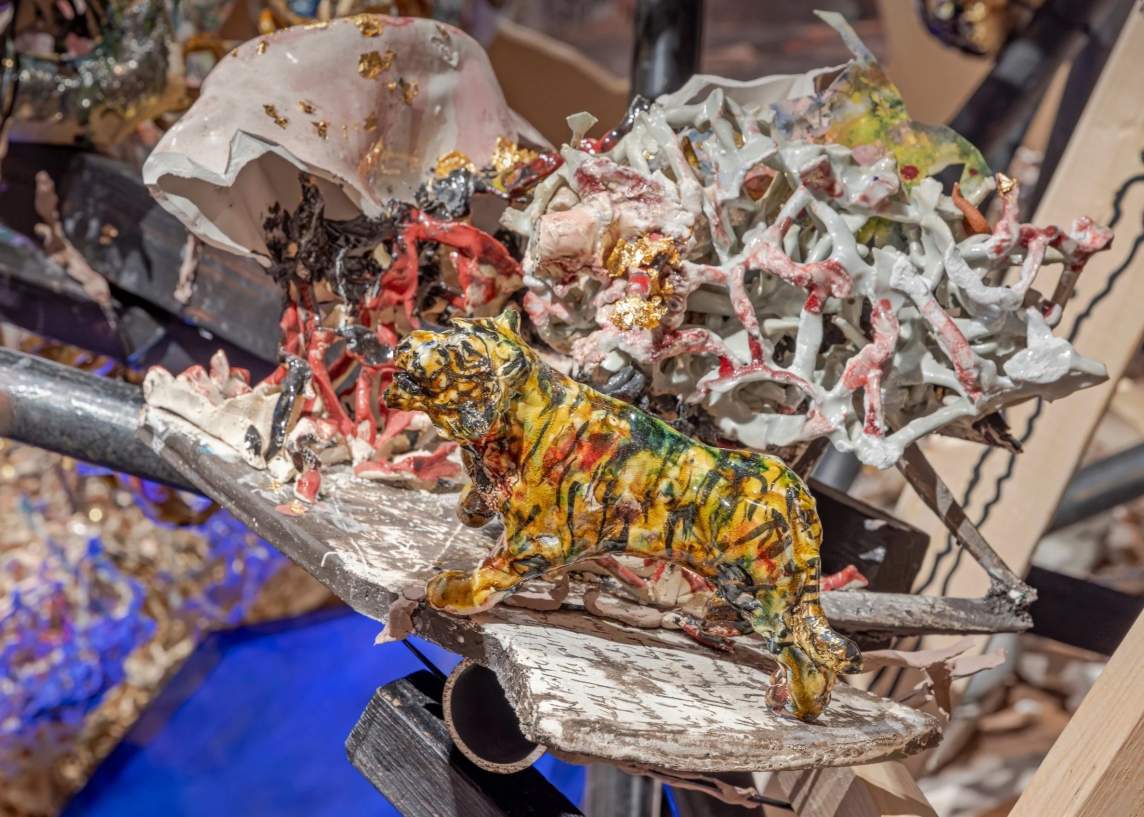
I've been digging into how my Indonesian ancestors made divination books and other ritual objects. This connection between material and spirit has, for me, everything to do with how we might stay centered in the toughest of situations.
Meeting online with fellow artists and scholars in Indonesia, I’m now working to learn and reclaim the language—both written and spoken—as a way of restoring a lineage of knowledge disrupted by colonialism. Through inscribing Batak script into clay and drawings, mark-making becomes a method of study and a way to reactivate this obscured history. This process is shaped by the discovery that my great-great-grandfather was a datu (Batak shaman) who wrote and worked with pustaha—tree-bark manuscripts that were passed down generationally.
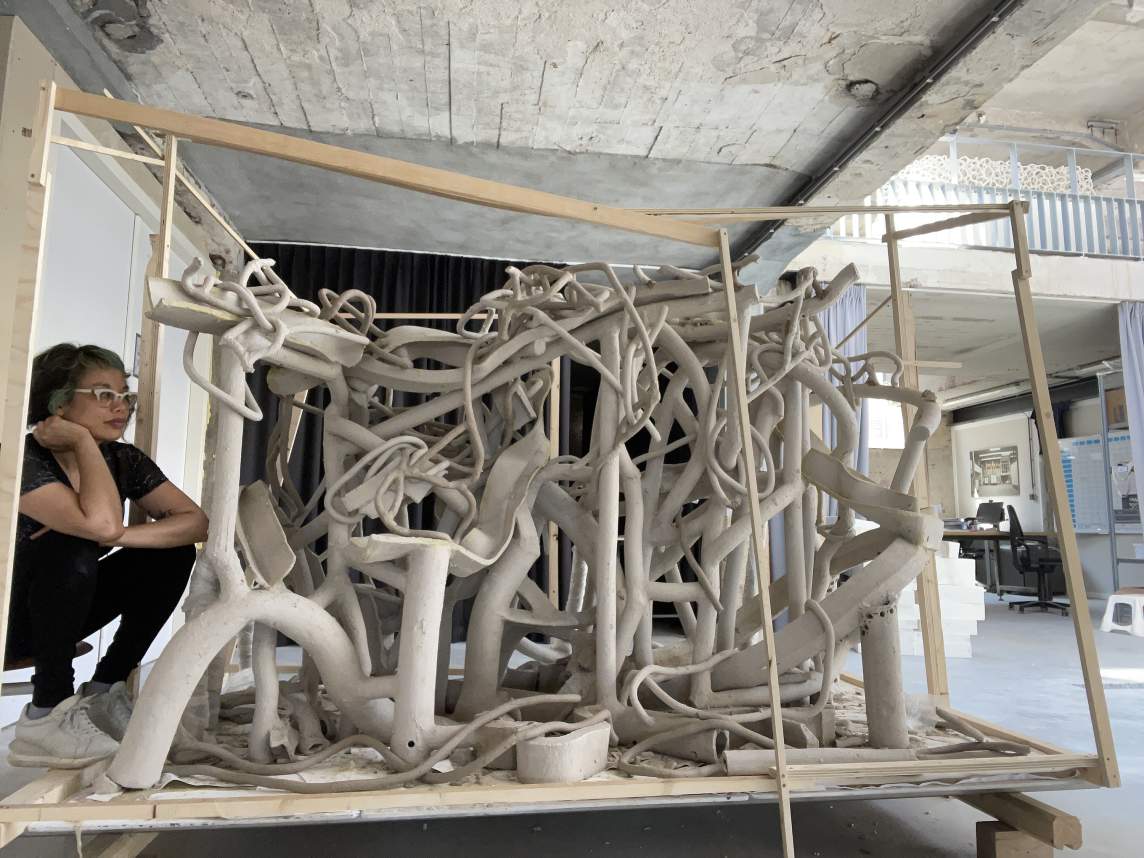
My studio is at Artbuilt in the Brooklyn Army Terminal. I also love working at residencies, because I have the full space, facilities, and extended time to work on things.
My current work brings experimentation in ceramics, sculpture, and installation together with video, sound, hand-cut watercolour paintings, and digital fabrication in a multi-sensory environment. In the installation, Uncertain Ground at the Gardiner Museum, visitors travelled on boardwalks and could sit or lie down on the pillowed shoreline of magnified clay terrain—nestled into my interpretation of a molten lake and the volcanic eruption that created it 46,000 years ago.
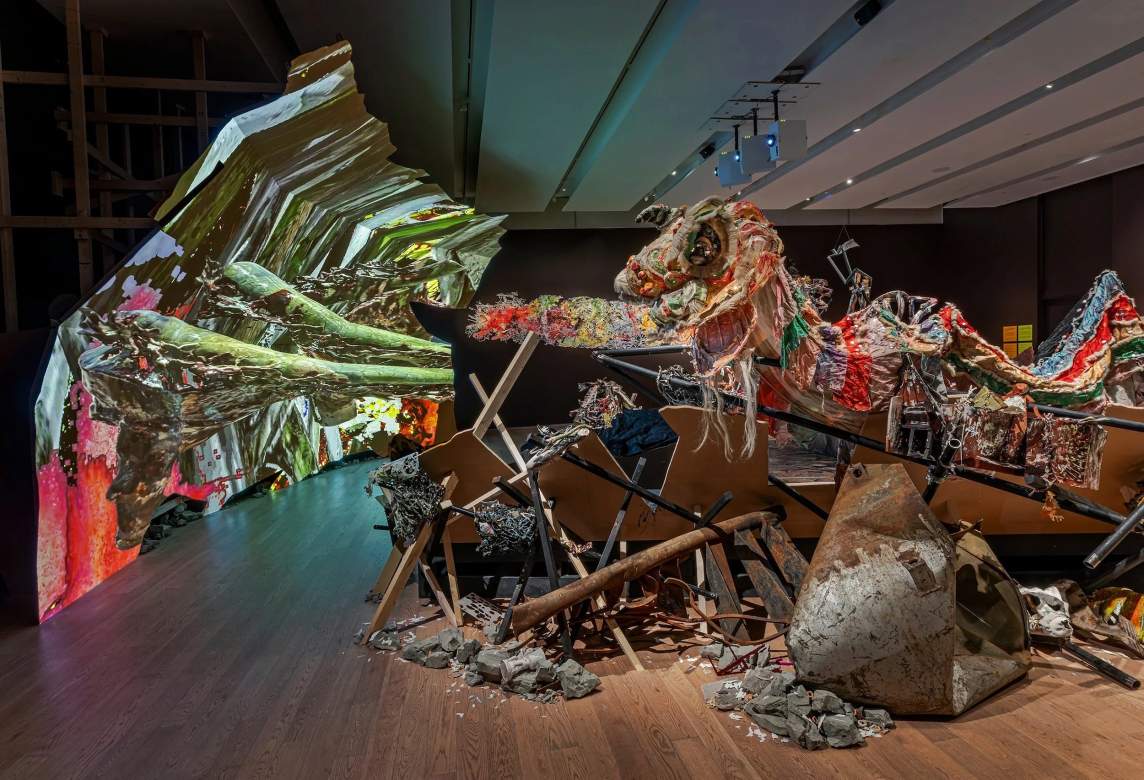
Jewelled glazes melt as watercolors pool in cut paintings, drawings on vellum and clay crumple next to glitchy video of an awkward puppet, a goddess, an ancestor. Throughout this unruly terrain, Leda clay, a thixotropic clay from Ottawa, is strewn under the boardwalks and video screen, untethering old stories, as the voices of close and distant relatives piece together a fractured yet tenacious oral tradition. Thixotropic clay is a material that loses its solidity and becomes more fluid when it is shaken or hit with force. Once it is again at rest, the clay returns to its original solid state. This clay can cause landslides and buildings to collapse in earthquakes. Hence the title: Uncertain Ground.
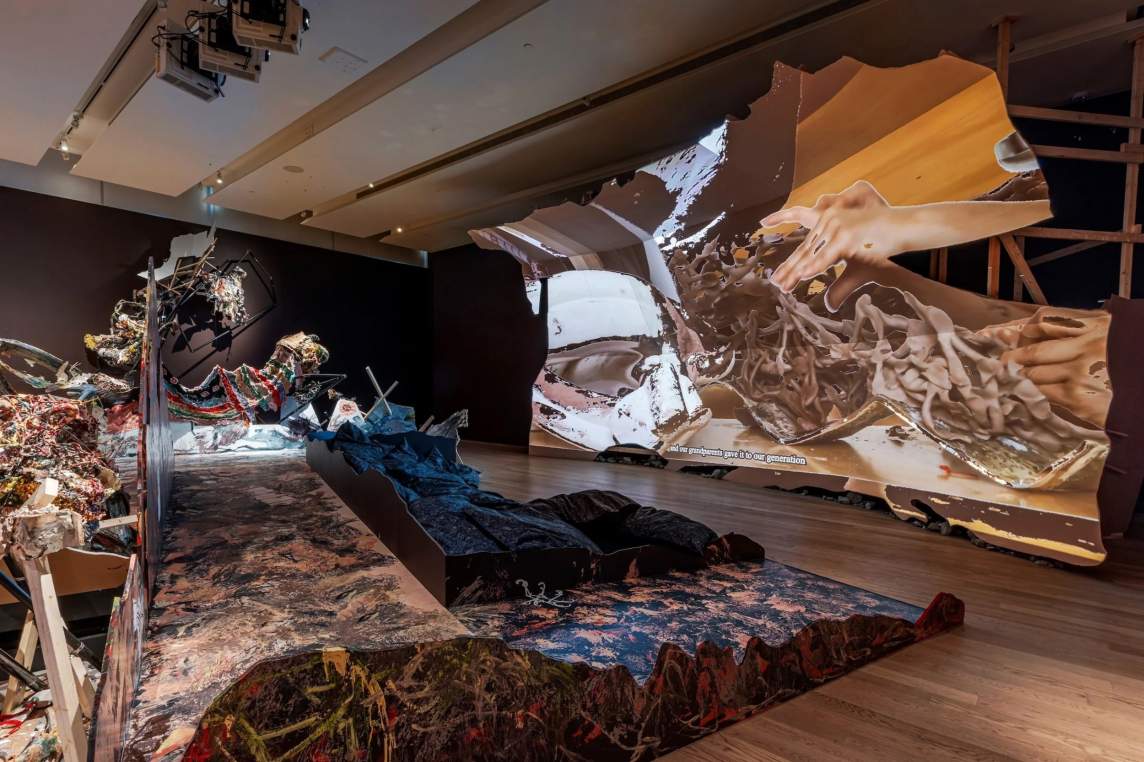
As you move through an installation like Uncertain Ground, you might recognize fragments—a porcelain leg, a mythological dragon—alongside forms that are more evasive: frothy clouds, shifting accumulations of cut paper, 3D misprints, a knot of hair from a stallion’s tail. These elements surface in unexpected ways—peeking from beneath a boardwalk, pressing through architecture, hovering at eye level, or swarming overhead. I hope these encounters activate your own images and memories, generating new stories while connecting to older myths and archetypes.
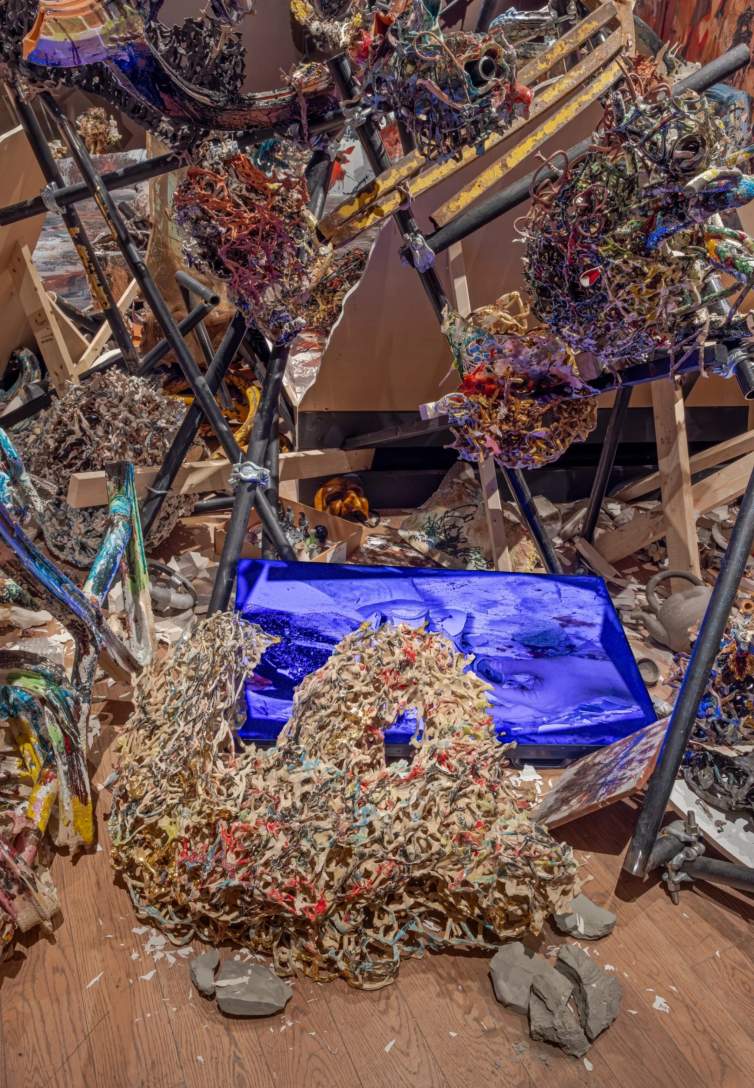
I sometimes think that I worked for so long in abstraction because I was at a loss for words to describe the dissonance and precarity, intricacy, and complexity I was experiencing. It took a long time before Batak stories and origin myths—and especially the shaman’s books—seemed to appear in front of me, so I felt strongly compelled to learn the Batak alphabet, and to sound out the words in the language of my ancestors. My Californian cousins, while fluent in Batak, had never heard of the books, and were as surprised as I was to learn that datu (the shamans) were literate, and recorded their sacred knowledge in pustahas, long books made from pounded tree bark.
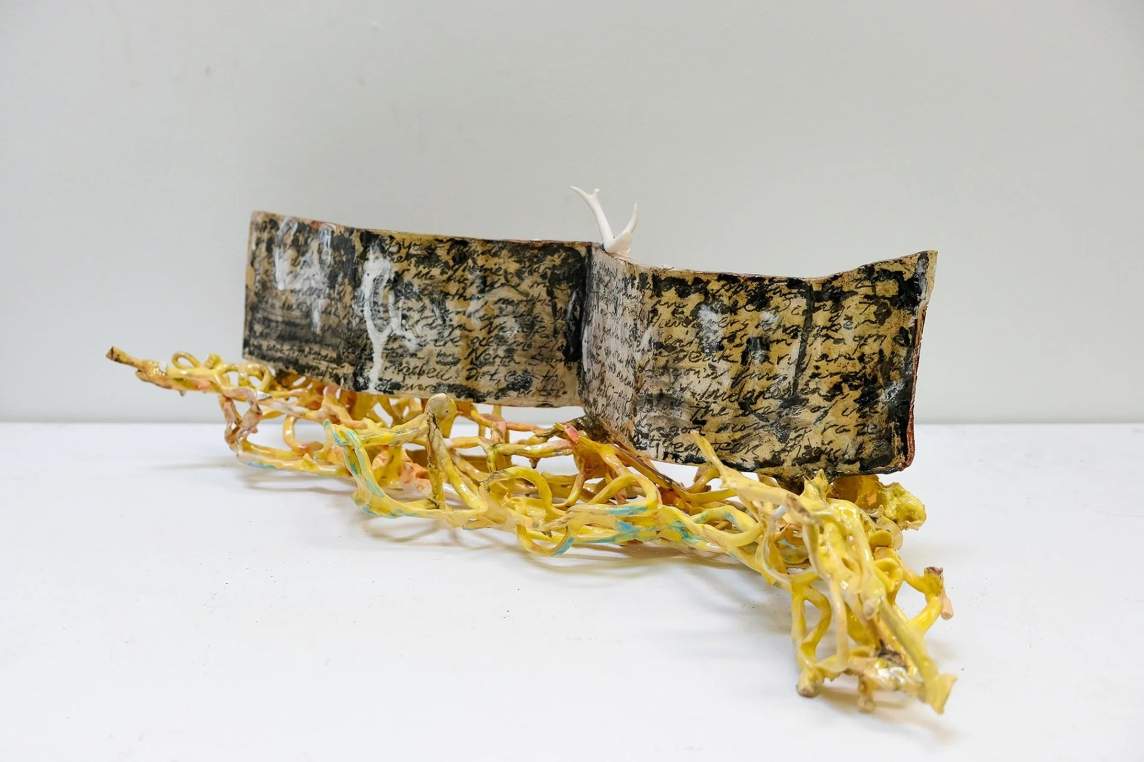
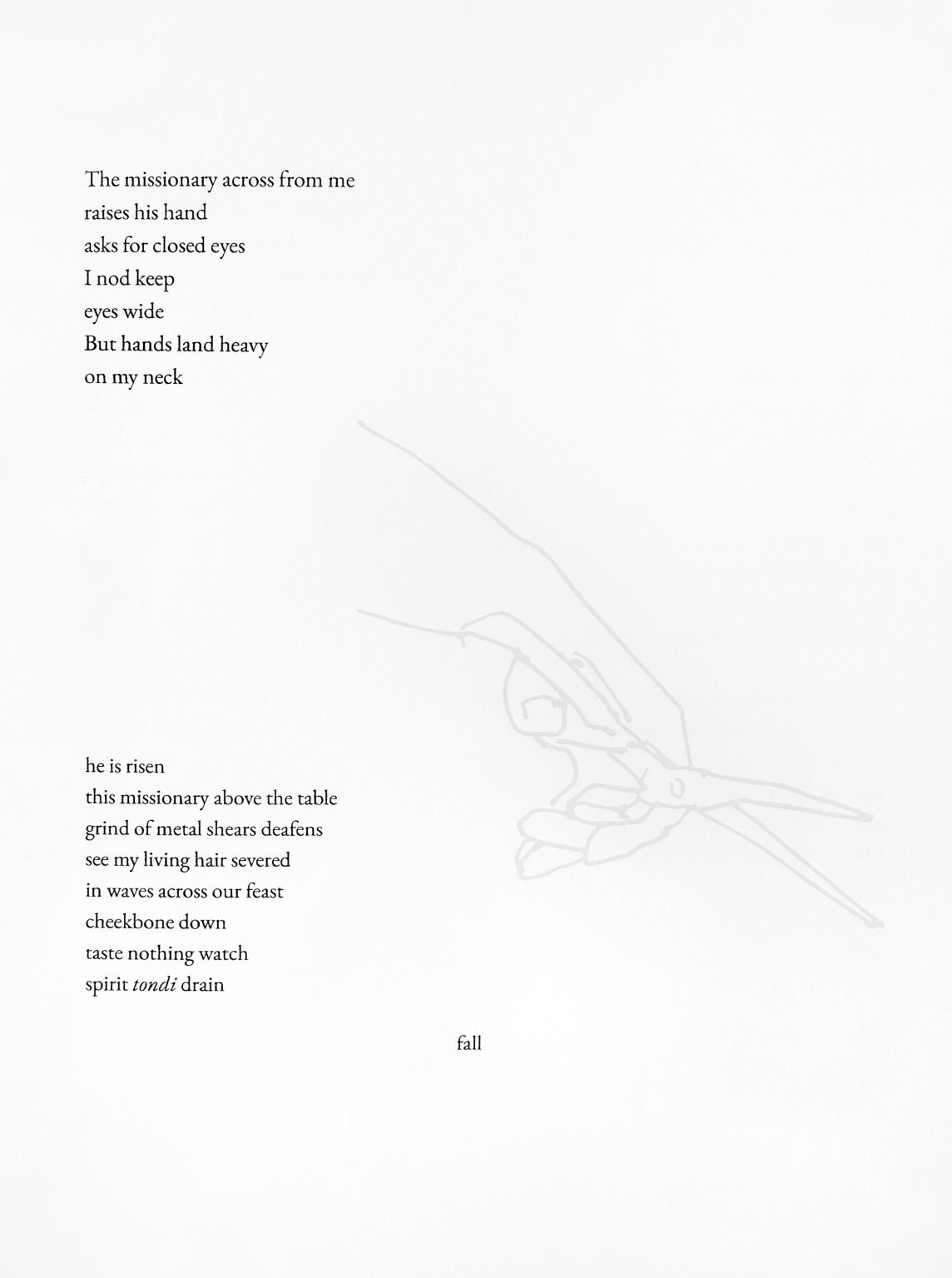
I learned from one of my cousins that when the European missionaries came to colonize the Indonesian people, they were trained to target the shamans, knowing that if they were converted, their communities would follow. My great-great grandfather, who was the shaman of his community in Tarutung, refused to convert. The missionaries then asked him if they could come to his home for dinner and he agreed. A meal was prepared for the guests, but before food was served, the missionaries asked everyone to bow their heads and close their eyes for prayer. As my great-great-grandfather bowed his head, the missionaries cut off his hair. For shamans, tremendous power is held in their hair. When my grandmother told this story to my cousin, she said that my great-great grandfather fell to the ground, traumatized. The forced conversion changed everything—the shaman’s sons, including my great-grandfather and his three brothers, all became Christian preachers. The spiritual leadership of the shaman transformed into a different kind of spiritual leadership.
This violent severing from Batak cultural identity is something I'm trying to represent in video and in the broader work. I’ve tried in many ways to represent this feeling of loss and tragedy through form and material, and am realizing that language is a way I can be more specific and direct about this content in my work. As I prepared for the Uncertain Ground exhibition, I wrote a collection of poems to give voice to the diasporic experiences of my family. It was published by the Gardiner Museum to accompany the installation.
With my most recent work, I’m moving toward a more intimate scale—developing smaller works that bring sound and movement into closer, more concentrated encounters. This shift will be evident in works I’m making for an upcoming exhibition at Pratt Munson in Utica, NY. The show opens this fall, and I’ll be presenting alongside painters Stephanie McMahon and Patrick Brennan.
The working title for this body of work is Swim the same river, and it will be an installation that traces my family’s diasporic history through the cultural practices, oral traditions, and mythologies of my ancestral homeland in North Sumatra. As in other recent works, I’m inscribing Batak letters and words into raw clay slabs, as well as automatic writing that pours and slips. This script is embedded into the material alongside recordings of my voice and others. Kinetic mechanisms will animate drawings and sculptural forms, introducing tension as they twitch, turn, fracture, and transform. In this make-shift theatre, loss becomes tangible while language—learned through the hand as much as the voice—persists as an embodied site of ancestral recovery and unfolds as a shared experience.
Interview and editing by Jenny Gill. Learn more about Linda Rotua Sormin’s work lindasormin.com.