In the Studio: Michael Arcega
“It's this kind of alchemical thing that happens when you abstract a word. It c...

Juvana Soliven is a visual artist and educator from Honolulu, Hawaiʻi, and a 2025 Joan Mitchell Fellow. We interviewed her about her work and creative practice in February 2026. The following is an edited transcript of that conversation.
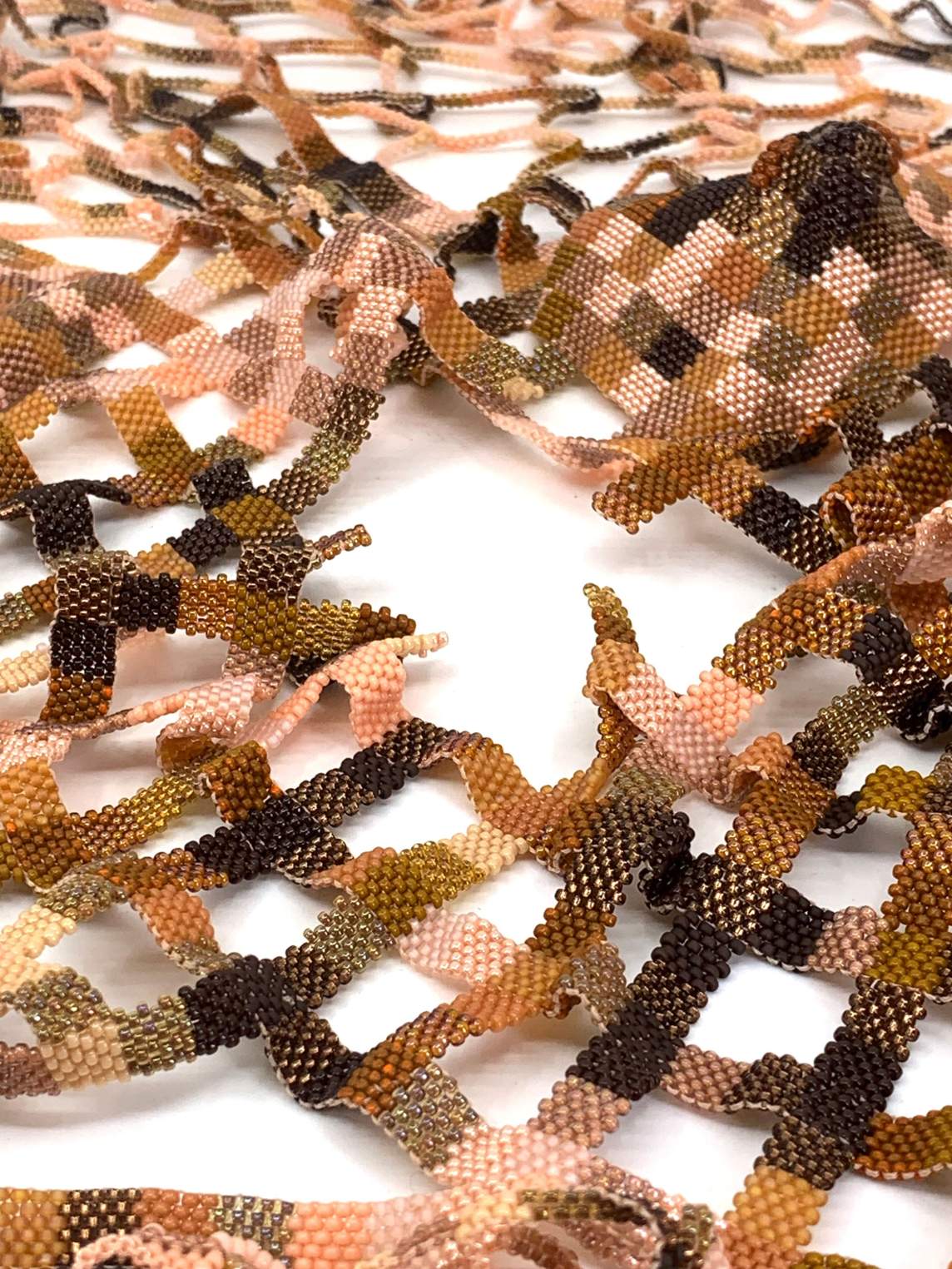
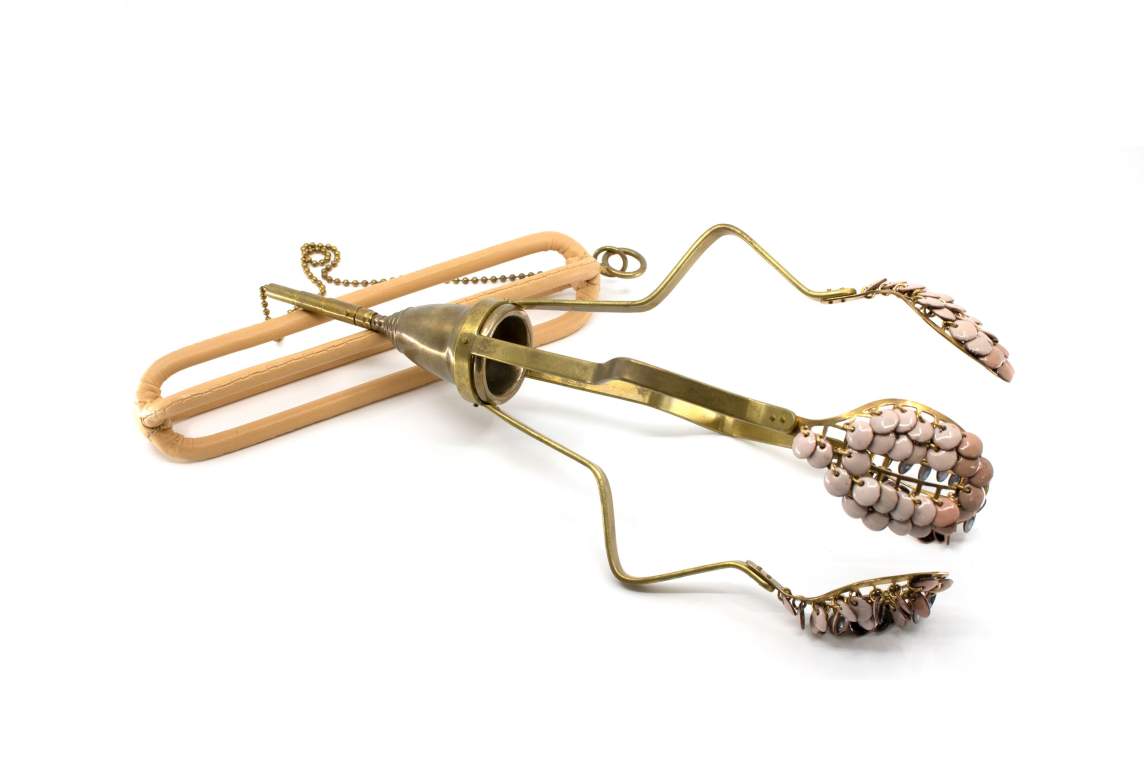
I work in themes that have to do with bodily autonomy, intimacy, women's positionality, and human rights through a craft-based lens. Many of the objects I make result in amalgamate forms of the censored body, medical implements, weapons, adornment, and traps. I use the pixelated censor broadly in my work and interrogate it through the tedium of craft practices—beading, weaving, paper crafts, metalsmithing, enameling, and sewing—as a meditation on labor, protection, and the endless work needed to fight for what is ours.
In much of my work, I've been invested in craft processes because of the way that craft, historically, has been kind of looked down upon, or thought of as artisanal work that has lesser value than art. I've had friends who don't like the label of “craft,” because it separates it from art too much. But I am interested in using the language of craft because of the way that it calls on community, while “art” practices can be more invested in the idea of this lone genius artist that brings forth something from within them. I think craft has this ability to pull from community and not just look inward. And that's something that I'm really invested in—this idea of inherited knowledge that is informed by the people around you. For me, that's a kind of heritage that relies on labor by women and people of color.
When I think about the histories of craft processes, I think about my maternal grandma, who taught me how to sew. My grandmas on both sides were seamstresses, so they were caregivers in that way to our families—people who mended things. Throughout the different craft practices that I engage in, mending and nurturing are always present. It takes time and attention, where you can't help but nurture the process. When I'm pulling forms out of my work, weaving and working things by hand, I think about the making histories and object histories, and how they may be re-presented through different material meanings.
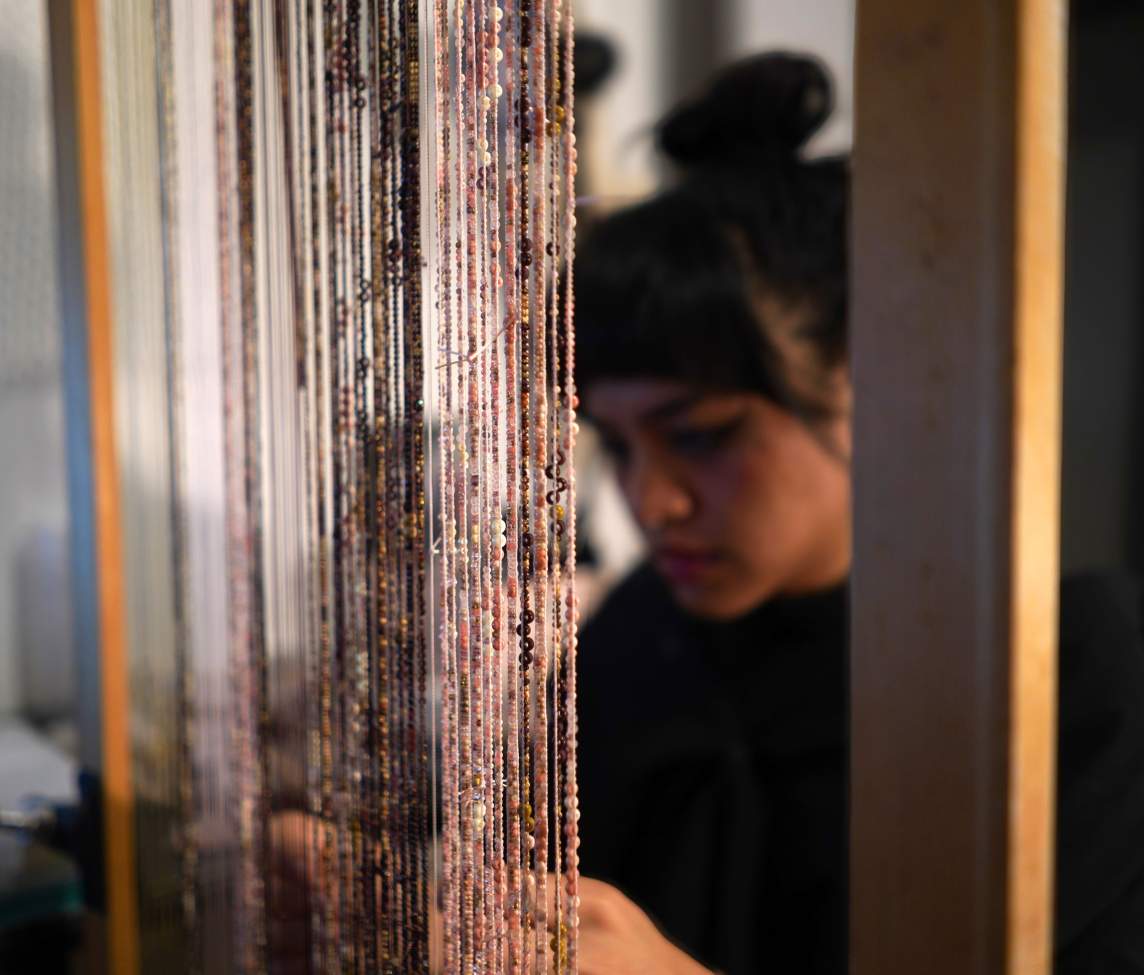
I don’t have one set medium or way that I start working on a project. And I think what's nice about craft—whether it’s metalsmithing, beading, or glass work, which I’m exploring right now—is the slowness of it. Having my hands in the work is really important because it allows me to build intuitively. I'm able to take time to see where it goes.
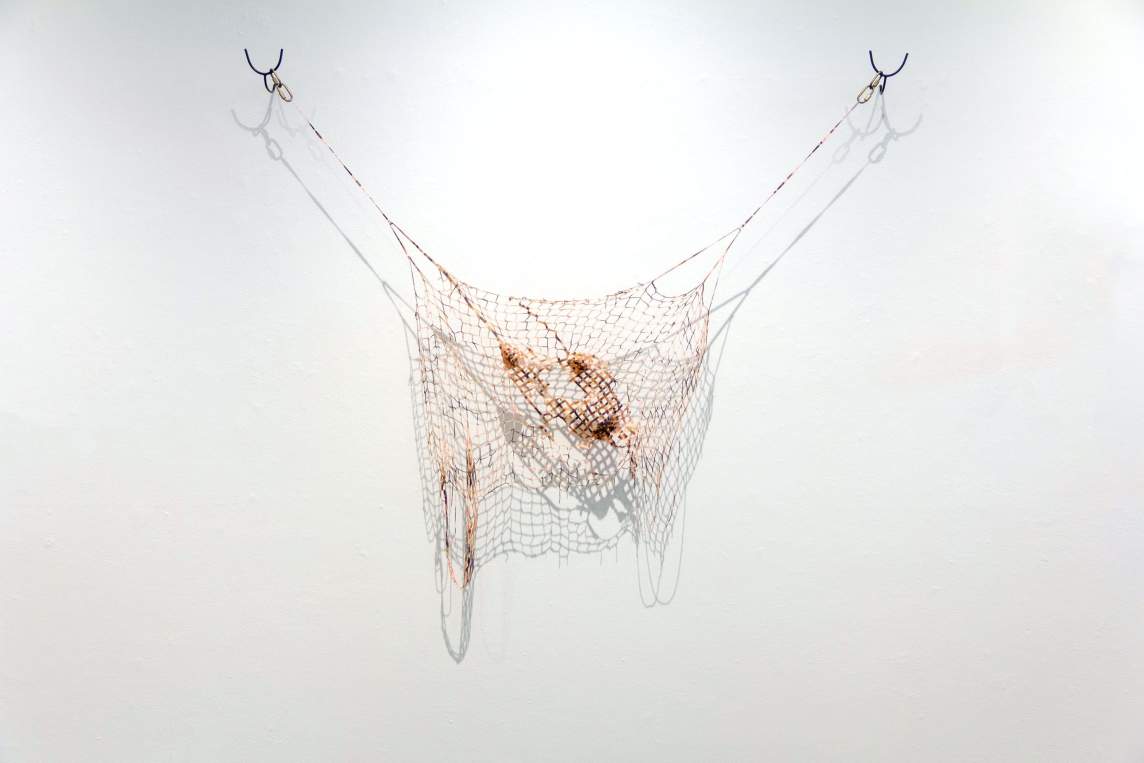
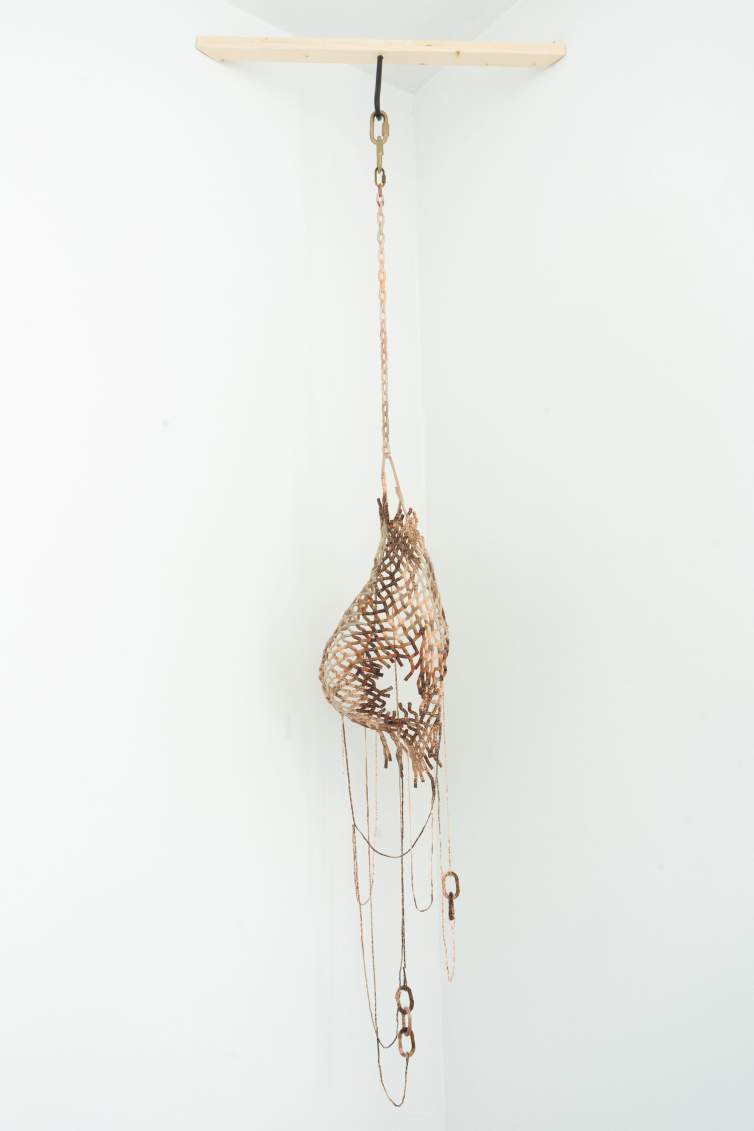
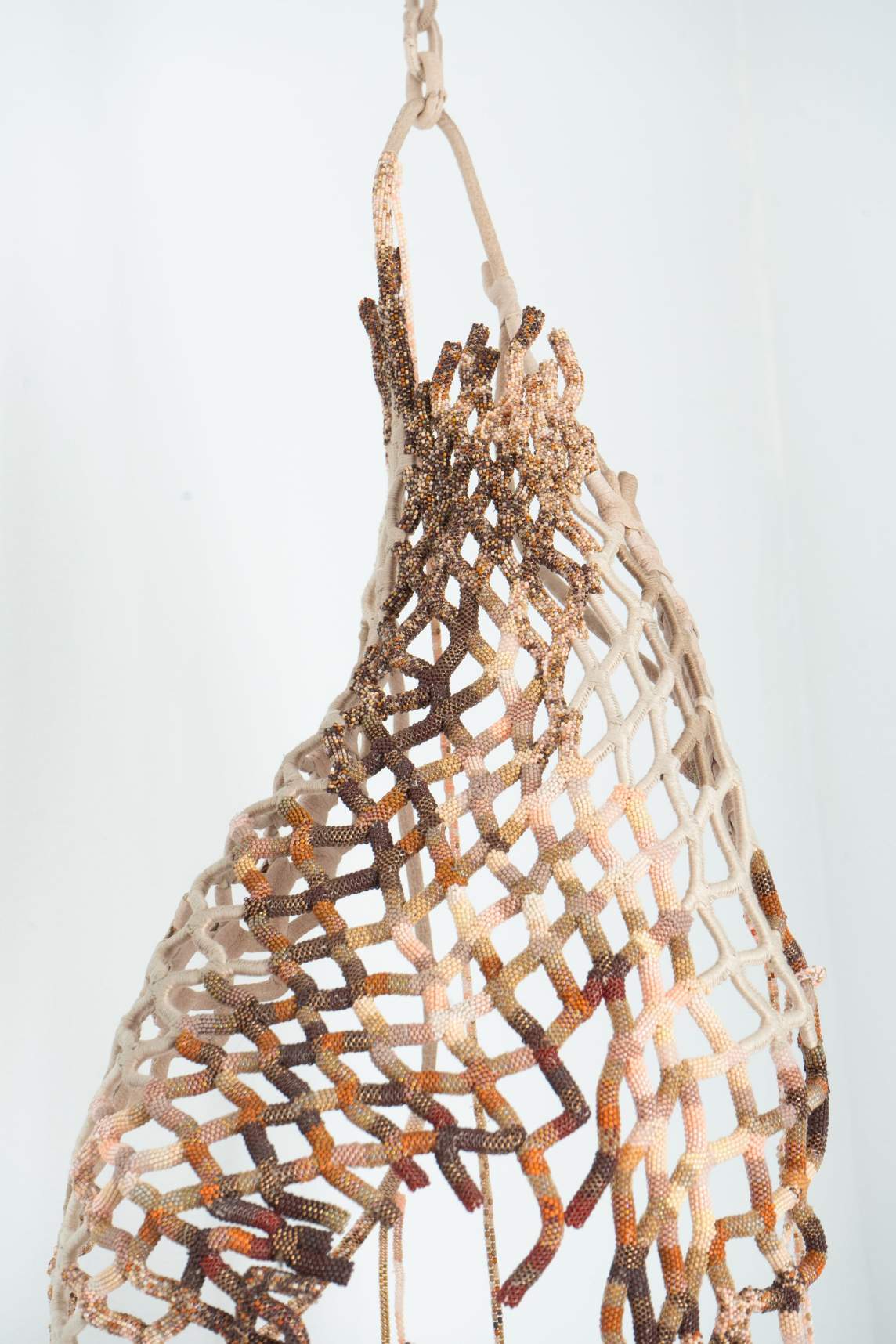
Sometimes the work isn't fully developed in my head when I start working, but as I see what I'm doing, I can respond and improvise. There’s a piece called Control, which was recently acquired by Williams College Museum of Art, that kind of made itself in this way. I knew that I wanted to make an abstracted body that almost looked like a flayed skin, something that represented a rupture of sorts, but I didn't know exactly how until I started making it. It's a beaded, netted sort of abstract bodily piece that I just started sewing, bead stitching these pixelated forms in a grid-like pattern and then expanding to more of a netted pattern. I think being able to see it up close as I was working on it—being able to hang it up and see how gravity took hold of it—dictated the next possible steps. Because of the slow process of beading, I was able to step back, adjust, readjust, add here and there until it felt like it was complete. And that was months of work—the whole time I was making it, I was like, "Oh God, why am I doing this to myself? This is never going to be done." But throughout that slow process, whenever I'm beading a big project, I'm like, "Well, this is something that's going to take forever, but I'm committing to it and I am making this. And at this point I have to see what it's going to be."
That piece, Control, was made in response to the US Supreme Court overturning Roe v. Wade in 2022. Control over our bodily autonomy, our rights toward self-determination, our gender expression, our narratives—control over what is inherently ours is under attack. Censorship, much like our bodies, relations, and genders, may be weaponized. It has both the power to protect the privacy and humanity of those vulnerable to scrutiny and the power to render perverse and profane what ought not to be.
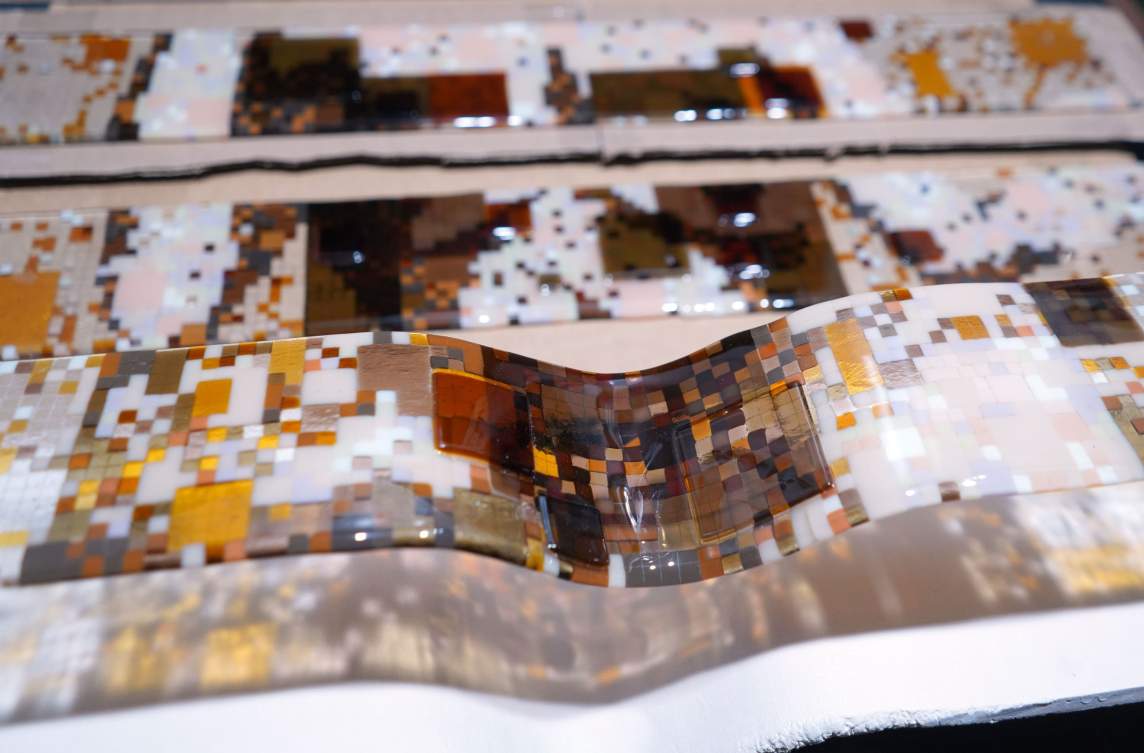
Lately, I’ve been working in fused glass, which is a new venture for me. I'm grateful to the Joan Mitchell Foundation for that new exploration because the Fellowship has been paying for the classes I've been taking in glass. Before starting this work in fused glass, I've already been doing a lot of weaving with glass beads to create these pixelated censored objects. The glass beads are tiny, so they are like pixels within pixels within pixels. I wanted to start working in fused glass to create larger pixelated forms, as a way of exploring space and installation—really expanding my practice from an object-oriented practice to more expansive space. With the glass, I’m also working with transparency and light as other factors to play with. This new work will be part of an installation at an art space in Hawai’i called Aupuni Space, which will be up from June to July.
Even though I've ventured into glass fusion, I still love beading and metalwork, and I integrate those processes into the practice as well. I have a show that opens in May at Art League Houston that's going to be a lot of older works and some new pieces that are in conversation with each other, because so much of it has to do with bodily autonomy—specifically women or femmes' positionality within the patriarchal society, and how we navigate space.
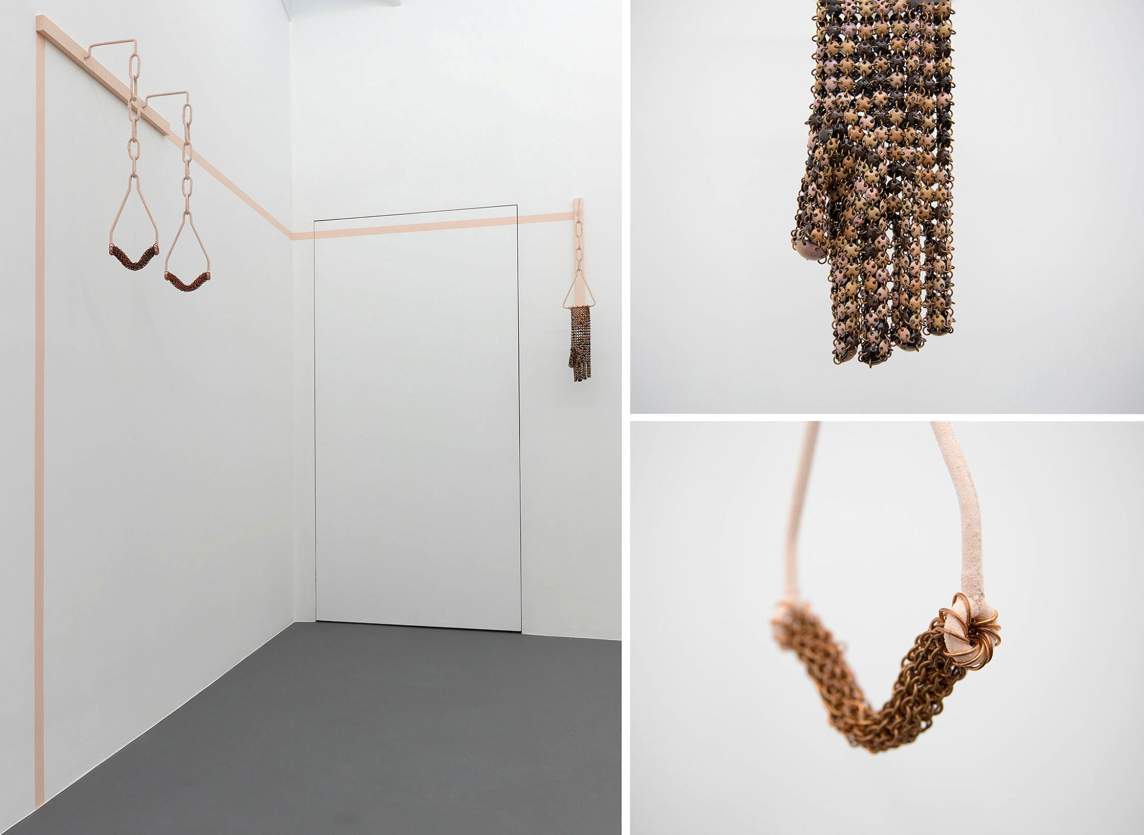
Art practices have given me a language that I can use to help others communicate their truths. I don't think that verbal communication is adequate all the time, and some of the themes that I work with are really difficult for people to think about, especially related to the history of control over women’s bodies and confronting the patriarchal violence that people face. I believe that the themes in my art could be more accessible through looking at something with beauty and detail, something that seduces you enough to start to understand and question the meaning behind the form, to open up further lines of dialogue. And then the repulsion comes afterwards. People often tell me, “This is so lovely, and it's luscious, but also my body feels pain looking at this."
Even if someone gets riled up and upset about my work, that also feels successful, that it wasn’t a passive experience. Even if you're moved to anger when looking at my work, I'm okay with that. That makes me feel that this language that I've been working through in my work is effective.
One of the motivations behind the work that I put into my practice is being able to come back to the community with something to offer. In Hawaiʻi, we complain about this brain drain—this pull to the coasts of the United States for more opportunity. So many brilliant people feel the need to leave to succeed, and when I see them visit, they're starved for the community that they left, but don’t know if it’s feasible to come back to it.
I have been lucky to have good mentorship in my community, so I went to grad school with the idea that I had to leave Hawaiʻi to come back home more fully realized, with something to offer back to the community that nurtured me. Through teaching and through my own studio practice, I can be an example for young people here. Representation does matter, and it's hard for it to seem like it matters when the people who are in positions that can change the course of your life aren't from your life at all and don't resonate with you.
Maybe five years ago, I hired a couple of my former students—two young Filipino women—to assist in my studio for a show that was coming up. I think seeing that I was able to provide work for these artists who previously weren't paid for a lot of their labor was something that was empowering to them. One of those women who I brought in to work with me told me that seeing me in higher education—someone whose family has the same immigration story and same cultural learnings—was like living proof that she could also exist in this world the way she is. It meant even more, then, that her labor was valued by someone who looked like her. That's something that absolutely motivates me to keep existing in that way, and to continue expanding. Showing up for myself in my studio feels like showing up for others as well.
Interview and editing by Jenny Gill. Learn more about Juvana Soliven’s work at juvanasoliven.com.