In the Studio: Michael Arcega
“It's this kind of alchemical thing that happens when you abstract a word. It c...
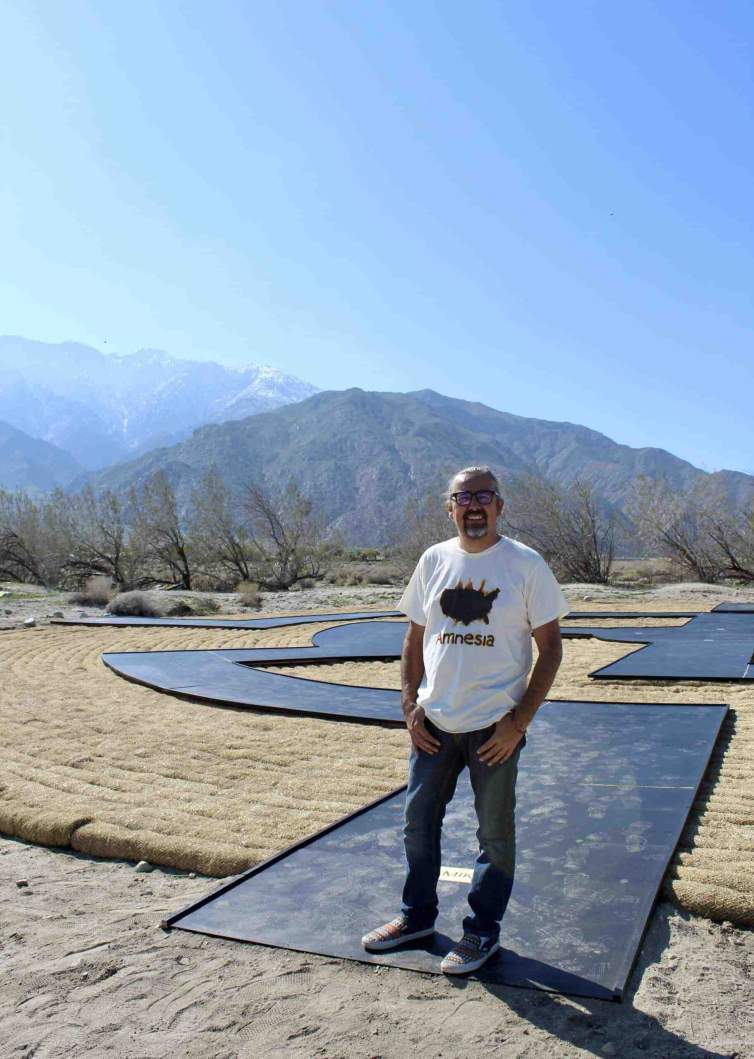
Gerald Clarke, a multidisciplinary artist and enrolled citizen of the Cahuilla Band of Indians, is a 2025 Joan Mitchell Fellow. We interviewed him about his work and creative practice in February 2026. The following is an edited transcript of that conversation.
When I was in college and grad school, I wanted to be an artist. Just an artist. And people were always asking me, "Do you do Native American art?"—like they have an idea of what that is. They think of certain colors, certain designs, certain imagery. And I would say, "I don't do that."
Then, as I got out of graduate school, I was just making my stuff and kind of feeling it out. I met other Native American artists and realized that there is a kinship between their issues and my issues and what we were dealing with. In particular James Luna. We met in Dallas, even though our reservations are only about 40 miles apart in California. We became really close friends, and he became a mentor to me. His work was the first time I was like, "Yes, I connect with this." So I embraced that identity as a Native artist.
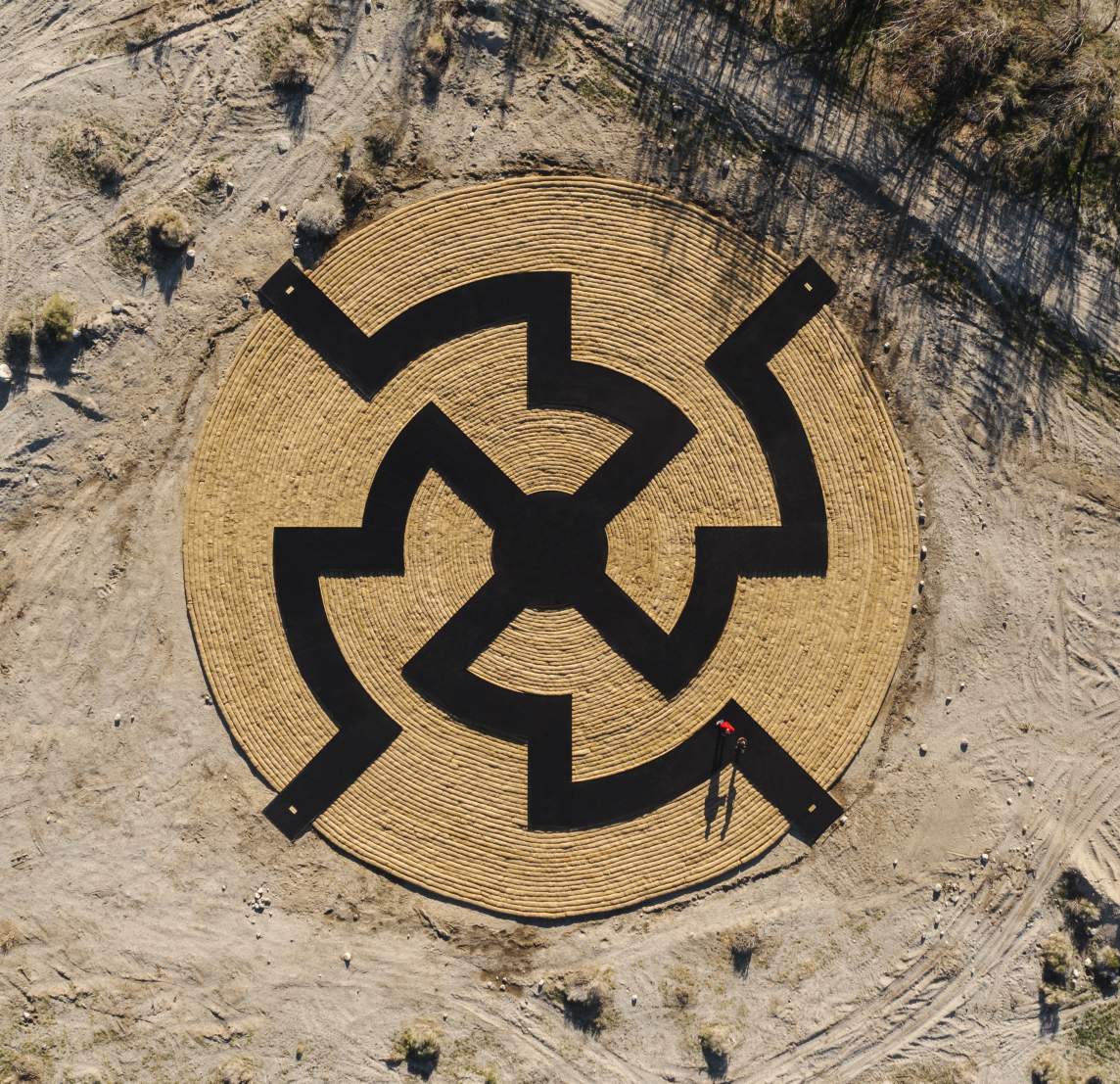
Now, as I've gotten older, I've realized that not only am I a Native American artist, I'm a Cahuilla artist. I'm part of my community and we have a very specific worldview. I've become more specific in my identity, as an artist. But at the same time, one of the things I've always said is, the more personal you can make something, the more universal it becomes. Ultimately, that's what I try to tap into—not necessarily what makes me Cahuilla, but what makes us human.
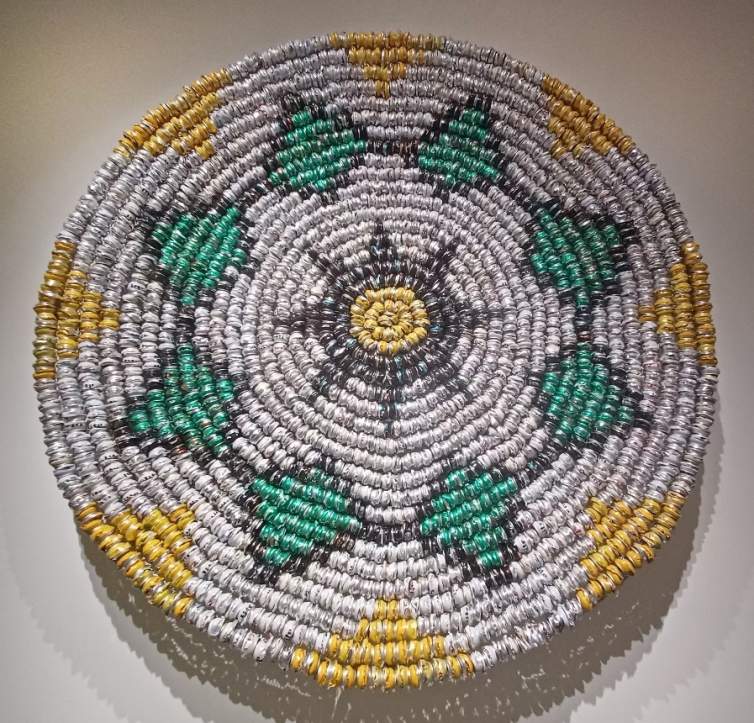
Native American art is a perspective on the world, that's what's important. The Institute of Native American Arts, back in the early '90s, had an exhibition and a catalog called "Creativity is our Tradition." It's not a certain design, it's not certain materials. So, I feel like I'm continuing not just that kind of work, but also this spirit of perseverance and adaptation. Me taking beer cans and transforming them into a basket-like sculpture is, I think, the same things my ancestors did when they were trying to survive genocide, basically. I've always kind of battled some viewers with that, because they read about Native American artists having a local art show, and they come, and then they're just confused. But it's the perspective. It's a unique perspective on the world. I think contemporary society is hungry for alternatives to what's going on now, and that native culture offers that. That's what I try to offer in my own work.
As an example, the basket sculpture I mentioned, Continuum Basket: Creation, was inspired by Cahuilla coiled basketry technique, but I bring that into a contemporary context. I created the sculpture using over 2000 crushed aluminum soda and beer cans to acknowledge the issues of alcoholism and diabetes in the Native community.
I grew up super poor, and you know, the stereotype is that native people, we're savages. So, I'm kind of a savage in the studio. I don't follow rules very well, and I don't feel constrained at all. I give myself permission to do that. But in fact, my education as an undergraduate and a graduate was actually pretty traditional. We were carving stone, casting bronze, oil paint, all that. I always say that I didn't go to art school to make art. I went to art school to prepare myself for a lifetime of making art. After graduation, my peers would truck their MFA shows to the local gallery. But I was like, "Well, that's not really 100% me." Once I finished my MFA, my work looked completely different than what I was doing at school, because then it was 100% me.
I love materials, but I'm really a conceptual artist, and it all comes from the idea. I don't typically sketch. I make lists of concepts and ideas, and then I figure out what that list is leading me towards. And then I make a list of materials, mediums, whatever best suits this kind of idea. And so, it's kind of like this efficiency process where I start broad and I just keep narrowing down until I hone the direction of the work.
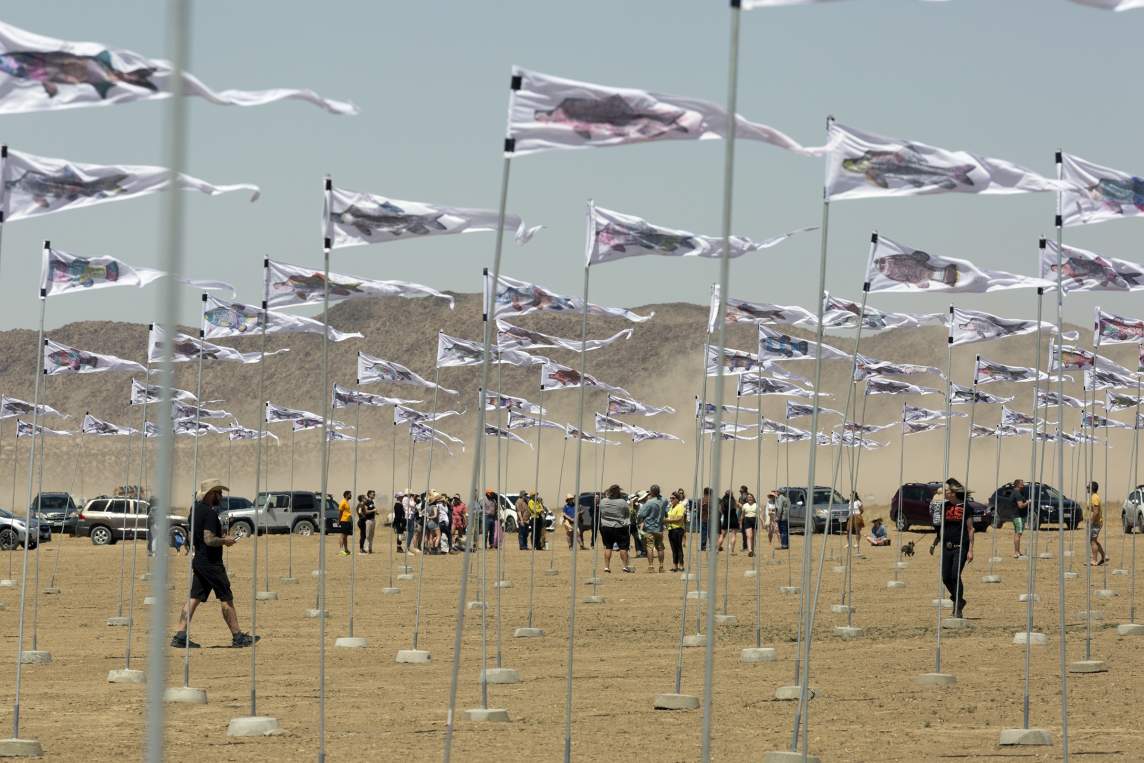
One of the things I think has hurt my career in terms of gallery representation is that I'm unpredictable. I don't produce a marketable commodity, so a lot of galleries don't know what to do with me. And I don't want to put those limits on myself of having to do the same thing or what have you. I never know what the next project's going to be until I get the opportunity, I get an idea and I just do it. I choose whatever material or media performance, whatever to help convey whatever that idea is.
I think one of the reasons why I don't repeat projects or do a lot of the same kind of stuff is that I'm actually very suspicious of myself and my own motivations. If I get too comfortable doing a certain thing, I just quit doing it. So I’m constantly challenging myself.
I use a lot of found objects, because I feel like the average person is afraid of contemporary art—because they don't get it, right? So I think, if I can put something in the work that's familiar, it at least entices the viewer into the work. In one of my works, If I knew now what I knew then, the found object was actually a song. This was back when I was teaching in Oklahoma. The work started with this song, and then one of my students, he got this horrible plaster bust of an Indian at a yard sale on the way to school and he gave it to me. I ended up gouging his eyes out, and I put a little TV monitor in his head and another one in his abdomen. And then I had this song playing, a country swing song. It was about a lost love or what have you. But I was thinking about our history. A lot of our history has been taken away from us. So when people looked into his eyes, the video in the back of his head was just all the landscape here on the reservation.
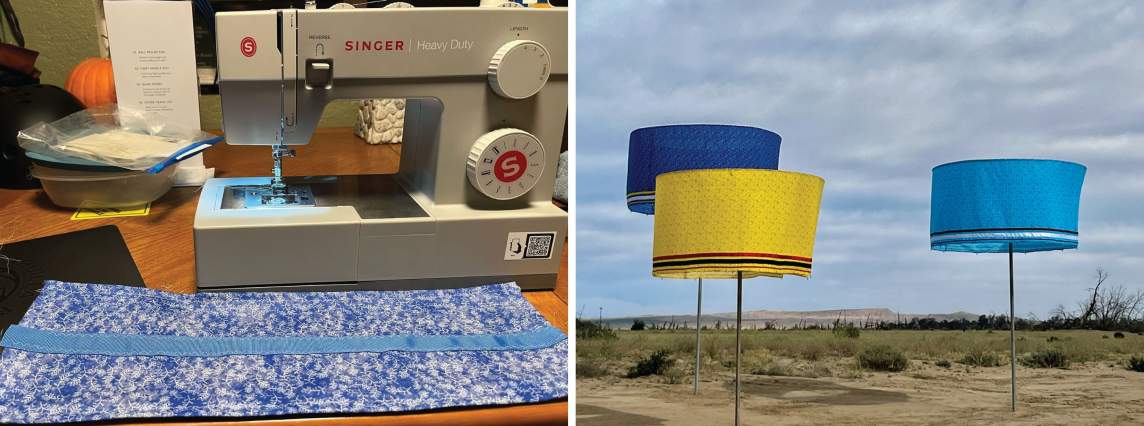
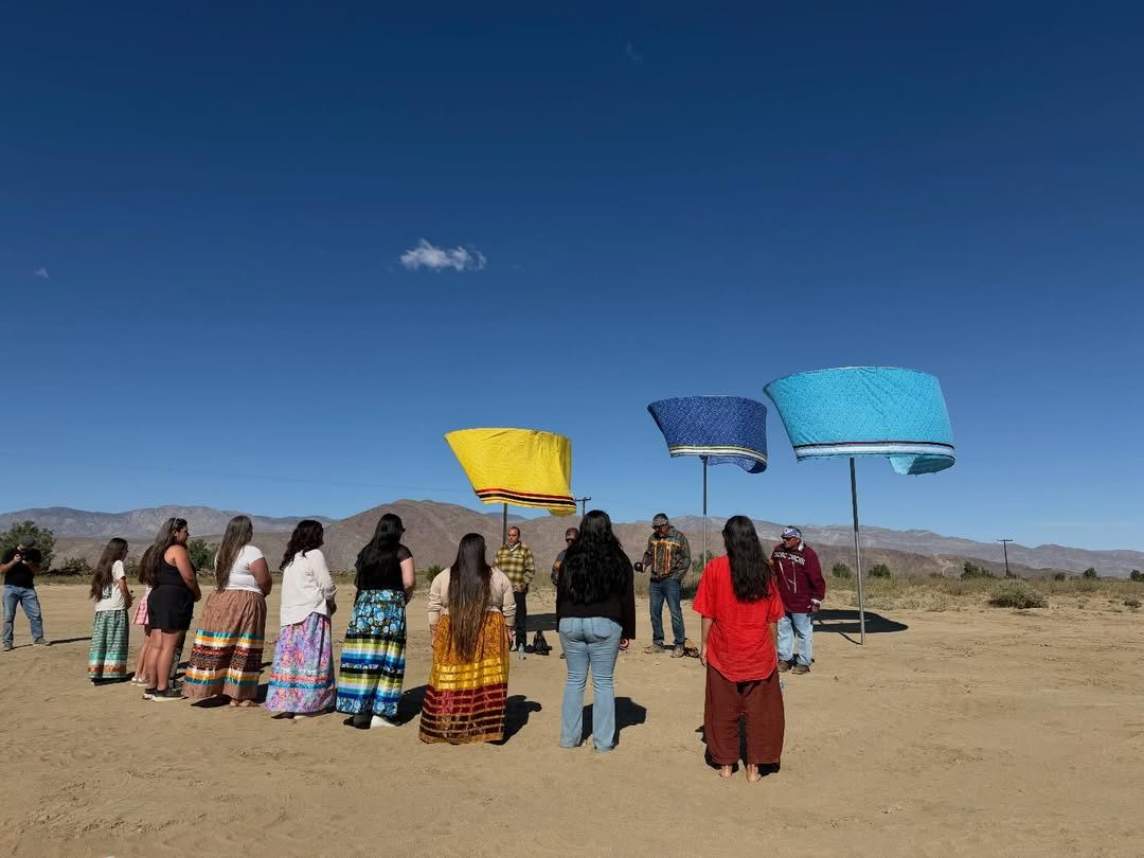
Right now, in the studio, I am sewing. I bought myself a sewing machine a couple of years ago to teach myself to sew. I'm doing a piece for an outdoor show in Anza-Borrego, which is not far from here, within Cahuilla territory. I'm a traditional singer for my tribe. We sing with gourd rattles—no drums, just gourd rattles. And my daughters dance, and they wear these long skirts with ribbons sewn around them. So, I'm doing these three large hanging curtain-like things that are circular. That'll be up 16 feet, maybe 12 feet and 10 feet. I'm sewing these ribbon skirt curtain-like forms that'll be hanging and blowing in the wind.
This project honors the women in the culture in that dance tradition, and also the land. So, as the winds come through and they start blowing, it's almost like they're dancing. And then in conjunction with the installation, we're bringing in singers and dancers for an event right there at the site, out in the middle of the desert.
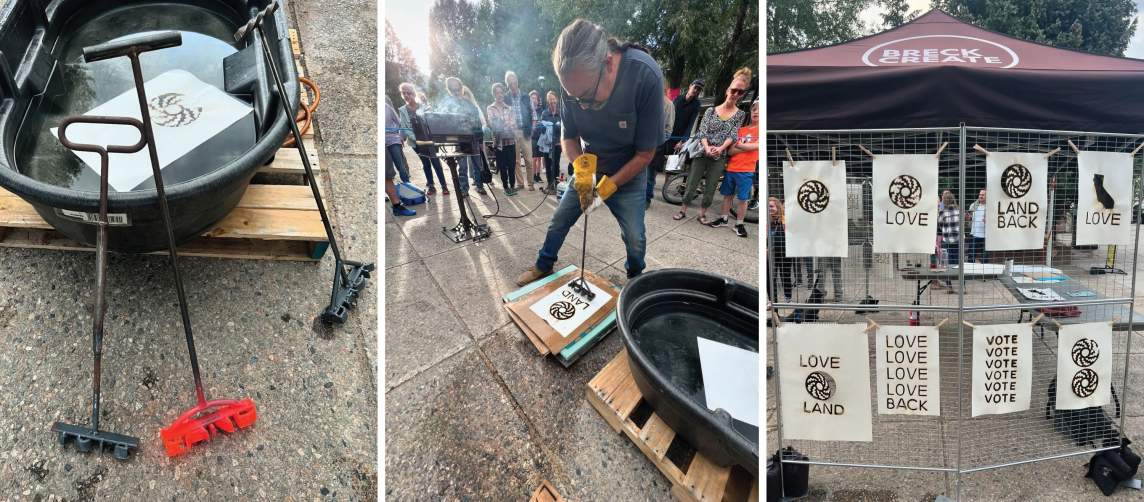
I just got back from Portland, Oregon, and I'll be having a show up there in August of this year. It's part of this CONVERGE 45, this kind of city-wide series of exhibitions. I'm partnering with a graffiti artist to do some prints and possibly a video work. I have this idea of juxtaposing text. There’s a lot of text in my work. So, I've been looking at and buying certain fonts that have this historical kind of feel, and I juxtapose that with graffiti text. I thought I could do it myself, and every time I tried to do the graffiti text, it looked like a 58-year-old trying to do graffiti text. It just looks sad. So, I'm partnering with an indigenous graffiti artist up there, and we're going to combine our works to do a series of prints and a video based on a mural that we're going to do. It opens in late August. And I have another show come up in Maine, so I go to Bowdoin College for the month of April, and I'm going to be doing prints up there. I'm not a printmaker, and I haven’t done a lot of prints, so that's why I'm going to do it, because it interests me. I'm going to work on some prints there for a show in Glendale down in LA that's also going to be in August.
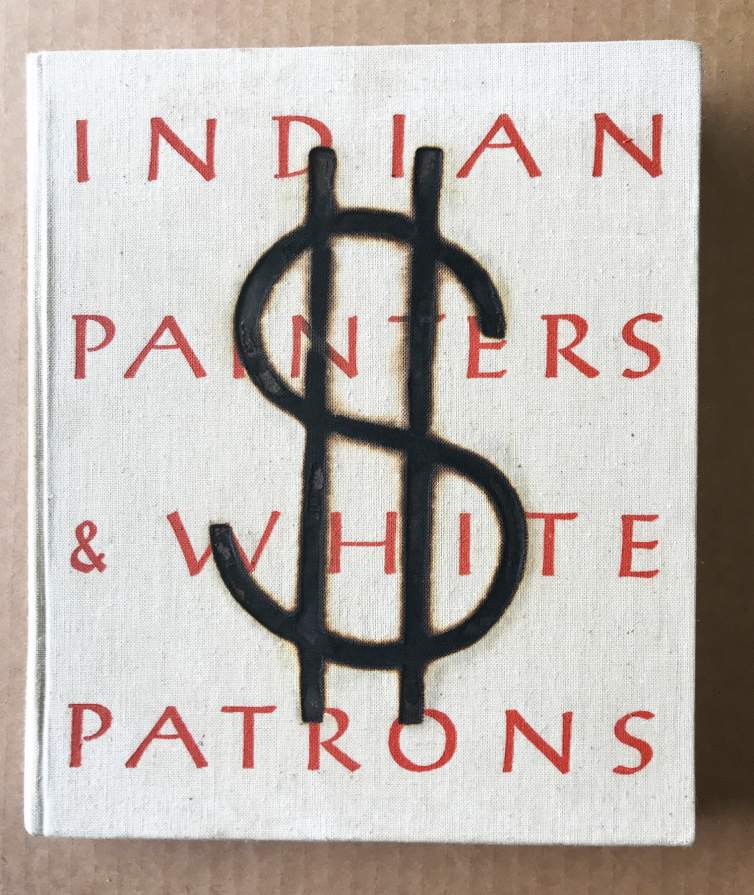
One thing that supports my practice is that I work for a university, University of California Riverside. I was hired 10 years ago as part of an indigenous cluster hire, where they wanted to increase their native professors. I applied and got the interview and got the job. And it was so strange—the first question they asked me was, "What department do you want to be in?" I chose ethnic studies, because in addition to the arts, as I mentioned, I'm a traditional singer for my tribe. I involve myself in cultural activities and ceremony. And so, I thought this was a way I could combine these different aspects of my life through teaching. I don't teach studio anymore, but I do teach a class called Issues in Contemporary Native American Art, where we look at the power dynamics between native artists, collectors, curators, museums, the. U.S. Government. It's not really art history, although it’s kind of connected to that. It's more like a sociological look.
I have a little bit of imposter syndrome, because I'm the only visual artist in my department, but it's really informed my practice. I'm reading things I probably wouldn't have read. I'm talking about things. It's really invigorated my practice quite a bit.
I love the physicality of making art. I think art discourse in the last century is trying to turn us into philosophers, but if we're always thinking about stuff and not making anything, what are we doing? To be quite honest, I'm kind of a jerk if I'm not physically making something or doing something. I run my family's cattle ranch—I was feeding cows earlier this morning—and I love it. It's a really nice compliment to the art or the academic side, because I think you can start living in your head too much. Being physically active helps me psychologically, maybe pathologically—and that's what really motivates me to make things.
I grew up listening to punk rock, kind of non-conformist and such, so I try not to preach in my work. I, personally, would reject that immediately. So, I try to pose questions. My ultimate goal as an artist is for someone to see my work and then go home, and around the kitchen table—because that's where culture starts—they say, "I saw something interesting or weird today." And it starts a conversation. If I can start a conversation, then I’m succeeding in my work.
Interview and editing by Jenny Gill. Learn more about Gerald Clarke’s work at geraldclarkeart.com.