In the Studio: Michael Arcega
“It's this kind of alchemical thing that happens when you abstract a word. It c...

Eric-Paul Riege is a Diné / Navajo artist and a 2025 Joan Mitchell Fellow. We interviewed him about his work and creative practice in April 2026. The following is edited and excerpted from the artist’s responses.
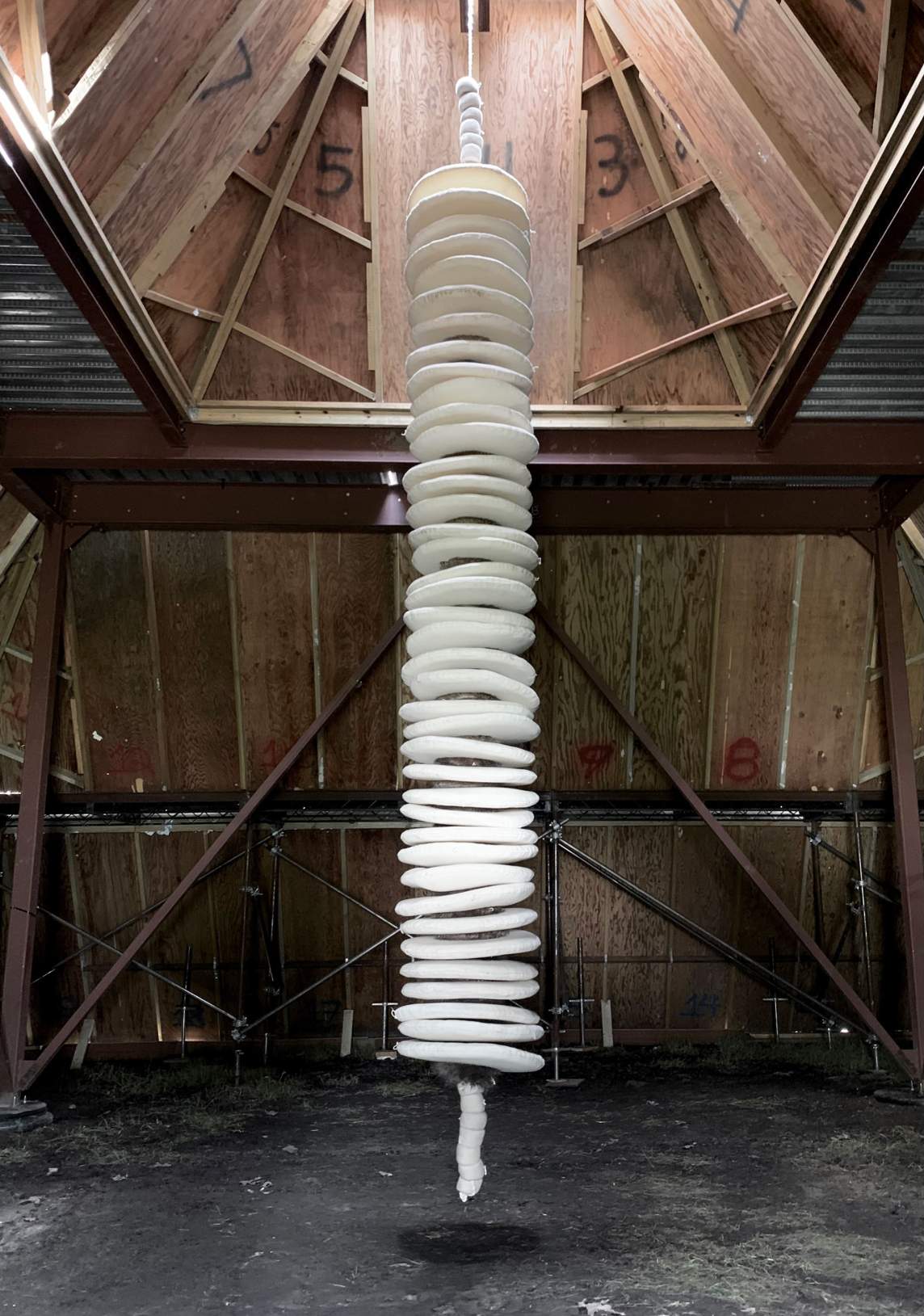
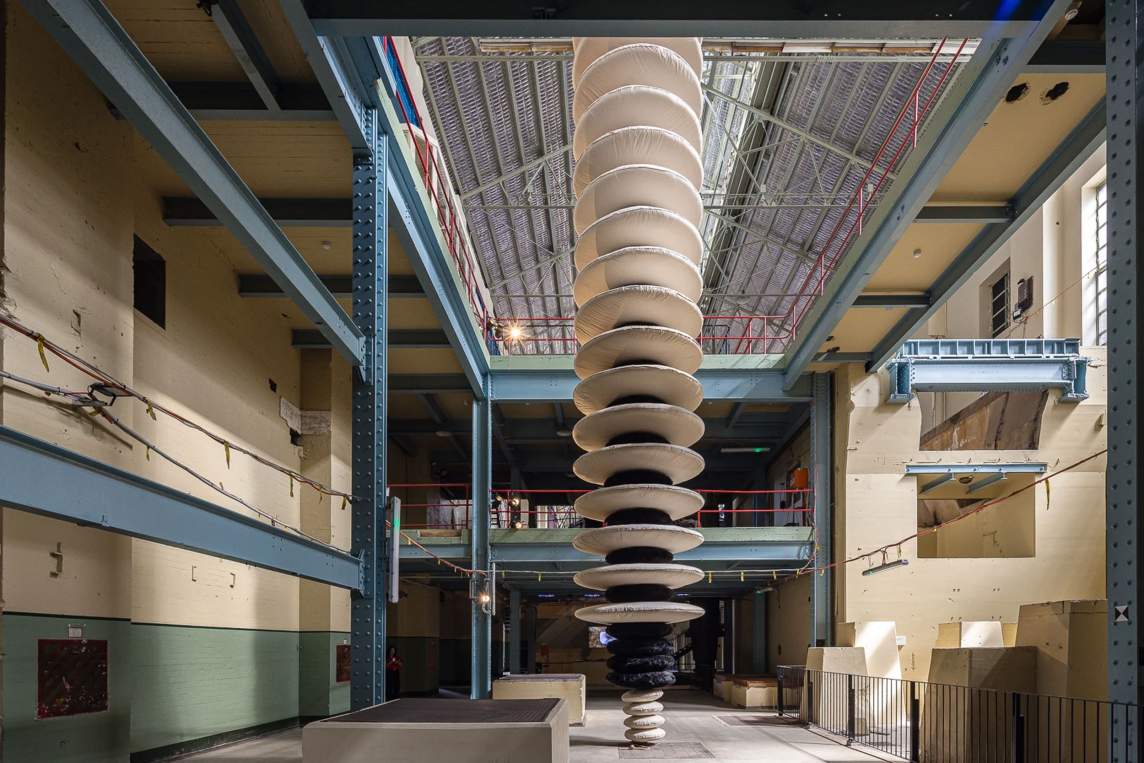
I’ve made this joke too many times now, but I always say I make pillows for a living. I make these assembly lines of hundreds of soft sculpture beads and discs and arms and fingers that are assemblaged into forms inspired by Diné/Navajo weaving, jewelry, adornment, and decoration. BigEarrings 4the BigGodz !
I am a descendent of weavers and fiber artists extending back to Na'ashjé'ii Asdzáá (Spider Woman), a Holy Person who protects Diné peoples and taught us how to weave. My work celebrates and carries forward this ancestral knowledge from my maternal family. Carrying is such an intimate gesture—one of the most kind I feel like one can have for another—so it excites me that I am a student of fiber for the rest of my life. I’m blessed to get to carry weaving through making and unmaking. Weaving is a continual celebration of survival.
I was told by one of my grandmothers that we adorn our body with jewelry so our Holy People can find and follow us and that our jewelry is listening and feeling with us. I began making large textile earrings as totems of memory called jaatloh4Ye’iitsoh, meaning “ear rope for the big gods/monsters,” which mimics and embellishes the traditional looped form of stacked beads.
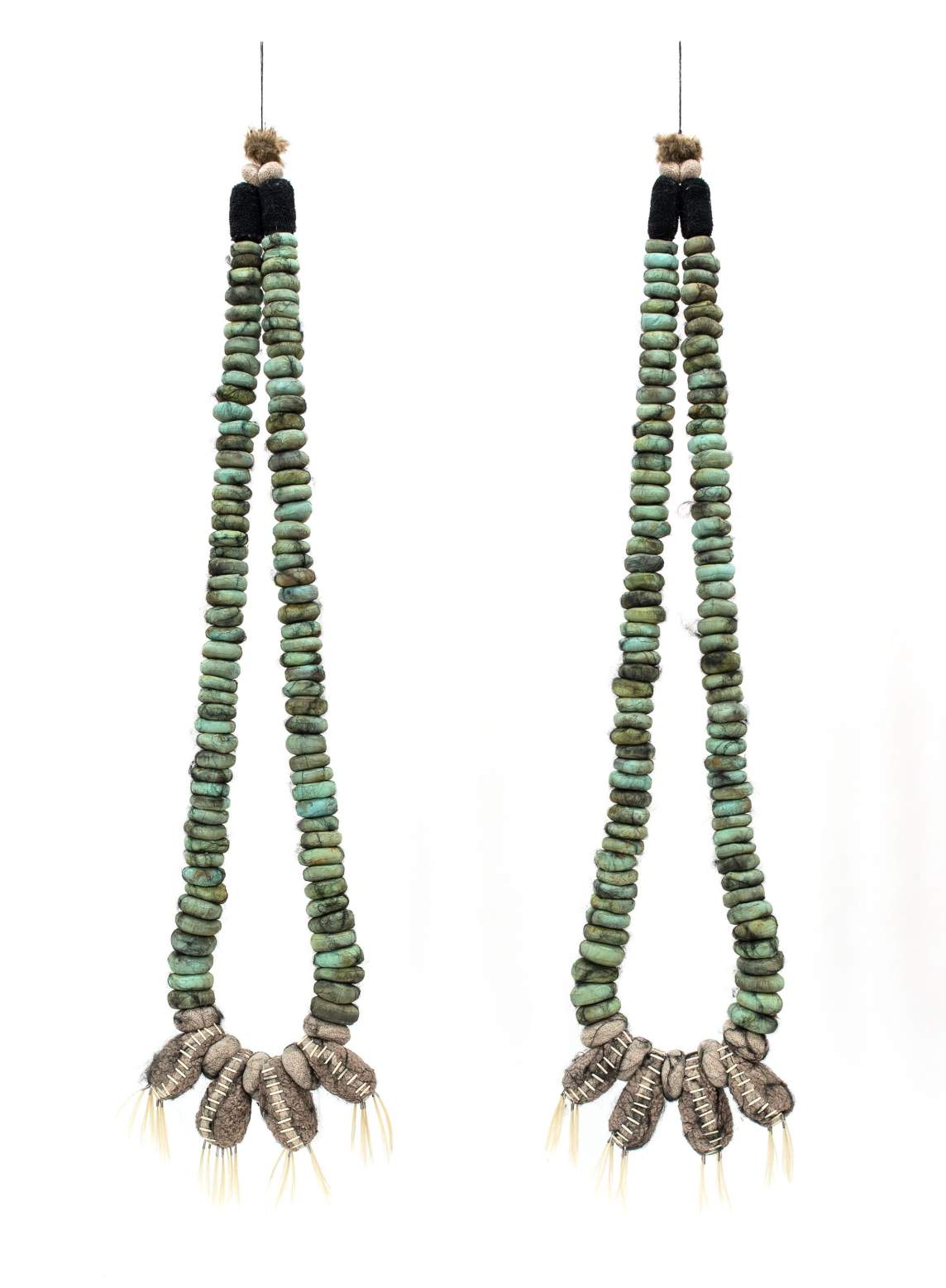
My jewelry and weaving objects also deal with economies and cultures of the marketplace, especially as related to authenticity and what is perceived as authentically Native American. The expectations around value and spectatorship particularly in materiality and presentation allows me to play with the precious and non-precious.
![+ [pronounced t’] is a sculptural installation of black and white components suspended from the ceiling featuring stylized ram sculptures, rows of tall cylindrical white candle-like forms above black cylinders, extending in iterations from a central vertical structure made of stacked disks.](https://www.joanmitchellfoundation.org/uploads/journal/_1144xAUTO_crop_center-center_65_none/ITS-Riege-4.jpg)
My soft sculptures hang to create immersive installations of welcome that suggest a home or hooghan (the ceremonial place). These spaces are charged with the spirit and memories of the gifts I have been given to become spaces of refuge that I perform within. The loom itself is technically the first home of a weaving, so the walls of my installations are often exaggerated Navajo looms. Homes exist externally and internally, physically and figuratively, and these homes welcome all to enter, look, and stay. They are our sanctuary to share.
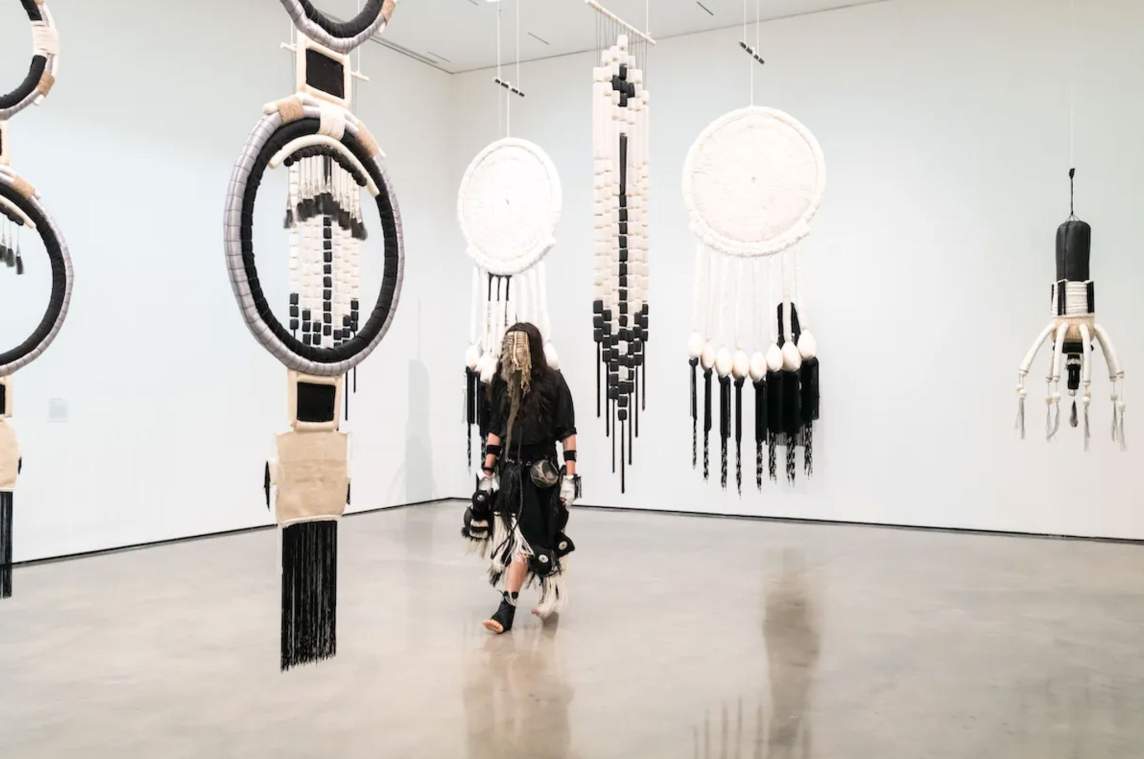
I live and work and was born and raised in Gallup, NM, which is a border town in northwest New Mexico and surrounded by Navajo Nation rez. It’s a place with many complex N8V stories, bodies, identities, and crafts, experienced and shown in these beautiful and celebratory [BUT also-] extractive and violent ways. My work in a lot of ways is about this place.
My studio now is connected to two of my homes. I can see them all right now. My childhood home is right there and my home with my family is right here and my studio is over there.
I’ve become somewhat of an organized hoarder as I get older. (Is that an oxymoron?) I save everything. Objects are so charged with our own experience with them but also in their own experience just being in the world among us. I think about the nomadic way materials travel and are touched. I want them to continue being touched by others.
My hands know more than my brain does and I let them lead. Listening to them is nice because I just kind of jump in for the ride and let them play. Naashnè ! I AM PLAYING ! Naniné ! U R PLAYING ! Neiiné ! WE R PLAYING !
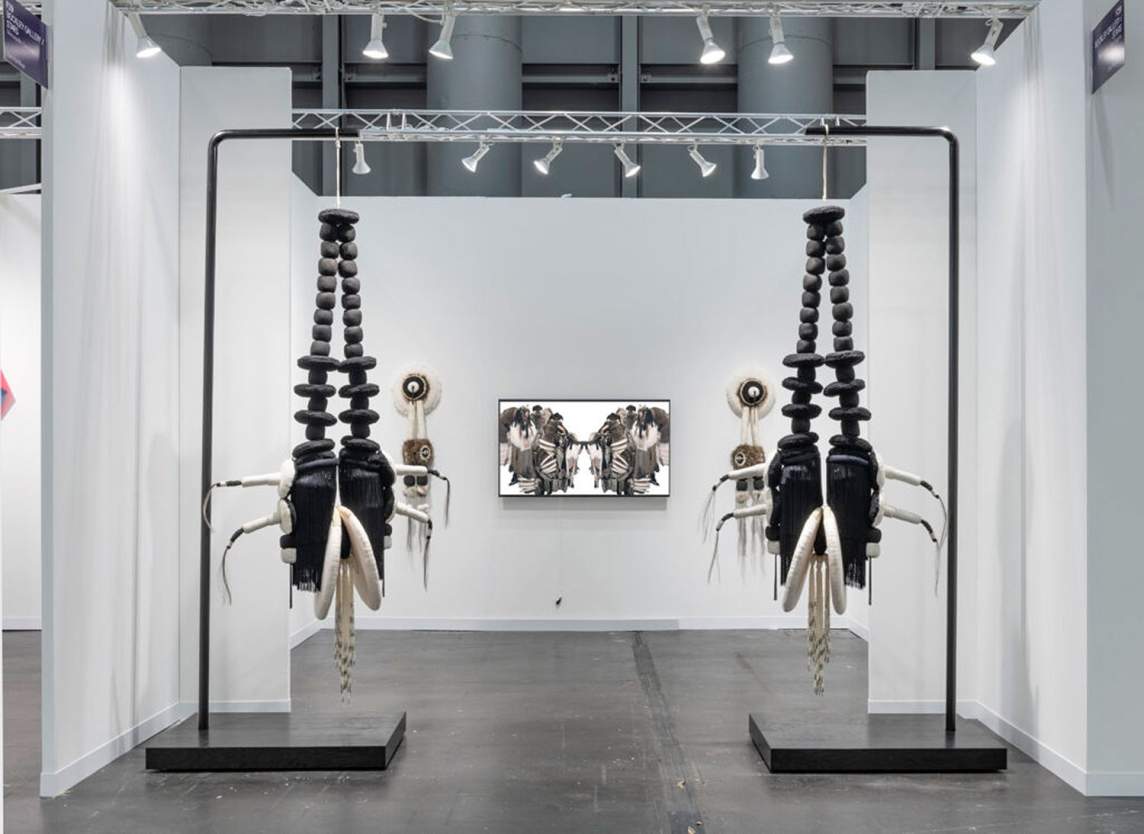
I work really modularly, so my practice is very fluid and there is a lot of assembly and disassembly involved. In making the same small parts over and over, the work becomes familial. Families typically look alike or act alike or sound alike and so new cousins always say hello.
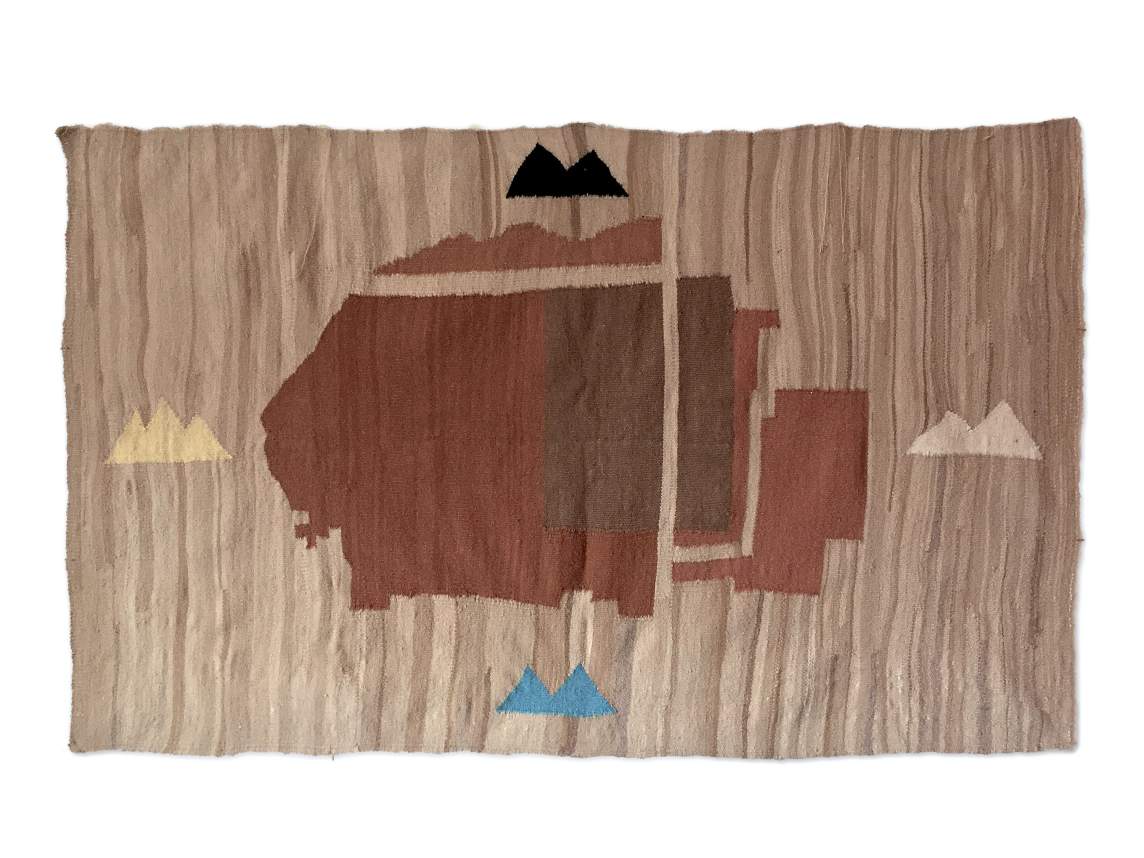
Right now, I’m making these plastic weavings I call aRug4aRug. They’re made out of the plastic sheets and rolls that museums and institutions I’ve worked with use to package the work after a project is over and then sent back to my studio. The first time I experienced this was in 2019, and I was in awe of the way the work was cared for and packaged and wrapped. I was like, “When thinking about the utilitarian use of a rug, they are there for warmth, comfort, protection, doorways, beds, and more, and these plastics are doing just that for my weavings.” And I also thought it was funny that when I started using the plastic and said it was art, then more plastic sheets got put onto the plastic sheets. It became this meta-ish way value and importance is determined by who has the perceived authority on it. The Maker? The Salesman ? The buyer? The Archive ?? The critic.,. iiZiiT ?!
Instead of creative blocks, I get creative flooding. And I can’t swim! So when I try to sit at the edge of the river of creativity and dip my toe in, I often fall in! And so, in this exact moment I want to weave this papasan chair I got from Wal-Mart because it has a cool frame. And then the cushion it came with can be the pedestal! I’ve also always wanted to collaborate on some sort of hybrid parade float performance procession for the Gallup Inter-Tribal Ceremonial, which happens here every August. OH! And next year [2027], I will have my first public sculpture in NYC! I can’t say exactly when or where yet, but NYC folx get around fast so it’ll be there!
Interview and editing by Jenny Gill. Learn more about Eric-Paul Riege’s work at ericpaulriege.com.