In the Studio: Michael Arcega
“It's this kind of alchemical thing that happens when you abstract a word. It c...
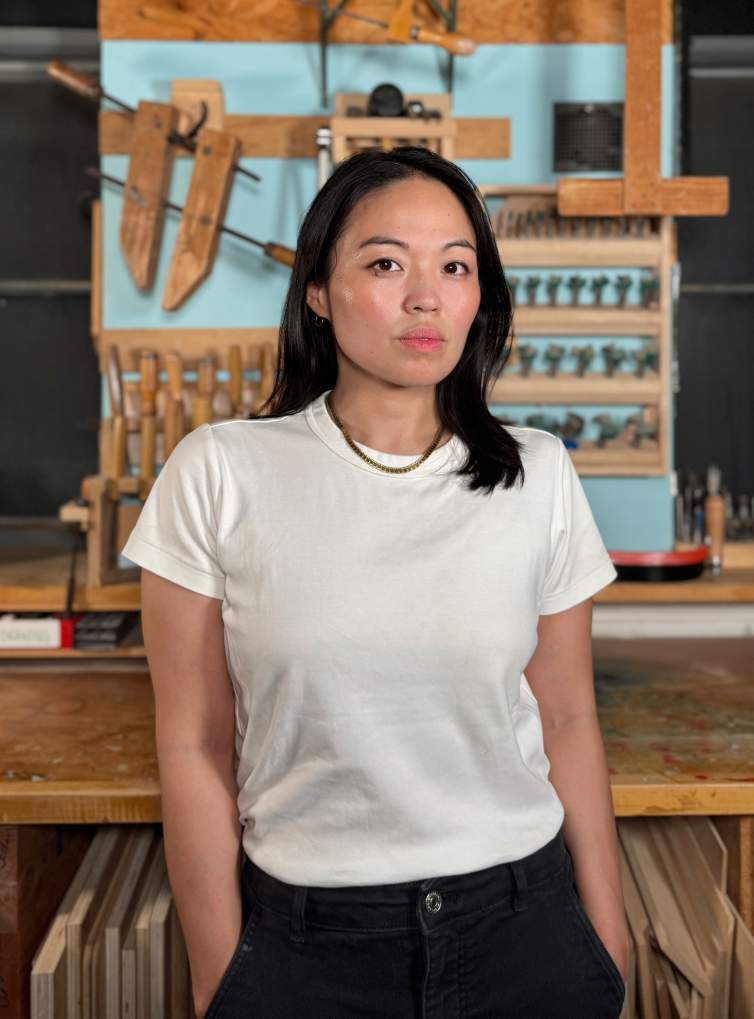
Cathy Della Lucia is a Boston-based sculptor and 2025 Joan Mitchell Fellow. We interviewed her about her work and creative practice in March 2026. The following is an edited transcript of that conversation.
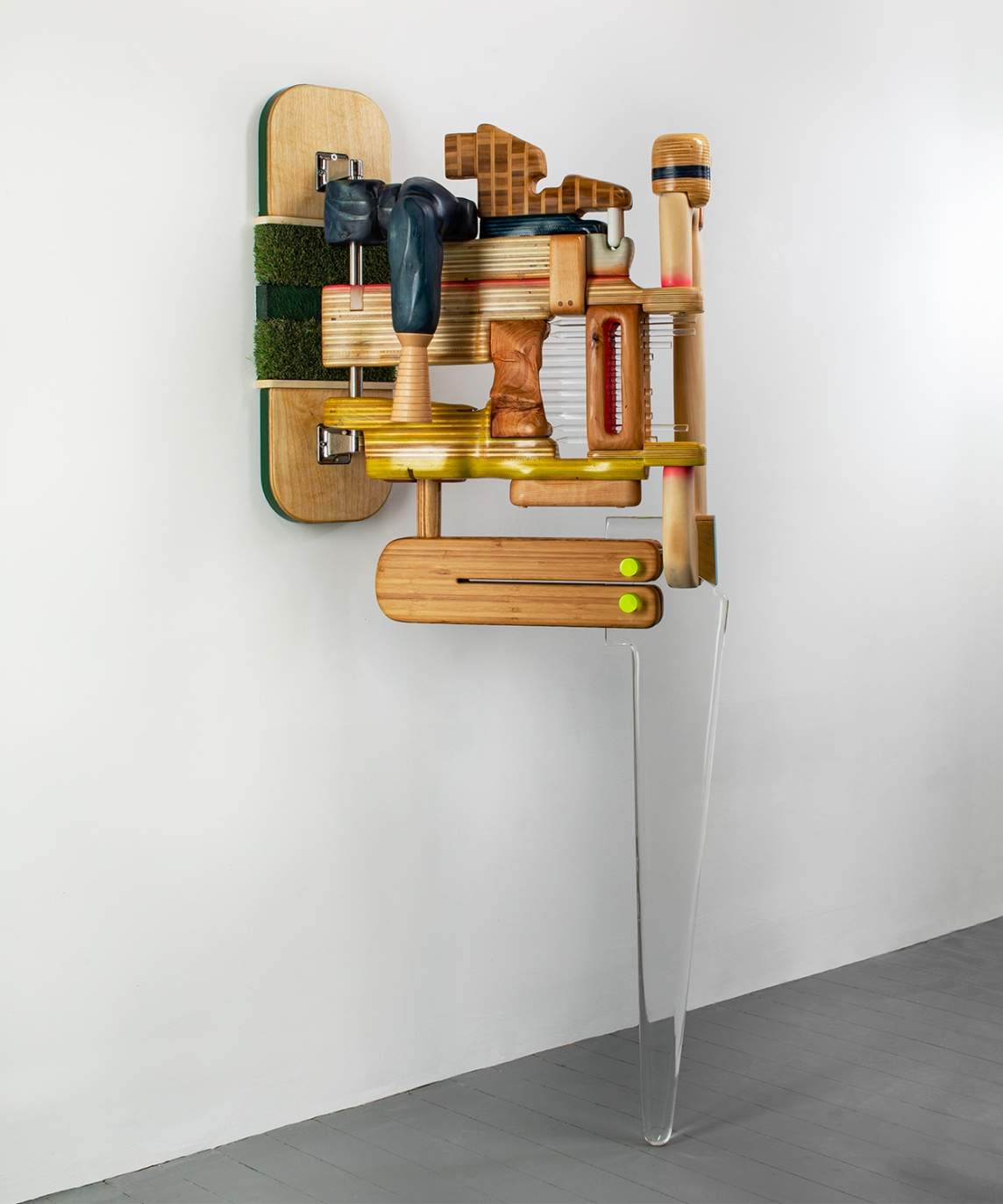
I'm a sculptor who makes material-based objects, primarily with wood, alongside other materials that are either going to challenge it, or compliment it. Thematically, I am interested in the relationship of the body with tools, toys, and weapons. I don’t think about my work as figurative, but it’s through these three elements that my work connects with the body or thinks about objects through their narrative with a body.
About five years ago, I made the decision to focus on working with wood and that has really defined the work and my practice. Like many artists who love working with our hands and who appreciate beautiful things, I get excited about trying a new thing, or finding a new material because I can see so much potential. But I feel like this can also feed the monster of inattention. I felt that I was an amateur at everything and wanted to give myself some boundaries of focus for my practice, so I chose wood. I gave myself one year to learn as much as I could about woodworking. This permission to pause and learn has been pivotal in shaping my practice. So for now, I'm a wood sculptor—a wood “plus” sculptor. I deal with a lot of carving, some ceramic and furniture elements, and digital fabrication thrown in together.
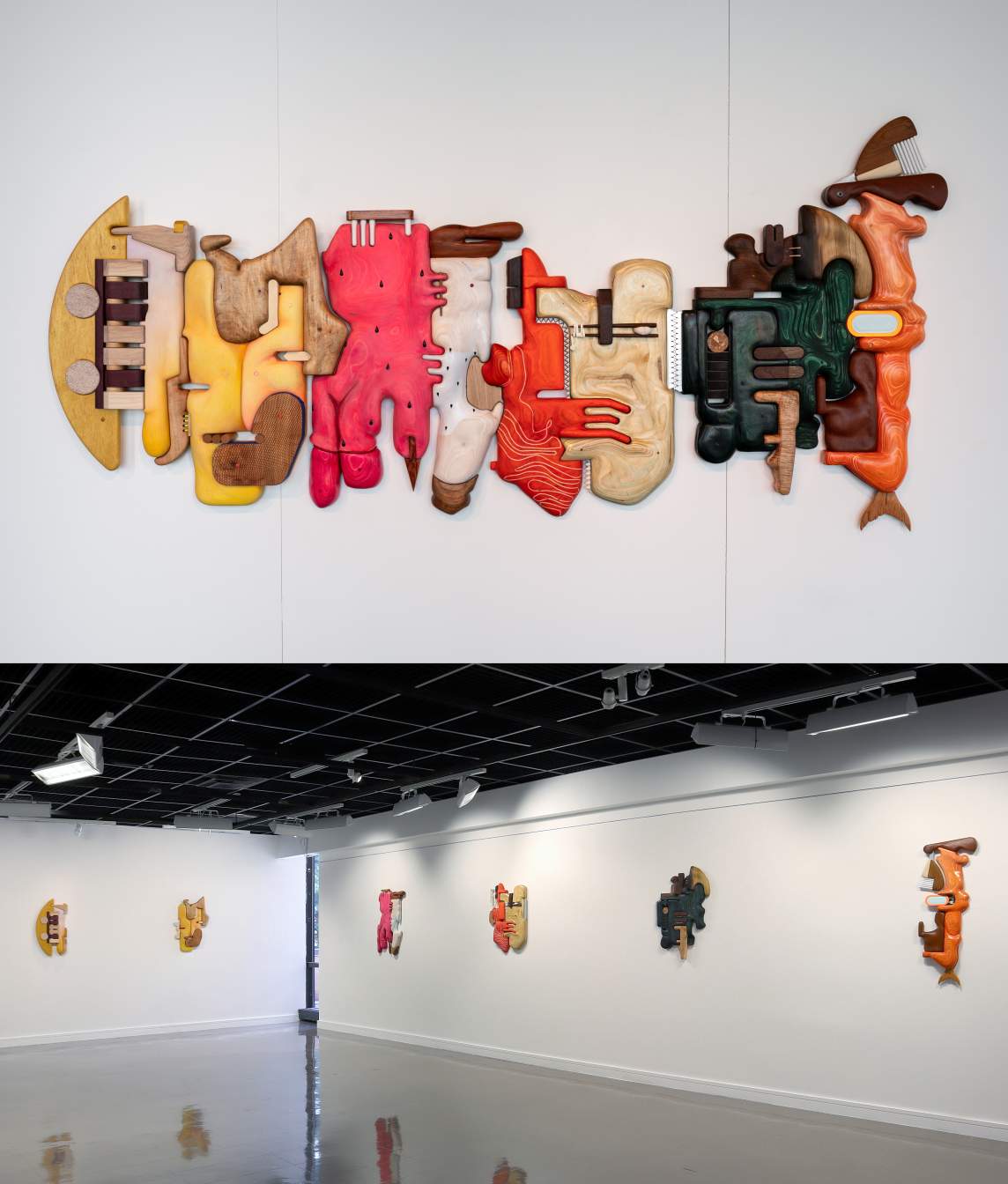
I make works that are meant to come apart—finished objects that at a first glance reveal their parts and the logic of how they come together into constructed objects. I'm interested in tinkering and play as an important part of knowing. It's human nature—we have to touch things, take them apart, and understand how they come together, whether it’s Legos and doll parts—or when you're older, it’s shoddy DIY projects, fixing up your first beater car, and all the things we jig and rig together to make them uniquely serve us.
One artist I look to is Louise Nevelson—she has a poetic attention to materiality, collecting and filling spaces, organizing, holding onto things, and understanding how they can change through their positioning next to other pieces or as they become part of a larger system. Isamu Noguchi is also someone I’m inspired by—both his work, formally, his commitment to drawing, and the way he moved back and forth between functional and nonfunctional objects and 2D and 3D media. There wasn’t a hierarchy between them.
I feel really connected to sculptors like Noguchi and Nevelson who draw and who understand this relationship between the 2D and the 3D. I do create freestanding objects, but I've always been interested in the relief format. Noguchi talks about the relief as landscape and carving as a form of drawing. And that's something that I see has come through in my work and how I think about the relationship with drawing and these reliefs that I'm making.
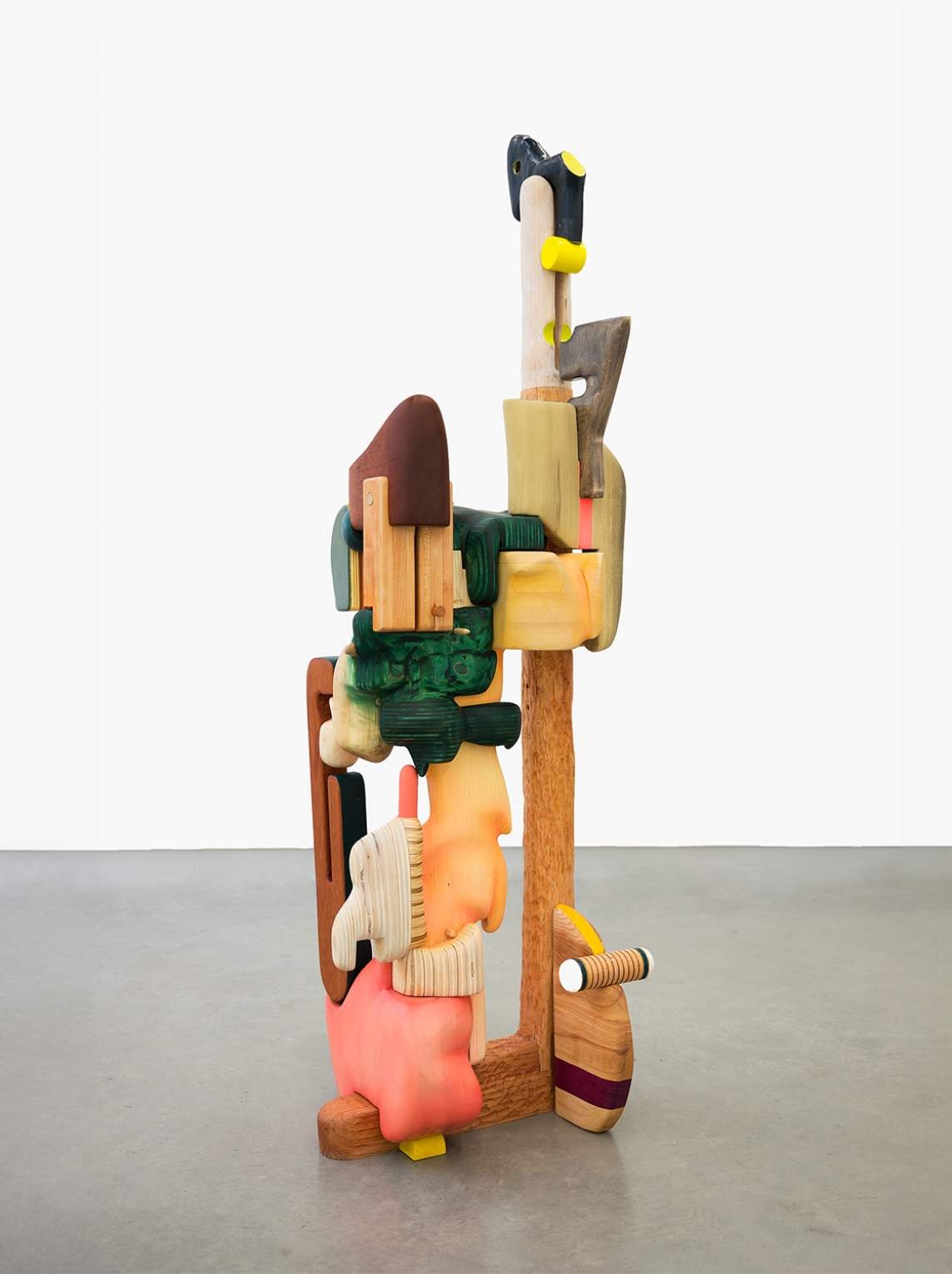
I do a lot of drawing in my practice, first by hand, and then those drawings go into the digital space, into the 3D modeling program, Rhino, where I continue to work with the drawings, pushing and pulling the forms out. I really like the impossibility of a 2D space describing a 3D form, and it’s something I ran into early on when I didn't know much about wood. I'd get these drawings done, and then I'd try to make them out of plywood and realize they're impossible forms. There are very different rules in the 2D drawing space on paper, 3D digital spaces in Rhino, and the physical lived space that material and our bodies exist in.
The drawing process needs to include something that is physical and tactile. I take the renderings out of digital to lived “real” space through 3D printing, or small laser cut templates that I can work like puzzle pieces with and continue to alter, photograph, and draw back on top of.
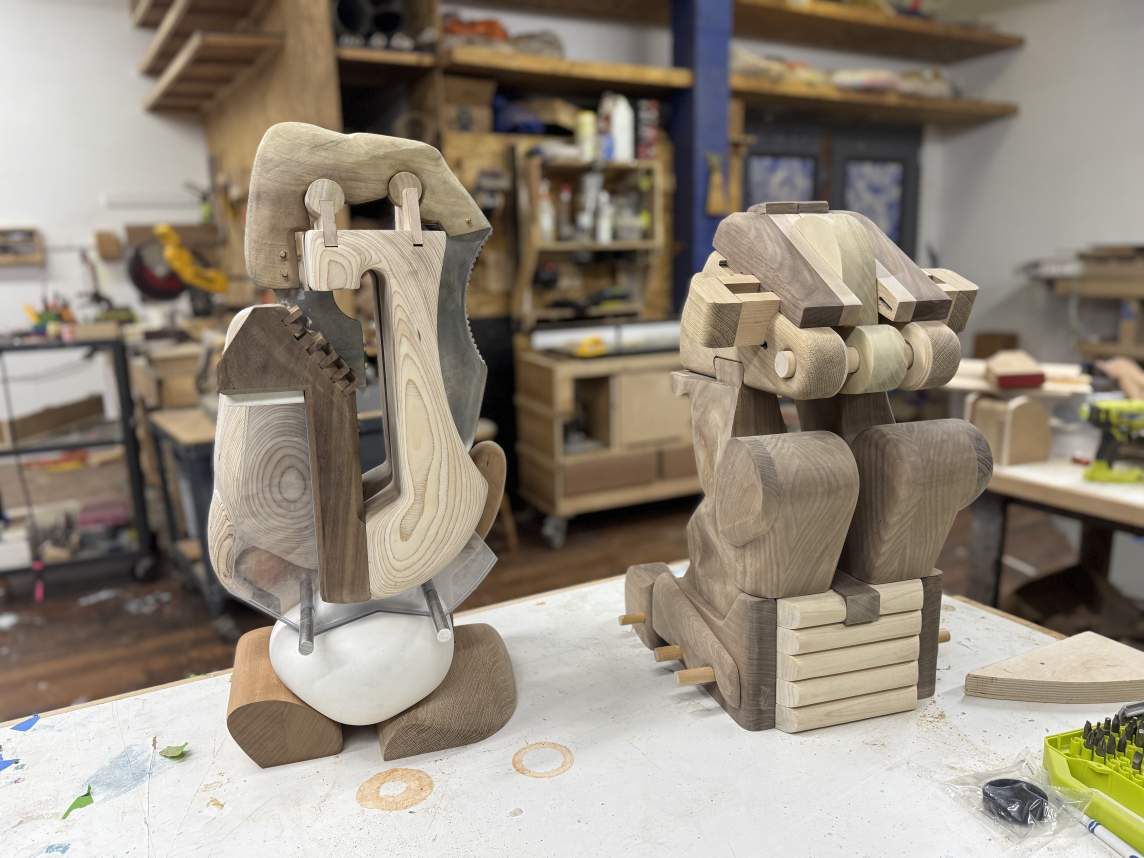
Something that I really like about the process of carving wood is the negotiation of the edge. As I get further along carving and sanding, I can take something specific and measurable with hard clean edges and really resist that edge, blurring it, and reducing it down to something soft, unmeasurable, and flesh-like. Without a hard edge, you can't just put a ruler up to it, plug it into a simple equation, and you can't easily describe it just by its dimensions. You have to understand it through the lens of something else—which could be time or touch or the sum of the forms around it. We understand an eroded stone through time or we understand something squishy because of how it reacts and records physical pressure. It becomes a narrative.
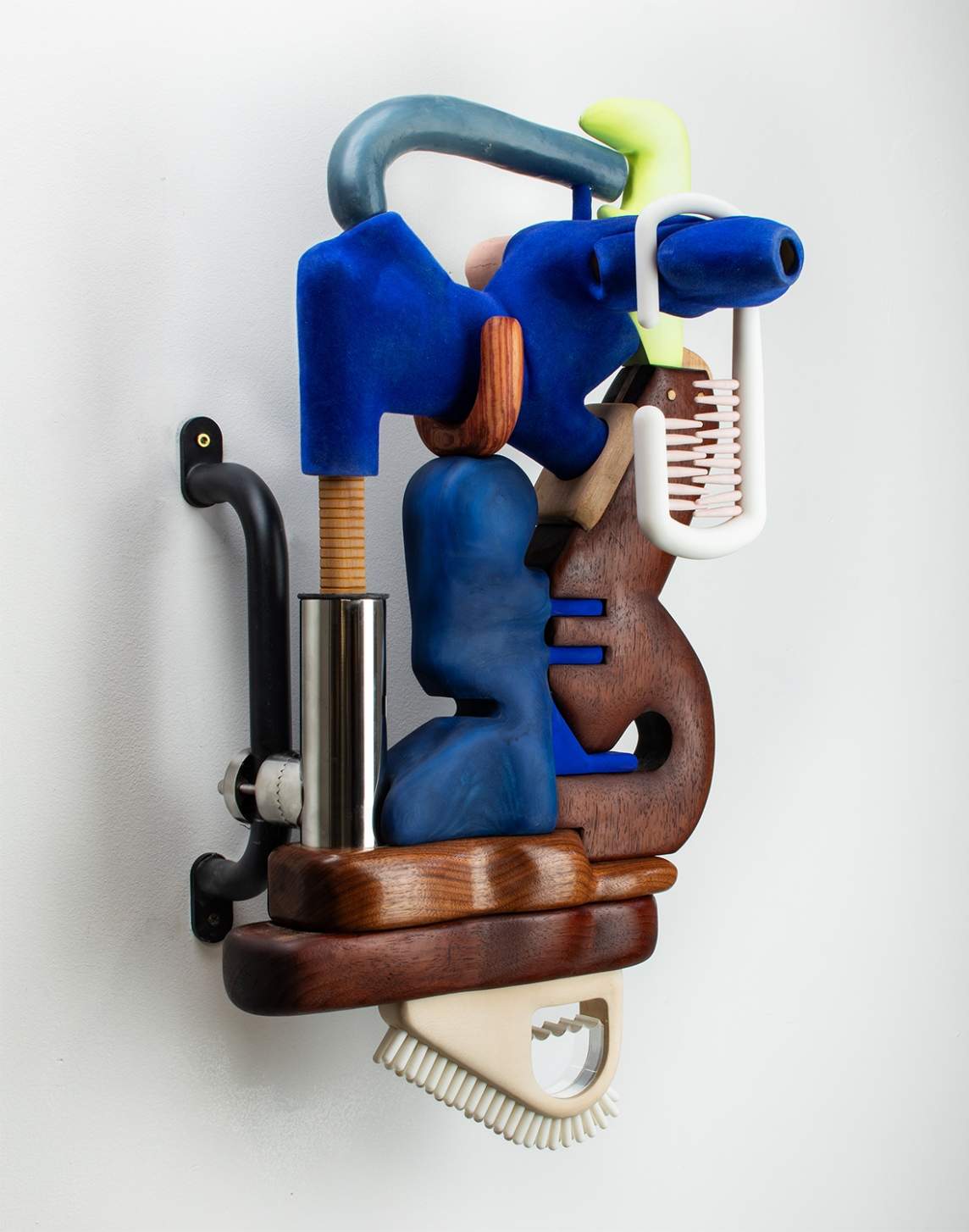
Idea-wise, my pieces usually start with something that lingers—which could be something I'm mad about, something I don't understand, something that I'm obsessing or day-dreaming about. I pull a form from it that is tangible and I draw out from there. The titles come at the end. As the idea moves through materials and stages it is impregnated by a thousand insignificant and often deeply personal moments. The work is transformed at every step—from carving, to unreasonable amounts of sanding, layers of air brushed paints and dyes, and then a thousand layers of finish. Working through multiple steps and in different materials is like carrying an idea around in your pocket. Imagine the start of a sculpture like a palm-sized sphere of playdough that gets stuffed into my pocket. It smashes into my thigh, gets jabbed by my keys… a pen bleeds onto it, gets covered in lint, and by the end of the week it has molded around and caked onto 10 different objects that have been in my pockets. I couldn’t possibly name it until the end.
Right now, I just finished work for some shows, so I'm in this postpartum depression transition mode where I’m coming up for air. I’m trying to use this time to learn. I’ve been learning to use the lathe and the CNC, and researching recalled toys and their instruction manuals. I’m a professor, so my practice really ebbs and flows around my students’ schedules. I will begin a six-month sabbatical from teaching in May, which will be the first time in my life that I will be able to focus solely on my art practice for such a sustained period of time.
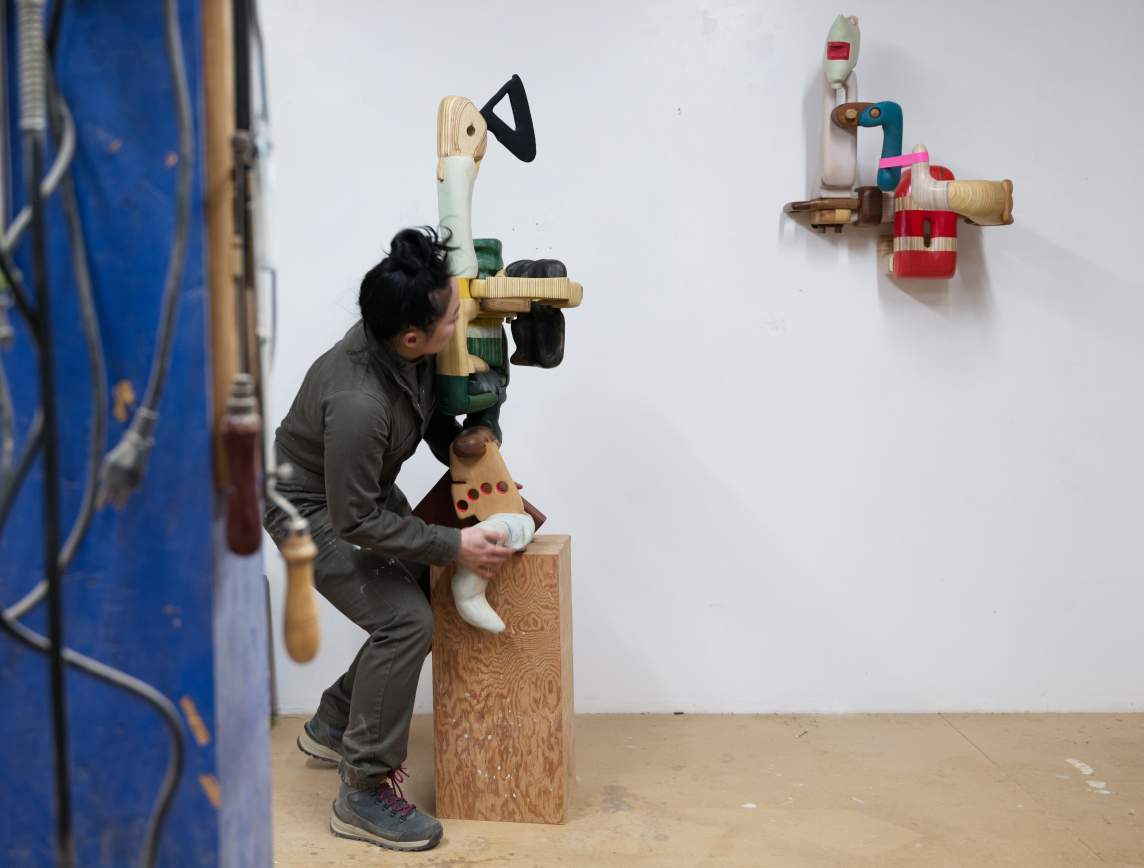
I'm currently obsessed with switchblades, multipocket tools, and eunjangdo, which are small Korean knives that women historically wore as ornament, utility, protection, and even for protecting one’s honor. They were worn in pockets or were attached directly to clothing. They are often made of silver and they could also detect poison. They are incredibly beautiful and I love the way they encapsulate so many functions in one.
I’ve been thinking a lot about things that unfold, deconstruct, and reveal something in a way that brings ritual or nostalgia into the action of disassembling and reassembling. I have been looking at hidden compartments, caches or places for storage. My most recent works have addressed this interest in hidden compartments with elements that slide apart and interlock to reveal a container. Cache 911 has a door that swings open to reveal porcelain phone keys that press down with a button mechanism.
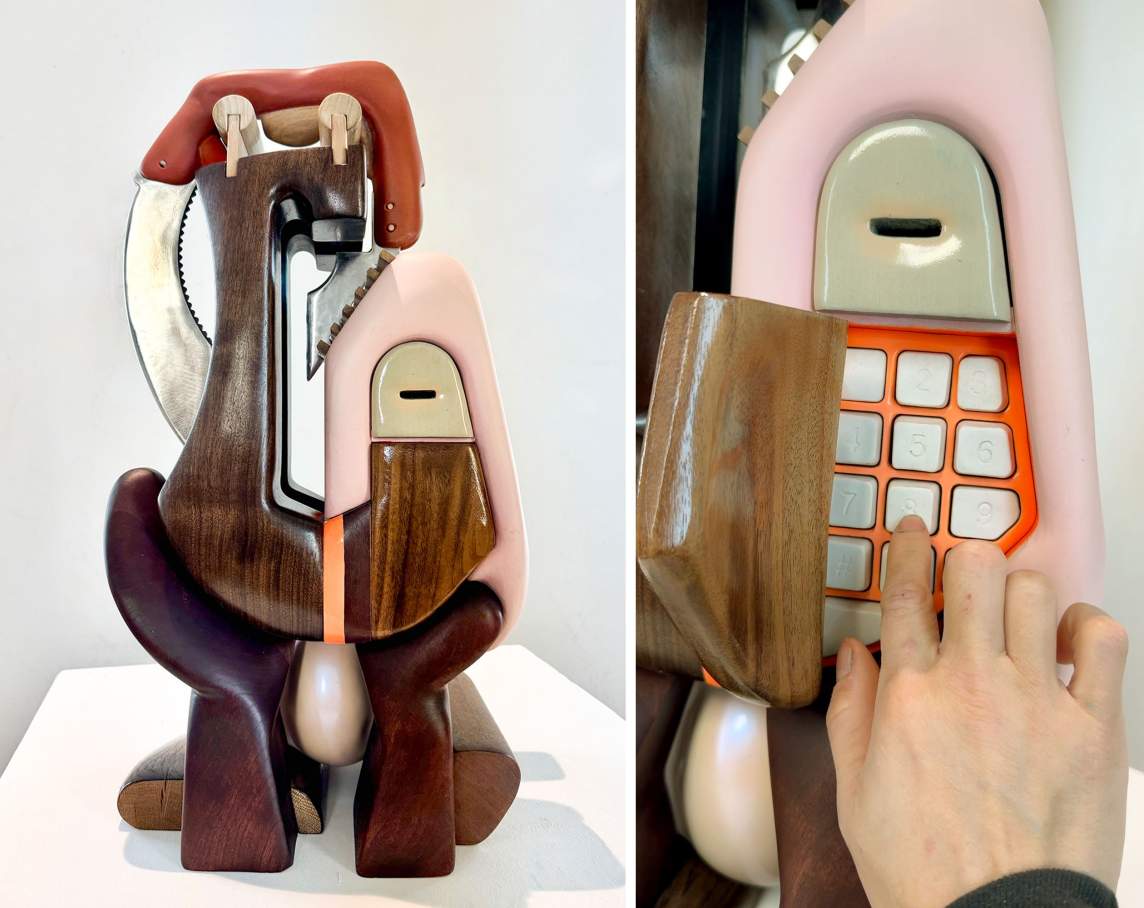
I bought like 500 button mechanisms on Amazon to get one with the right tactile click. The work is not meant to be touched by the general audience, but I am trying to build in moments that can reward more intimate experiences with the work outside of the cold gallery space. I really care about the surfaces and treat them with enough specificity so that there is a desire to touch it—this kind of savage animal urge to do something forbidden. I want people to be curious about how things come together, what feels familiar and what doesn't feel familiar. I hope that my work inspires curiosity about the things that people construct their lives out of, what those decisions are.
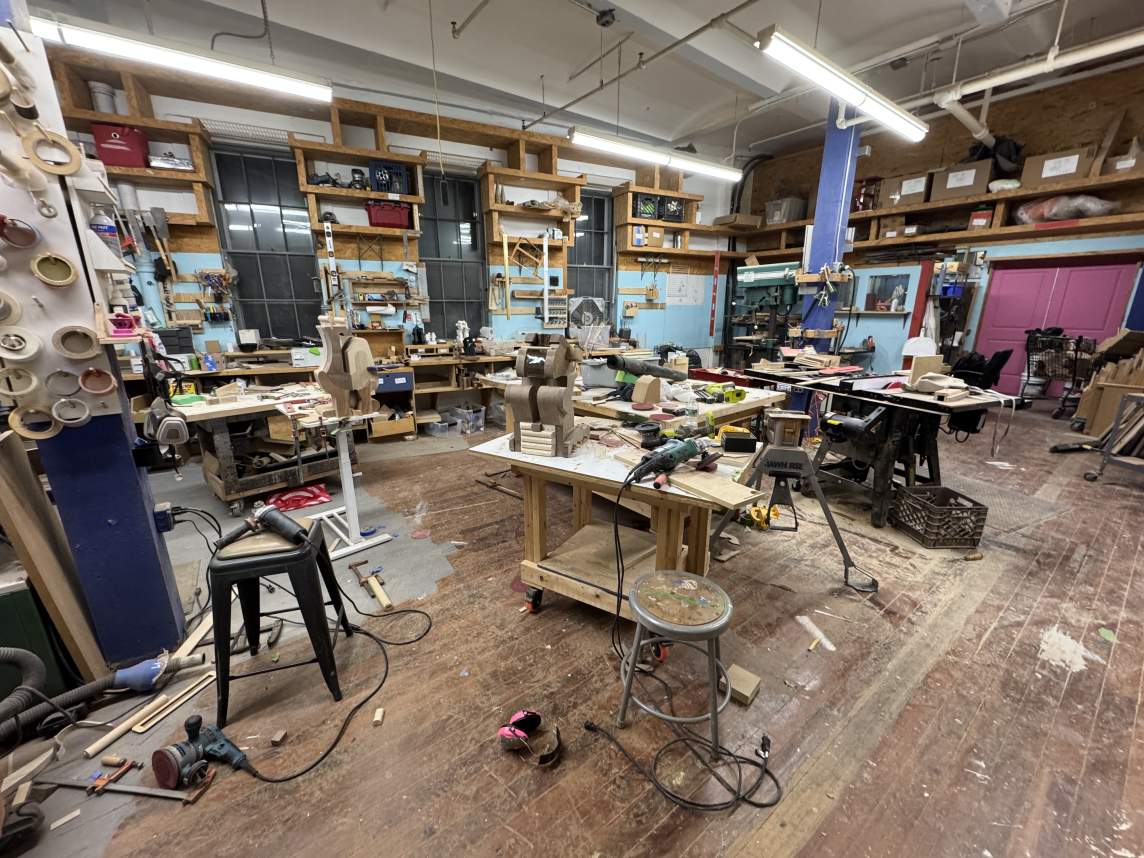
Three years ago I moved into my dream studio and it has completely changed the way I'm able to work. I don't work in an orderly manner like a traditional woodworker, where I’m moving systematically from one tool to the next. I move constantly back and forth between many different tools, so nothing can ever get put away. I have clay being recycled next to a 3D print while I’m carving clouds of dust and another piece has a fresh coat of lacquer drying. Everything moves, everything's on wheels. That type of temporal, chaotic, permanence is really important to my space and is reflected in the modularity of my work.
As a sculptor, what we're doing is essentially thinking about space. Even if I'm making objects that take up space, I’m still creating space. It is why the spaces and objects we choose to share our body with undoubtedly affect how we see and what we make. I just need to let things sit out so I can keep them in my peripheral.
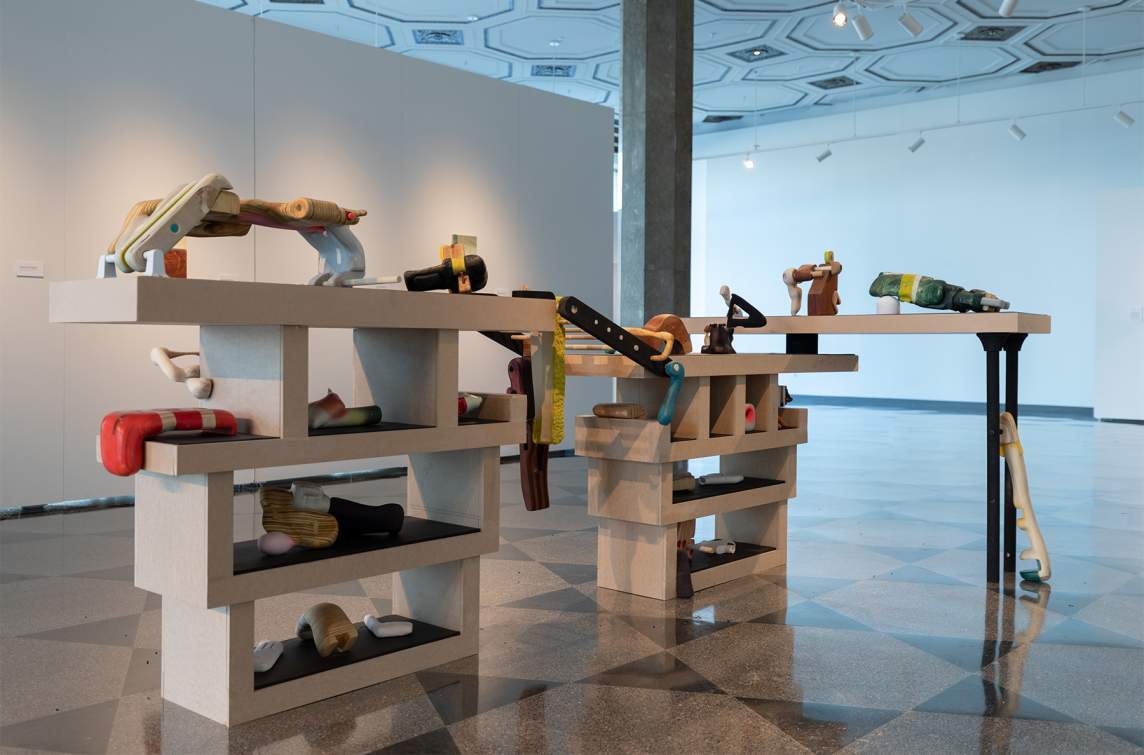
There was a piece, Table of Contents, at a show I had last year, where I was purposefully trying to bring a part of the process of making into the exhibition experience—thinking about the life of objects, but also the life of making them. It isn't like we just make this thing, and then it's in the show and that's it. There are all these other elements in the relationship with this thing you make and it is very much a conversation. I learn so much about the work while packing it up, building crates for it, seeing it in the peripheral of other works while it sits on a shelf. It also performs differently in an artist talk, a studio visit, or when it sells to someone else. A lot of the time, the work is at rest. It’s never dead, but it’s resting.
So, I created this working table that is modeled after the storage space that I inherited in my studio from a brilliant woodworker and carpenter, Peter Thibeault. I wanted to bring a piece of my studio into the public space as a reflection of uncertainty, vulnerability, and rest, but for it to also be an homage to Peter, to inherited spaces, spaces we create, and spaces I used the table to build pieces for the rest of the show, store work inside, and display components of sculptures that were not in the show. Everything was at rest.
There is a real sense of quiet that comes over me when I am working in a way that engages my full body. I have found something close to ecstasy in the truly deep and toxically thick focus that I find only in the studio when I’m working with wood. I really like making things, and it is so powerful to be able to form a life around curiosity and indulgence. It’s important to me to take advantage of the gift of being able-bodied so I can have the practice that I do. I make things just because I'm curious. And sometimes it is just slightly, remotely curious. I don’t need to solve a problem that will change the world. I don’t need to make work that is morally good or bad. It is totally indulgent. I spend thousands of hours making a thing just because I want to see what it looks like and feel what it's like in my hands.
I think that being an artist is about decision making. The more decisions you make, the better decisions you make. Eventually those decisions turn into a language. You make the decision to be an artist and to live your life a certain way where your art can be at the center, but it doesn’t mean that art is the focus all the time. I bring things that I’m trying out in the studio into my classroom, and bring conversations from the classroom back into my work. It has allowed me to maintain a real sense of community and dialogue in a practice that can feel deeply isolating at times. I acknowledge the immense impact of stability on my practice that comes from teaching and my connection with the academic institution. It works for me. Teaching sustains my art practice, and I believe in a fluid and porous relationship between practice and pedagogy.
Interview and editing by Jenny Gill. Learn more about Cathy Della Lucia’s work at catherinedellalucia.com.