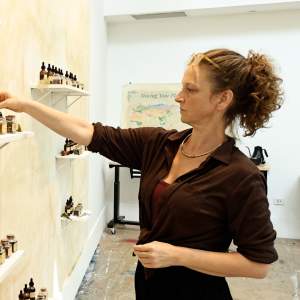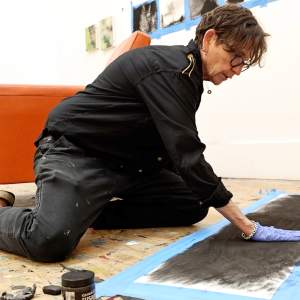
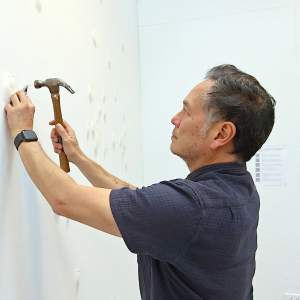
In the Studio: Michael Arcega
“It's this kind of alchemical thing that happens when you abstract a word. It c...
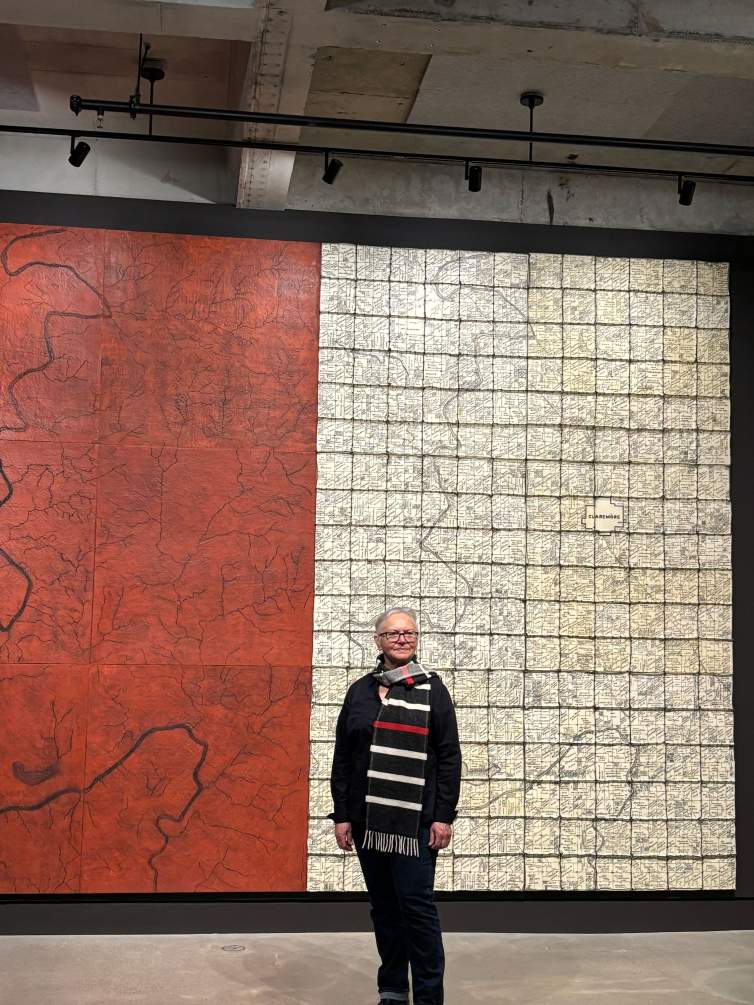
Brenda Mallory, a 2025 Joan Mitchell Fellow, is a Portland-based artist and citizen of the Cherokee Nation. We interviewed her about her work and creative practice in March 2026. The following is edited and excerpted from the artist’s responses.
My work is mostly three dimensional, although most often it hangs on a wall. I work mainly, though not exclusively, with reclaimed or found materials. I like to address issues of sustainability and ideas of resilience and creativity through “making do” with what is available or at hand. I deal with ideas of disruption in nature and cultures and how systems might be profoundly changed but adapt and survive even under duress or damage. I like to show seams, mends, and repairs.
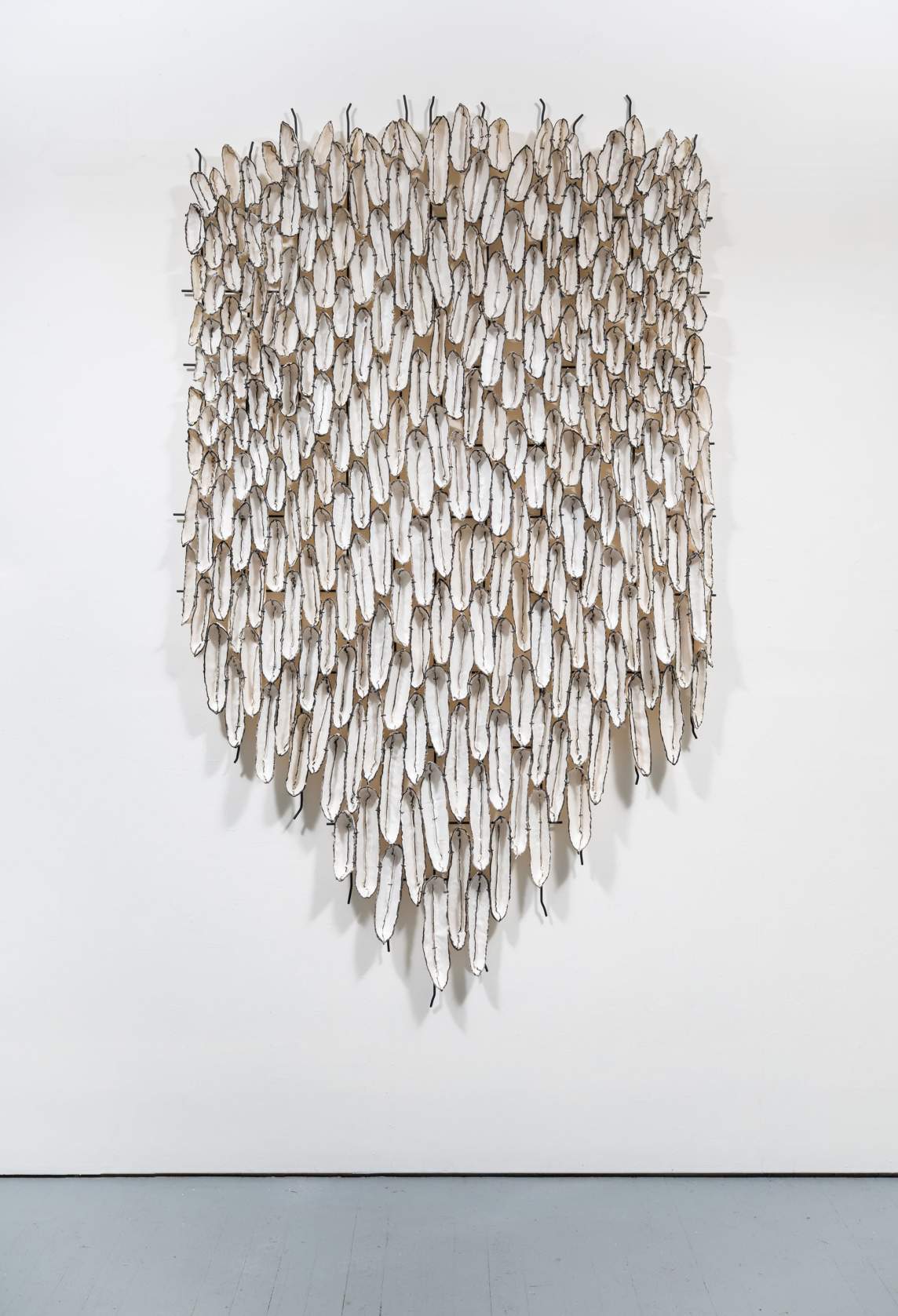
These ideas of disruption and repair, of “making do,” were present when I first started my practice, but I was mainly thinking about environmental issues like climate change and genetic modification of plants in our food systems, and how the commodification of seeds and food systems was a form of power and domination. Demeter Does the Math (and Cries) is a project that ushered in themes that continued to be present in my work for years.
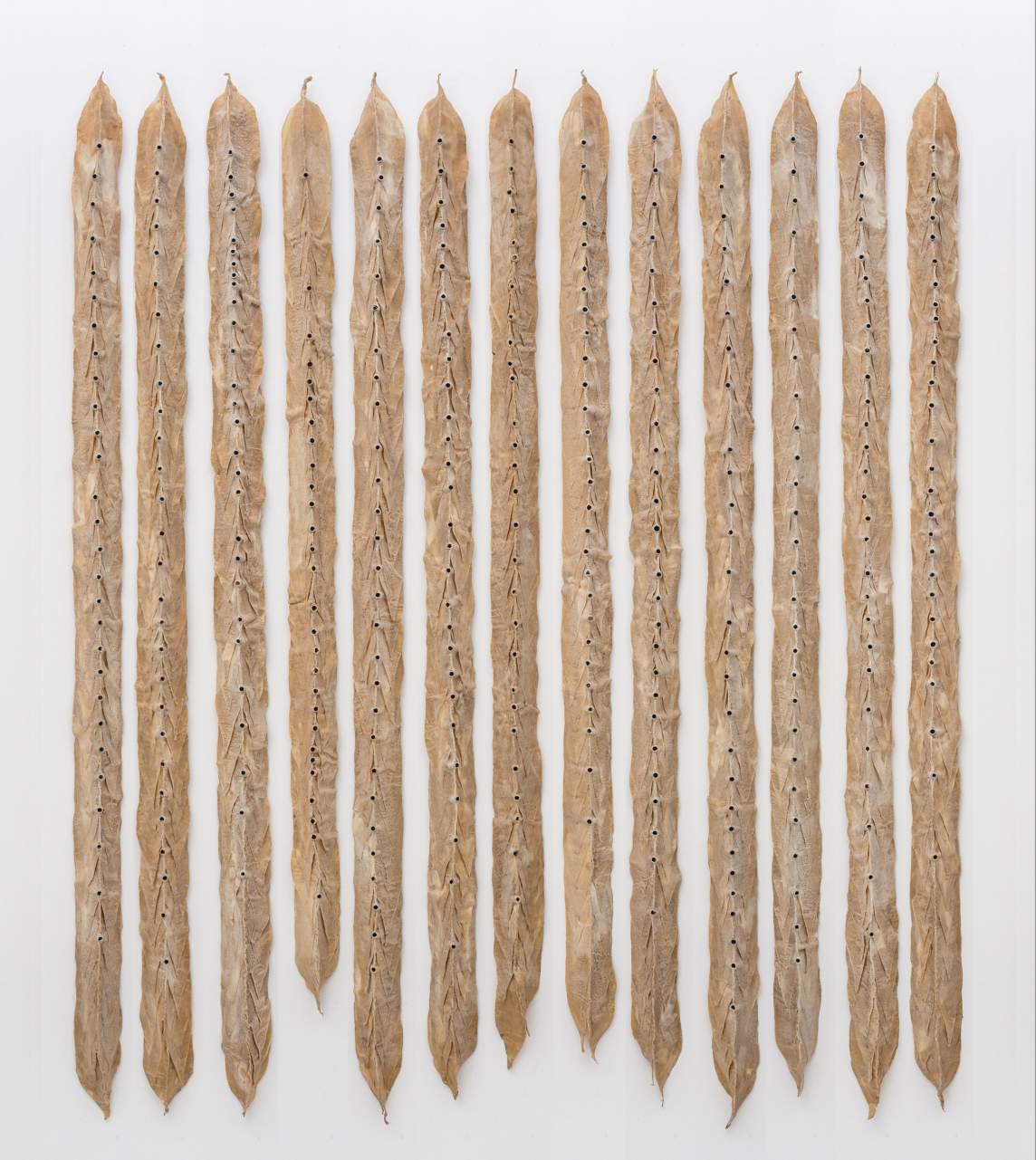
The title refers to the Greek myth of seasons and cycles. While making this piece in 2000, I was considering several ideas: my own approaching midlife and menopause; the burgeoning fertility of my pubescent daughter; and the agro-chemical genetic engineering technology that renders seeds infertile. The politics of power and greed commodifying the life cycle of seeds appalled me. The 13 sections represent the lunar cycles in a year, while the 28 shell casings represent the days of each cycle. The shell casings from spent ammunition and post-manufacturing cotton scraps from reusable menstrual pads come laden with information—tropes of violence and fertility all bound up with a reference to time and cycles.
As time has gone on, I have focused more on how these issues of domination are present in the history of my Cherokee ancestors and how, despite deliberate efforts to assimilate the culture out of existence, we still thrive. One of the first pieces I ever made about Cherokee history is called Recurring Chapters in the Book of Inevitable Outcomes. It's a large sculptural installation that was inspired by a book I was rereading, Sacred Formulas of the Cherokees, written by James Mooney, who was an anthropologist chartered by the government to write down the histories of the Cherokee before they all disappeared. This was when we were still in the East.
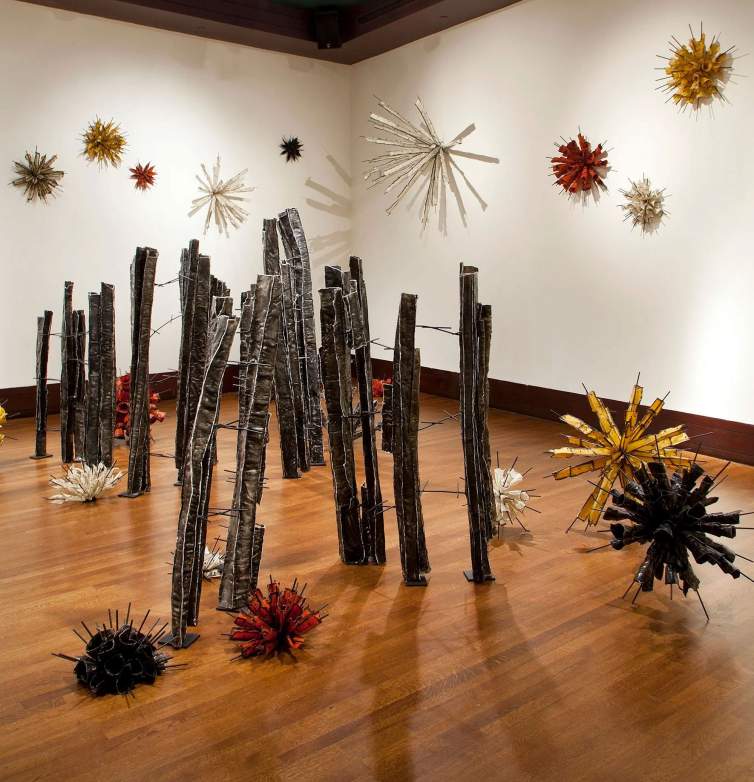
The installation has these tall standing forms that look like burned out timbers or stalks of a plant or corn that has already been harvested, or is past its prime. It's got this somber feeling of death and ending, but coming all around it are these spore-like forms that are colorful and bright. I think of those as seed pods or new life, so the piece goes back to this idea of lifecycles—death and rebirth, or in the case of the Cherokees, being burned out of their homelands, but that's not the end of the culture. In fact, the culture is thriving and continuing to this day to grow and be resilient.
That piece, Recurring Chapters, is very tactile. It has welded steel elements and waxed cloth, which is a material that I started using in school and continue to use to this day. It can take so many forms. In this piece, there are these sewn forms that I then stiffen with beeswax and paint with pigmented wax.
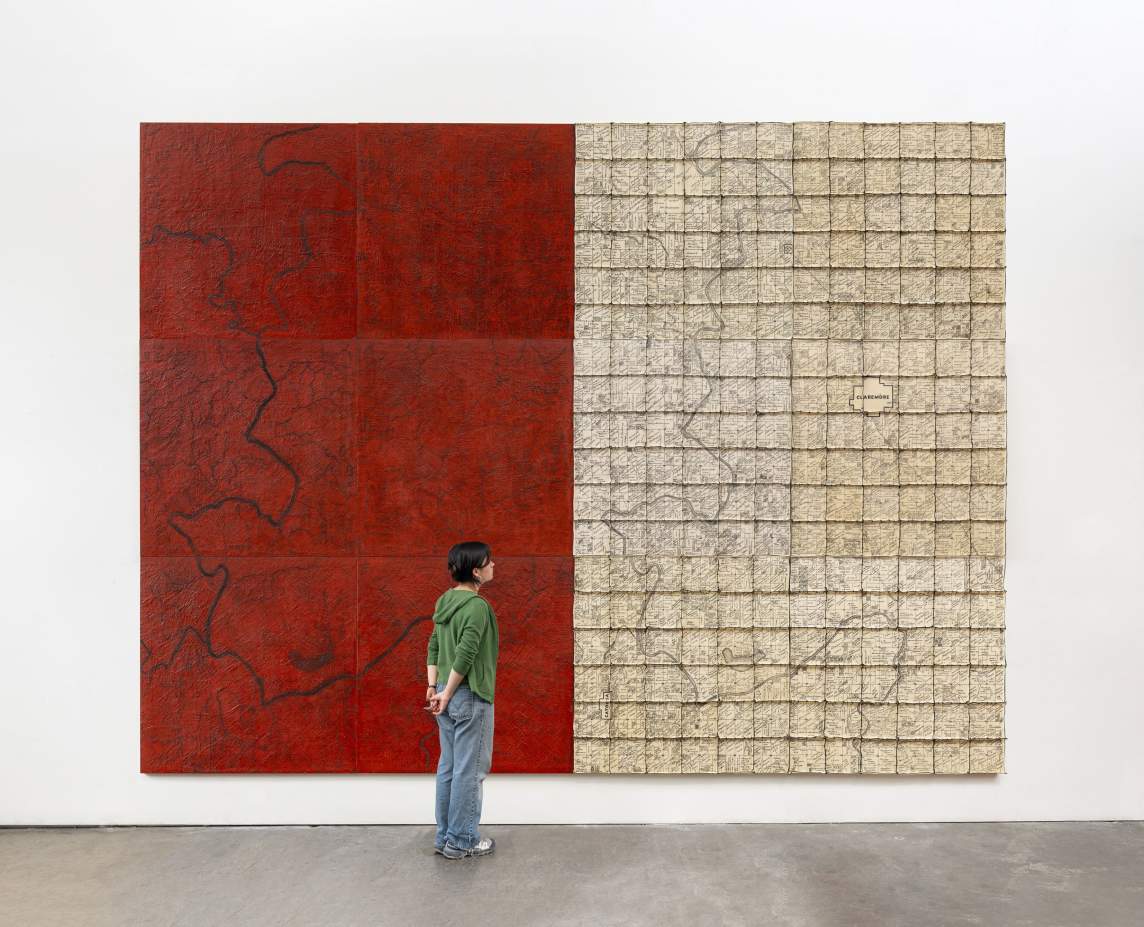
I recently made a piece called Old Homeplace that also directly references Cherokee history. This is an important piece that falls outside of my normal way of working in that it’s representational. It has to do with Native land allotments and the subsequent loss of those lands.
My granny’s land allotment was in the Cooweescoowee District of Cherokee Nation along the Verdigris River. My dad grew up farming that land, hunting and fishing in the Verdigris bottomlands. Granny lost her allotment due to inability to pay the taxes or through borrowing on it—I’m not sure—but I surely remember that every time we drove by it, my dad would sadly say, “there’s the old homeplace.” The piece is a diptych. The white side has enlarged maps full of allotment lines, railroads, names of people. All the sections are crudely sewn together with hog rings. The red side is the same map, minus all manmade overlays. Only the rivers, creeks, and waterways of the land are incised into the wax panels. So it feels like how the land was before settlement, and perhaps will be again after some apocalyptic time, where there's nothing left.
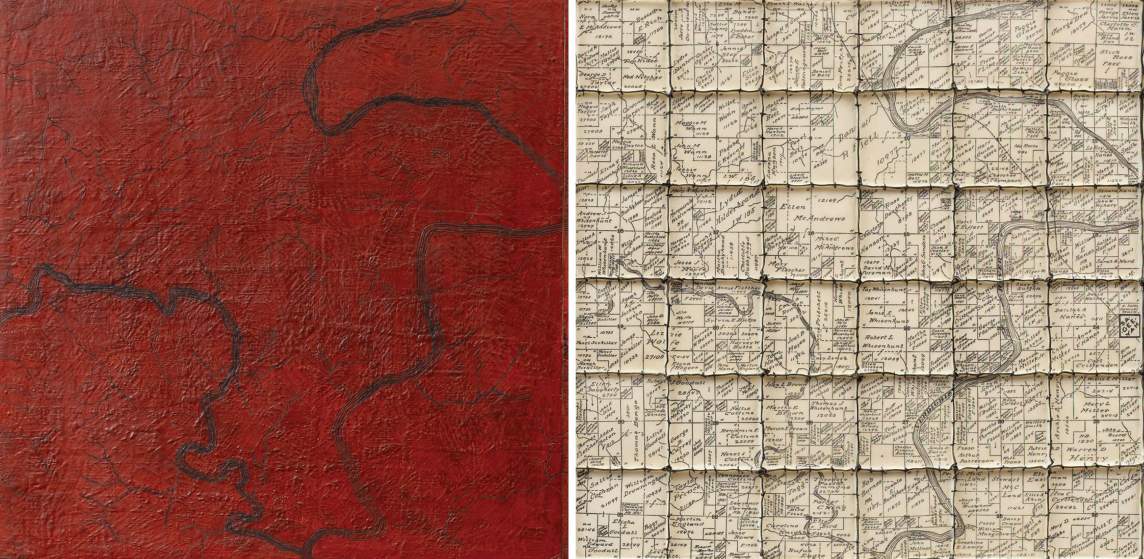
Losing allotted land is certainly not unique to my family. This map shows only a small section of the Cooweescoowee District, which is only one small part of Cherokee Nation, and the Cherokees are just one of many tribes whose communal lands were forcibly divided. But the story of graft and political theft of Indigenous land and of attempted genocide through assimilation, while personal to me, is universal and current in many places in the world.
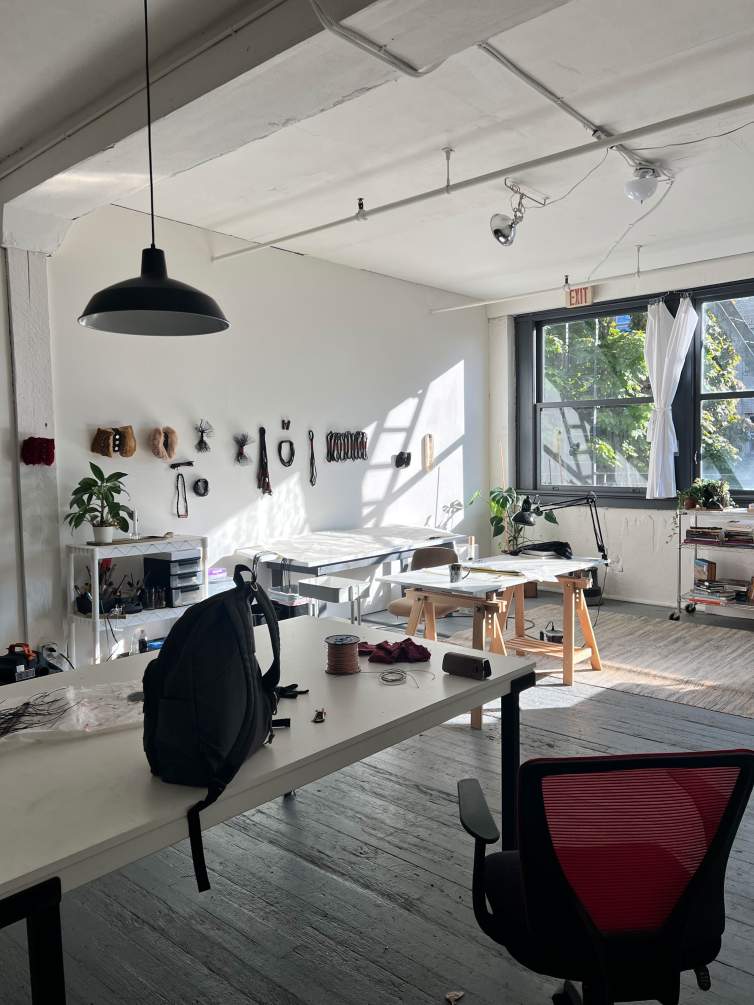
For many years, I worked in my home studio, which was all of my basement. For a basement, it was pretty nice and had windows. There are wonderful things about a home studio—you can multitask making dinner, managing childcare or elder care, and do some weeding while having a phone conversation. But it was hard to get anything large in or out of the basement. With that space parameter, I often made pieces in component parts that would come together outside my studio to form a large piece.
Last year, I moved into a larger space in a commercial building. It’s nice to have more room and to have less of the distractions of home.
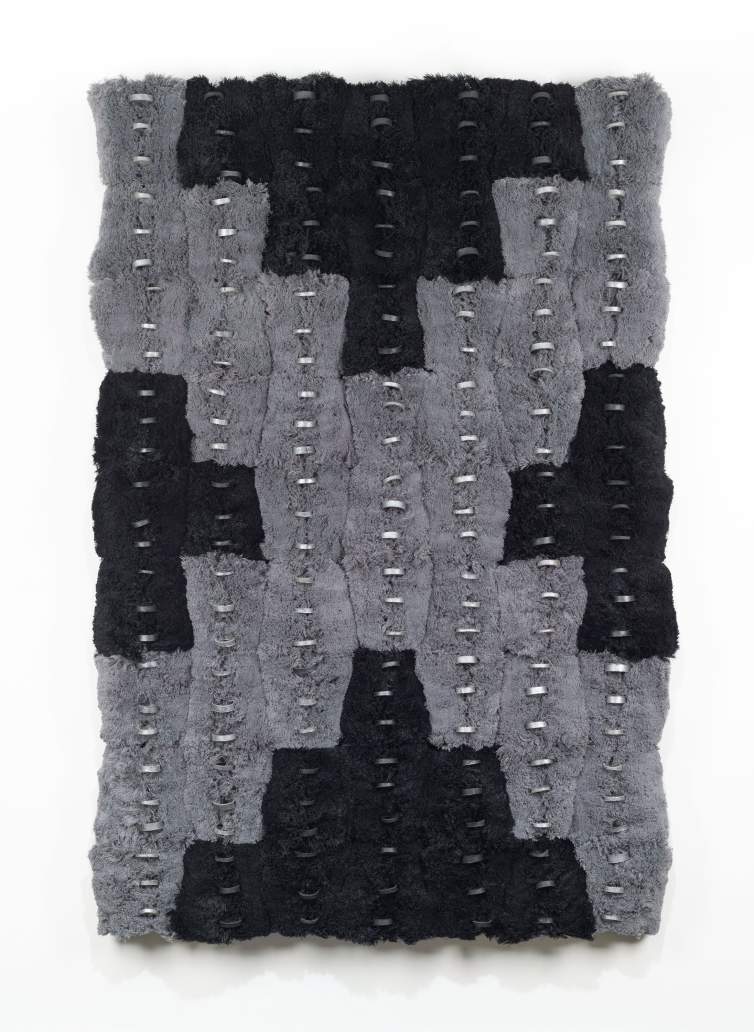
I love the adventure of making—to see what comes when I start working, how to find a way to convey an idea through materials and form. Most often my work starts with material exploration. Since the beginning of my career, I have had access to scraps of fabric from sewing factory offcuts. I love stacks and stacks of the same shape or form. I experiment with putting them together in different ways, often making (sewing or cutting) hundreds of the same form before combining them into one piece. I work with beeswax to stiffen the cloth forms.
I also use other materials that I find—firehoses, industrial spools of thread, packing materials, bike inner tubes, drive belts. I like to transform them in ways that make the original form or function not immediately recognizable. I don’t always sketch out ideas first, but start with a general idea. I try to keep my mind open to the strange ways a material performs and let that influence how a piece comes together.
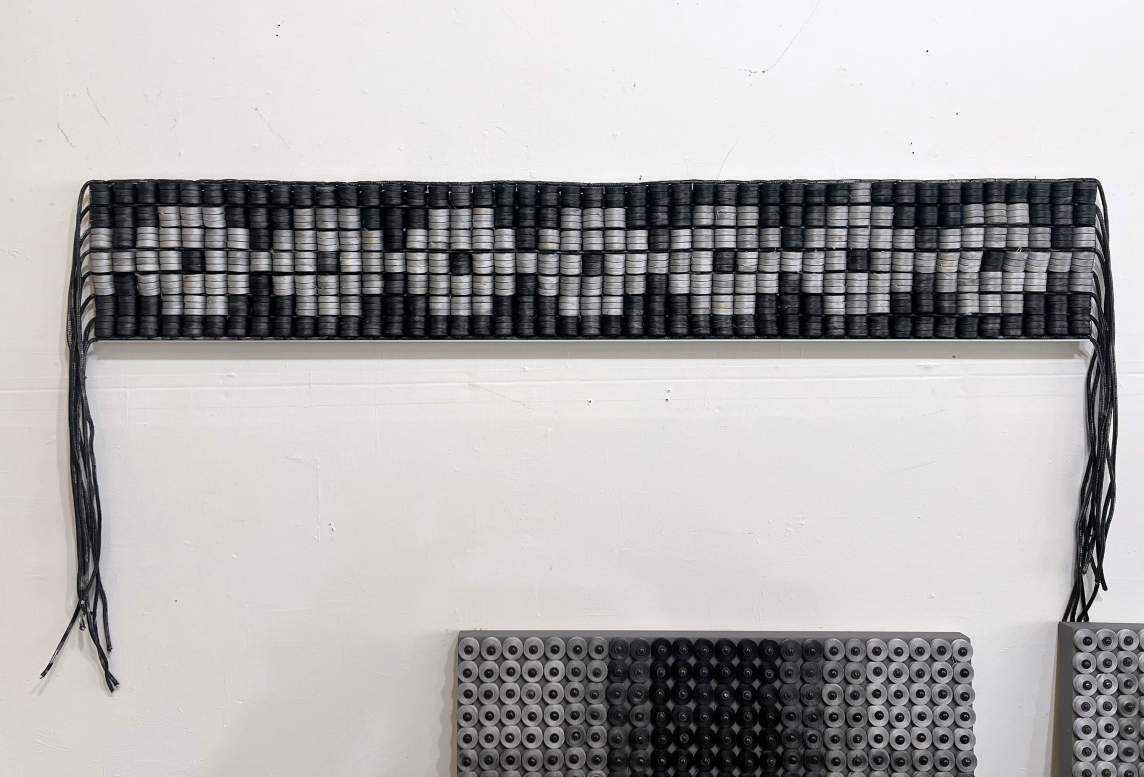
I often work on multiple pieces at once. Right now, I’m creating some very formal, minimal, geometric pieces made from pre-wound bobbin spools for industrial sewing machines. I found a whole bin of them at a local scrap store. I love elevating a mundane material—something that has basically been deemed trash—into a piece of art.
One of the things I'm liking about these bobbin threads is how they come unspooled and conceptually that feels like our world right now, things are just raveling out, unspooling all the time. Systems that were perceived as structured and strong are coming apart.
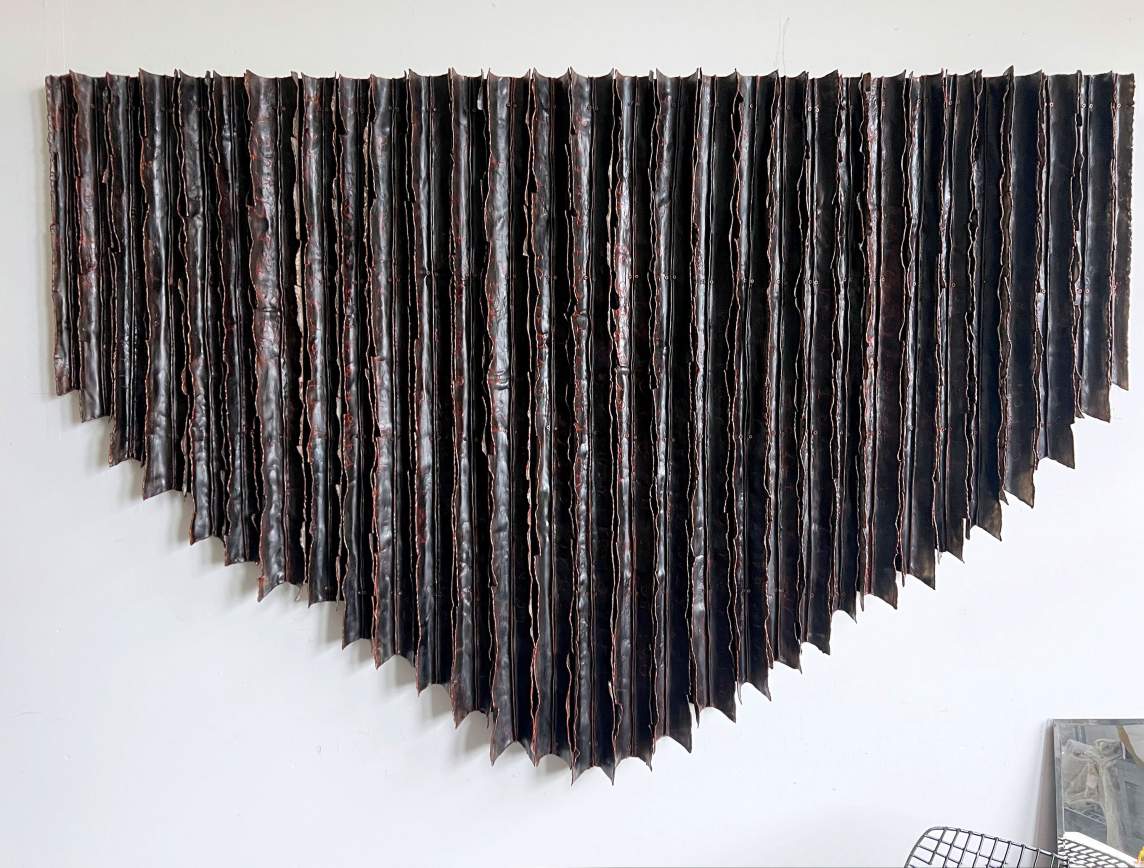
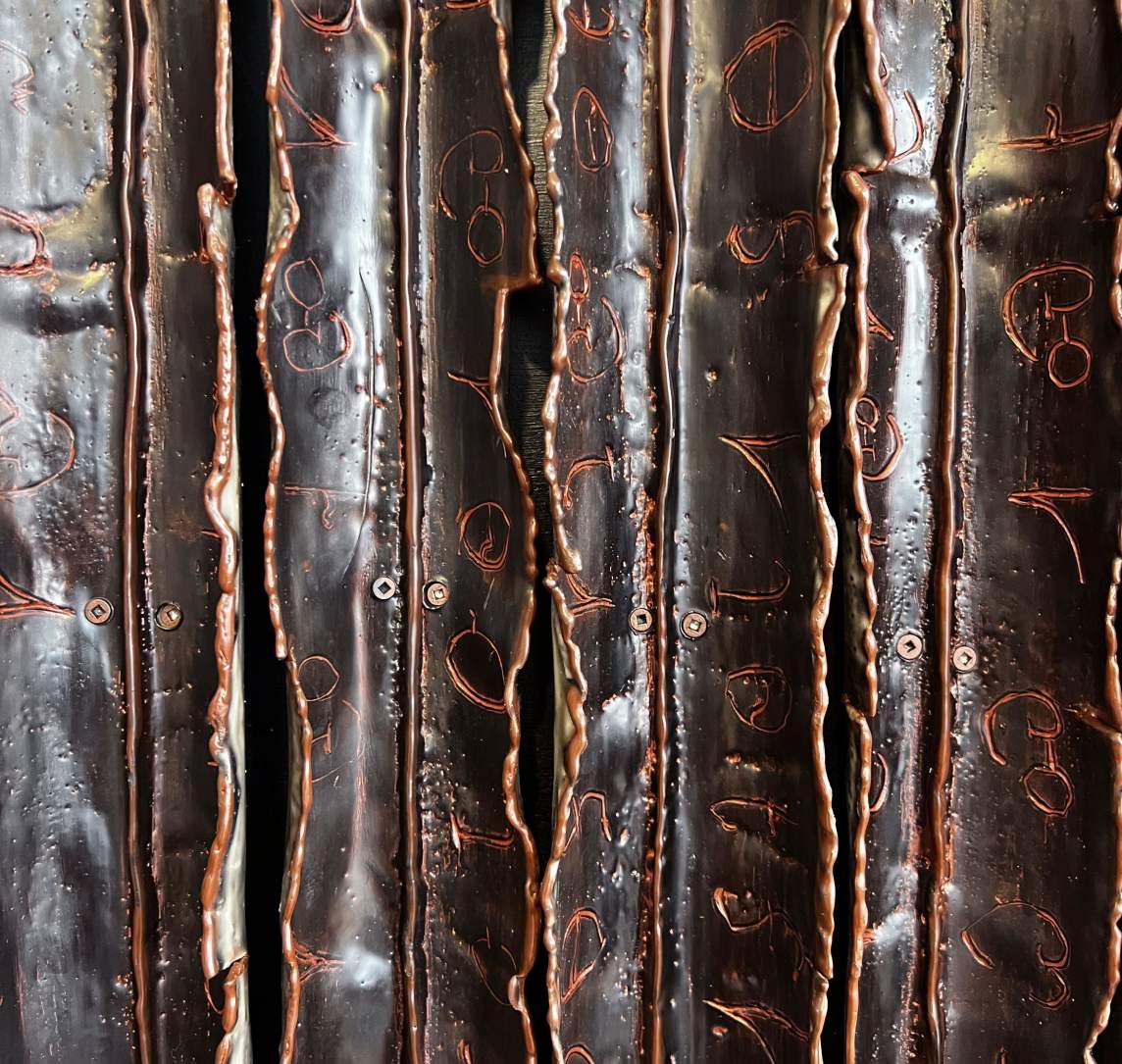
I’m also currently working on a piece that is much more organic, made from strips of reclaimed cloth and wax that I am carving with phrases in the Cherokee Syllabary from a list of Cherokee Community Values. I can’t speak Cherokee, but I think it is important to acknowledge the language and put it out in the world as proof of the continued existence of our culture.
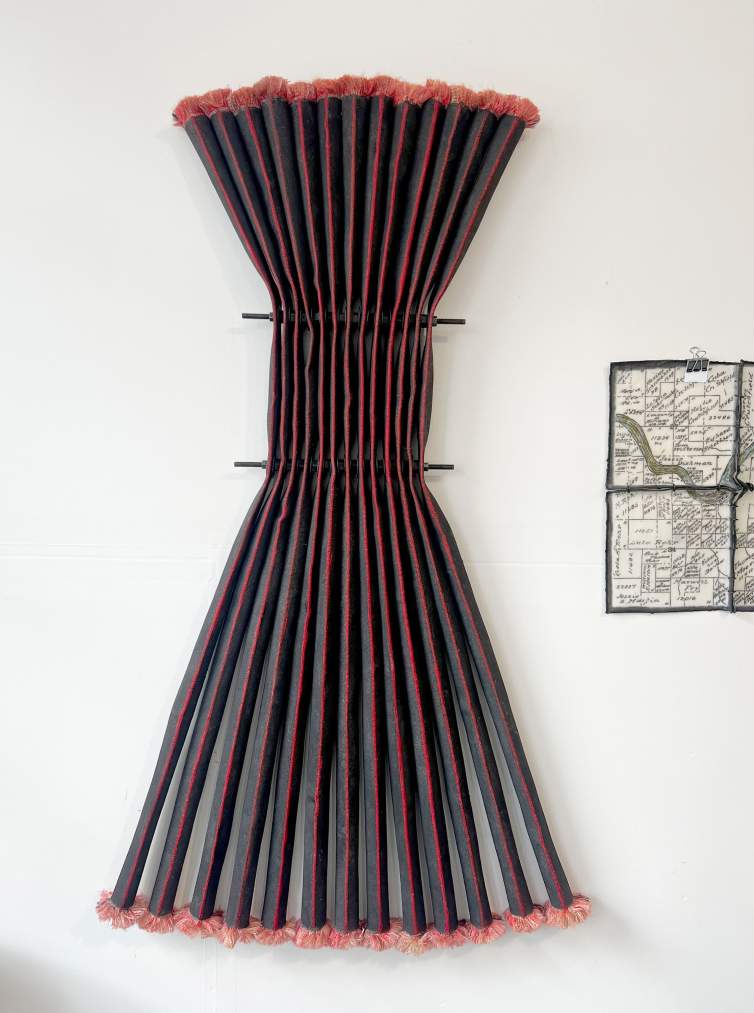
The third piece I’m just finishing up is made from reclaimed firehoses I found at the dump. I have blackened these linen firehoses with charcoal that I collected from a forest fire in central Oregon. I’m excited about how this works conceptually—drawing attention to the plight of our environment because of practices of our own making. A destroyed firehose covered with ash is a sad, heavy statement.
It’s a busy year for me outside of the studio as well. The piece I mentioned earlier, Old Homeplace, is currently on view in the group show Mapping Familiar Territories, Charting New Paths at the Jordan Schnitzer Museum of Art at Portland State University. In June, I will have work in the group show Material Witness at Peter Blum Gallery in New York. I’ll have work at the Armory with Marinaro Gallery in September, and in October, I will have a solo show with Marinaro. In October, my work will be in a group show at the Frye Museum in Seattle entitled My Body is a Basket.
I’ve also been doing a printmaking residency at Mullowney Print here in Portland since January. I love all the physical processes involved in printmaking. For this print series, I’m again using the bobbin spools, this time as mark-making tools to explore this idea of unraveling and coming apart in the same way that I've done with the actual materials. It’s similar to how I’ve approached printmaking in the past: using some kind of material that I'm already working with in my studio as a mark-making tool, almost like a rubber stamp.
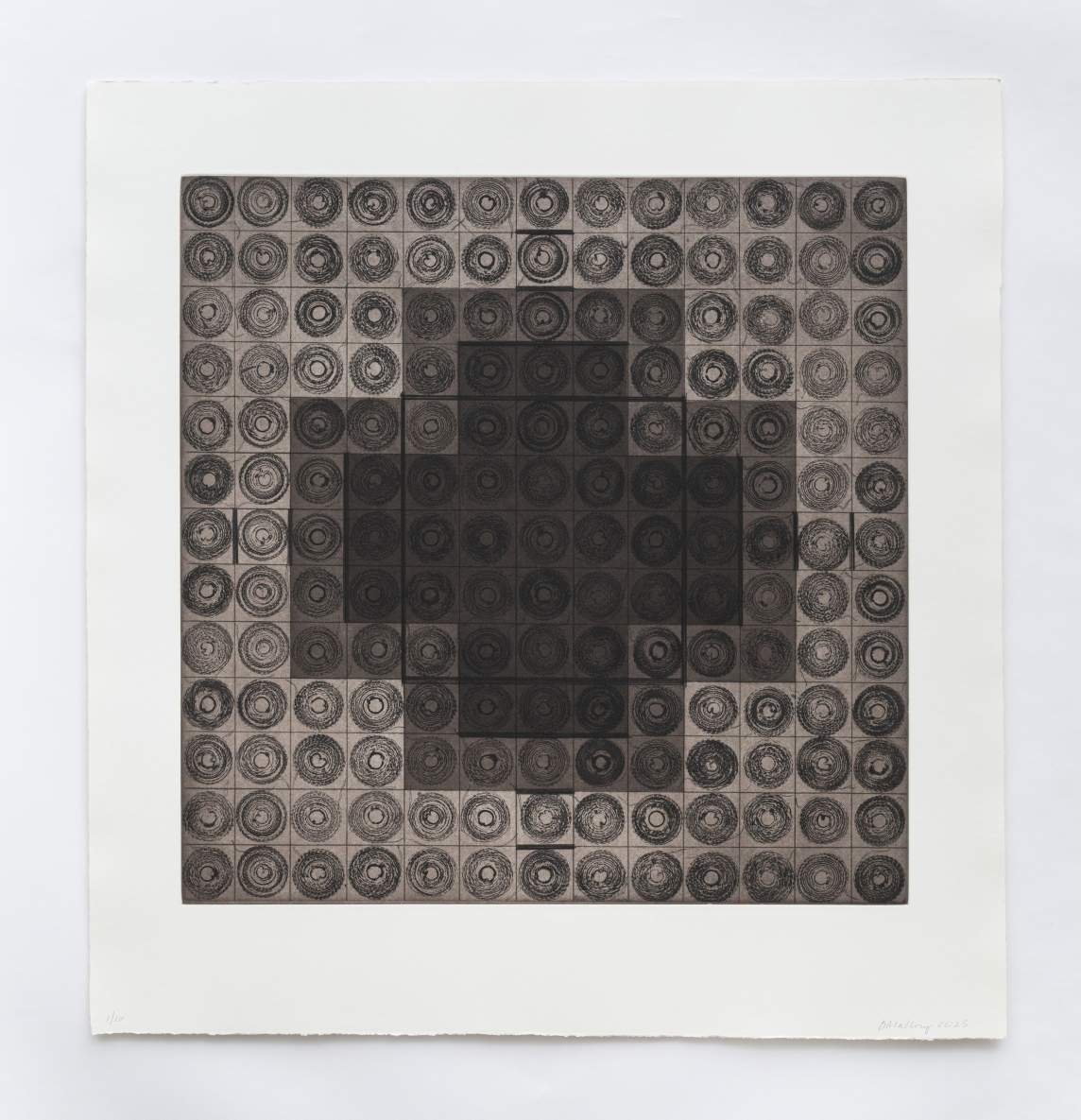
With all of my projects, I hope the work is compelling enough to make the viewer think about some of these topics I’m interested in—dominion, disruption, repair, and interconnections. They may be pulled in by the beauty of the forms and textures, and discover deeper issues on close examination.
Interview and editing by Jenny Gill. Learn more about Brenda Mallory’s work at brendamallory.com.