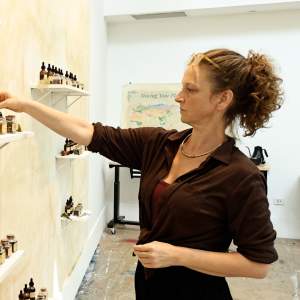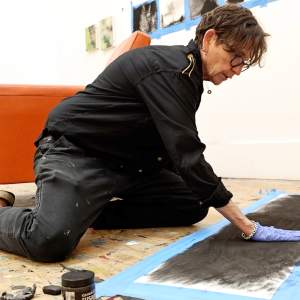
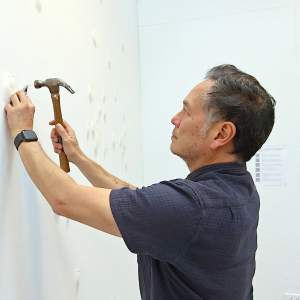
In the Studio: Michael Arcega
“It's this kind of alchemical thing that happens when you abstract a word. It c...
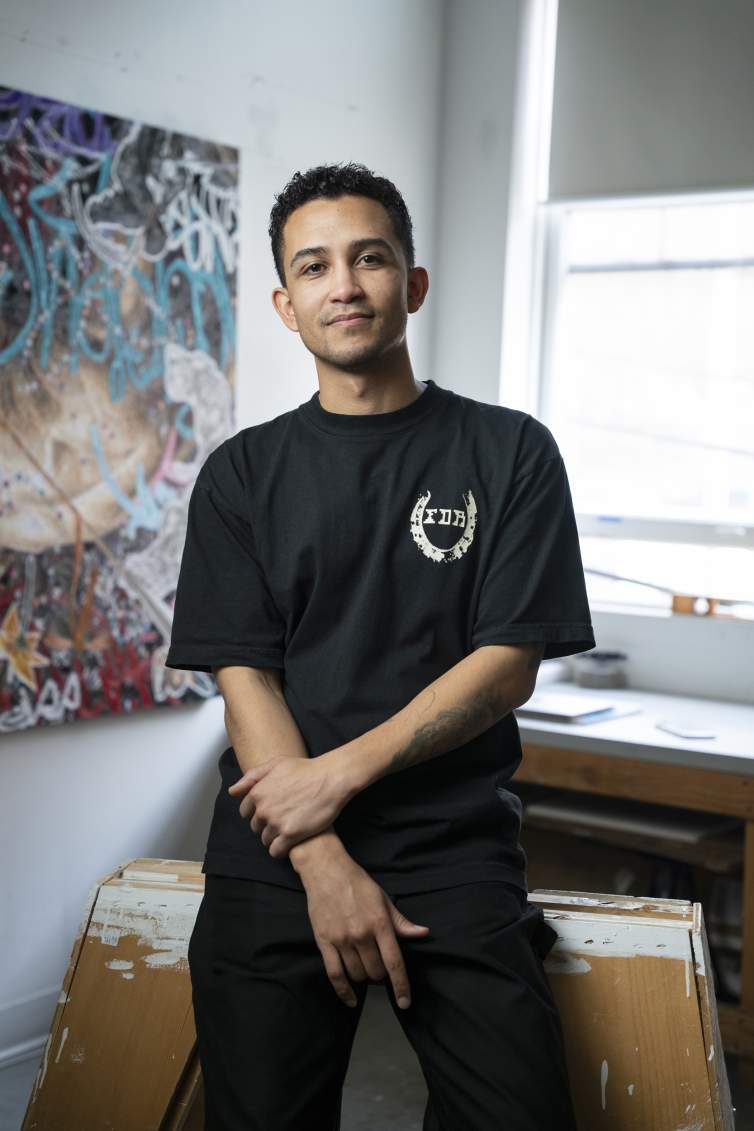
Anthony White, a 2025 Joan Mitchell Fellow, is a Seattle-based artist and community advocate. We interviewed him about his work and creative practice in March 2026. The following is edited and excerpted from that conversation.
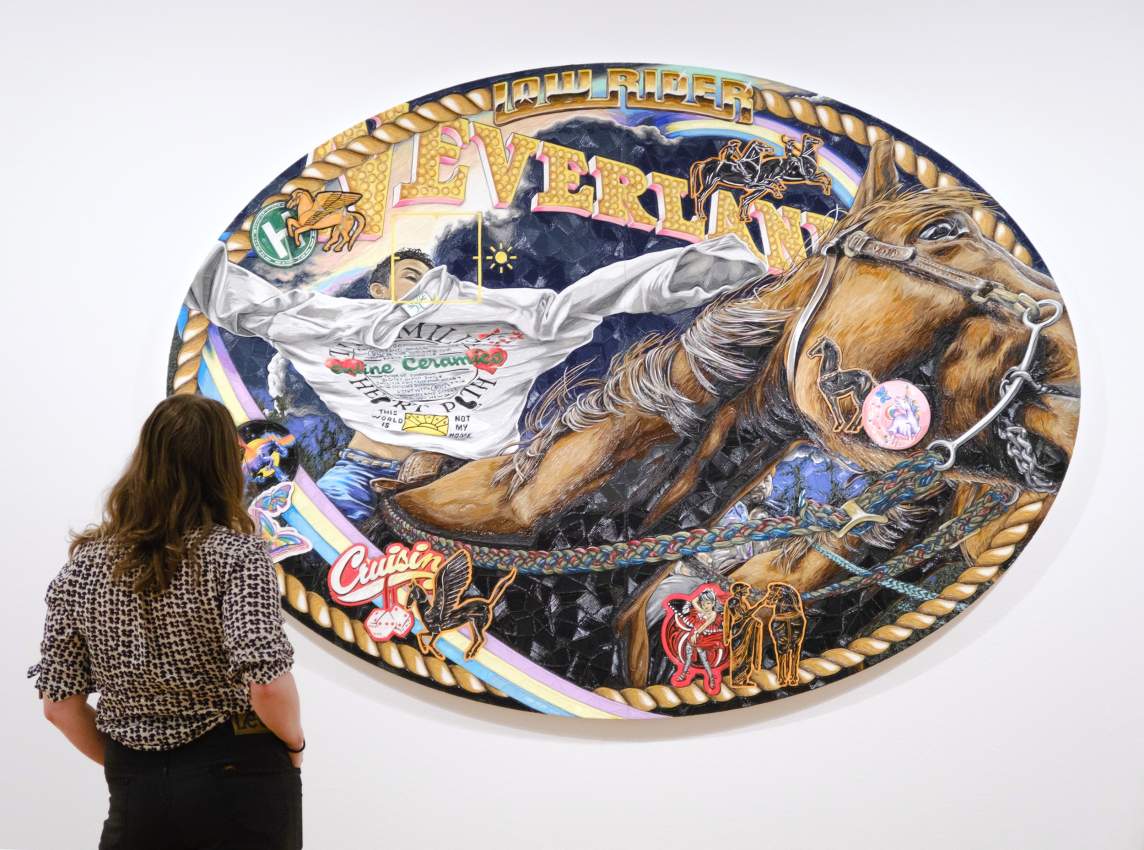
I immediately recognize the things I make as paintings, although they're not. I use this very unusual material, polylactic acid, which is heated and melted. I essentially draw with it. This material, which is very vibrant and saturated, is primary to my practice.
My goal with the work is to provide a window for others to see themselves within. I'm basically trying to reflect my daily existence, how I navigate it day-to-day, what I'm seeing, what I'm being influenced by, what culture is telling me, what billboards, advertisements, ads all want me to look at. I'm taking all of that in and assembling these thoughts and ideas into my compositions.
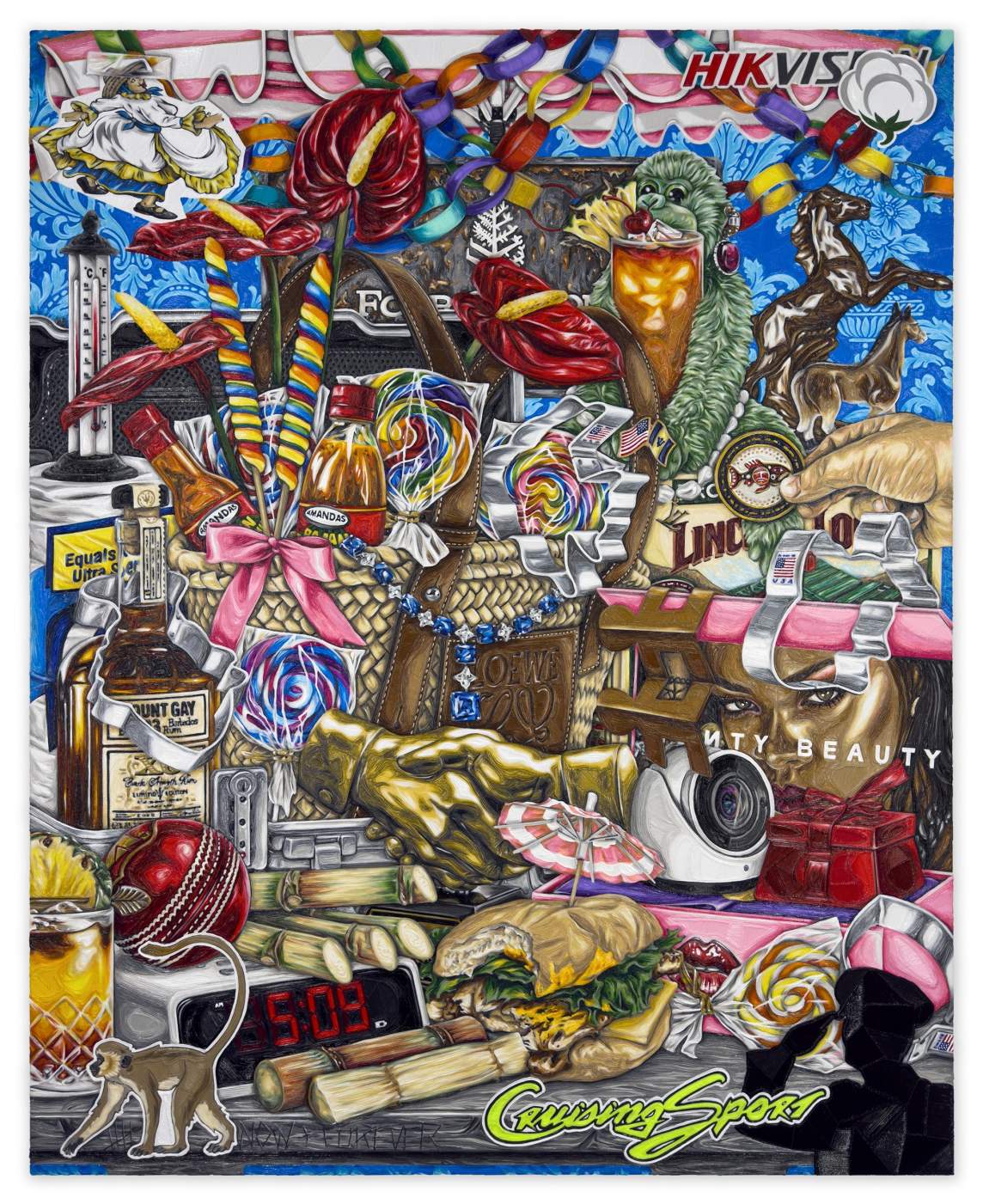
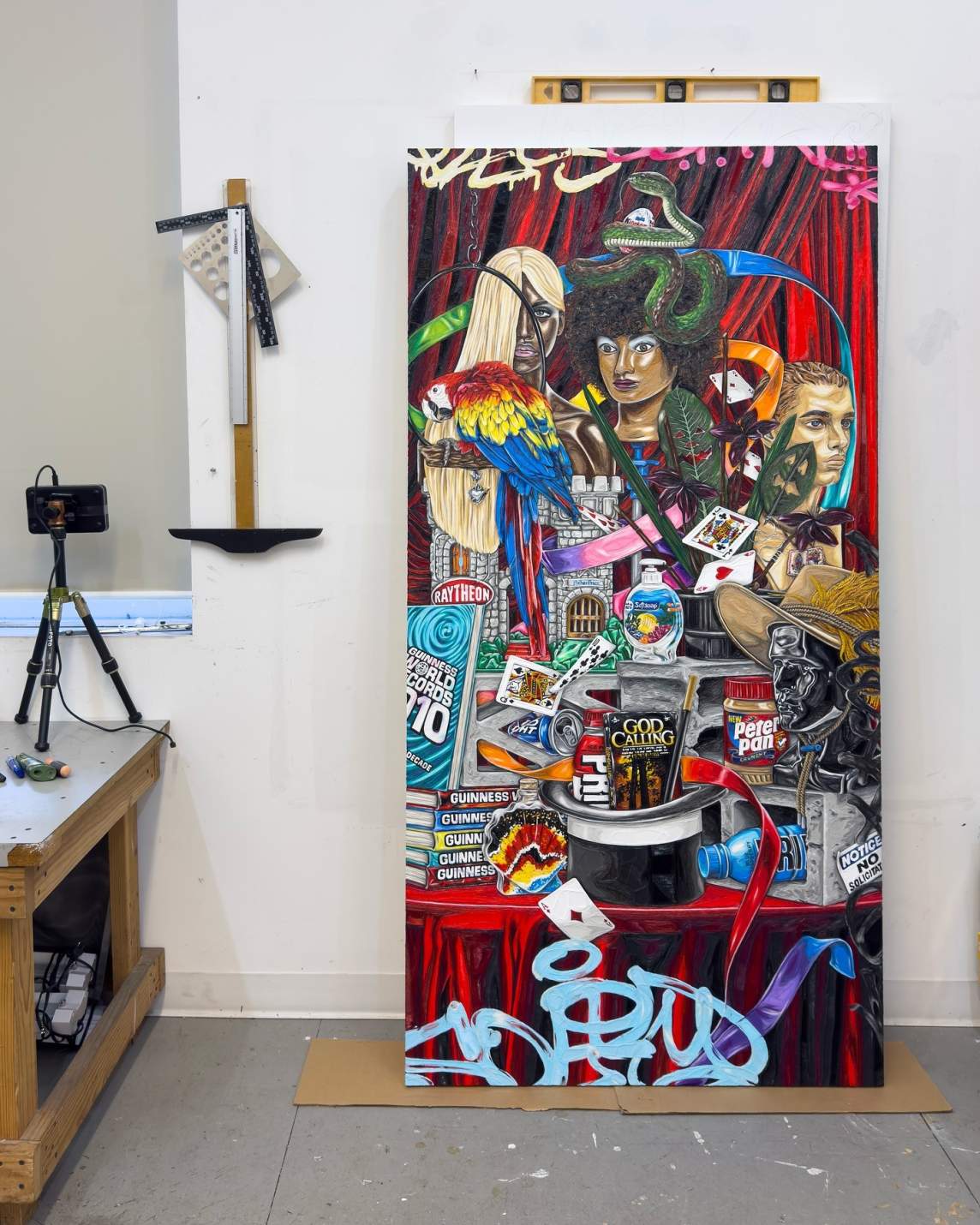
I've always been influenced by 16th-century Dutch Vanitas—these amazing, detailed paintings that have so many layers to them. They start to reveal themselves the longer you look at them. Similarly, I'm trying to create these portals for viewers. It's from an individual perspective, but I think the work is able to talk about life in a generational sense and also a social-political sense.
With my still-life work, I like to tap into nostalgia and what the world looked like not that long ago, representing obsolete technology to comment on how things become dated in a really short amount of time. It signals how accelerated our existence is, how absurd that is, and how much waste that produces. It's a never-ending cycle, and I think there is a place for blame and fault, but inequality is certainly a part of why there is a lot of waste. We think about fast fashion or all of the materials used in quick chain restaurants, and how the system was designed in a way to create waste. But it's for somewhat specific demographics, and the game that's at play in the world has been set up in a way where reinventing the rules or re-strategizing how it's played is close to impossible. I don't necessarily know what a course correction looks like in terms of making sure everyone is taken care of. But that's a question that sticks in my head in the studio: how do we undo all of these systems?
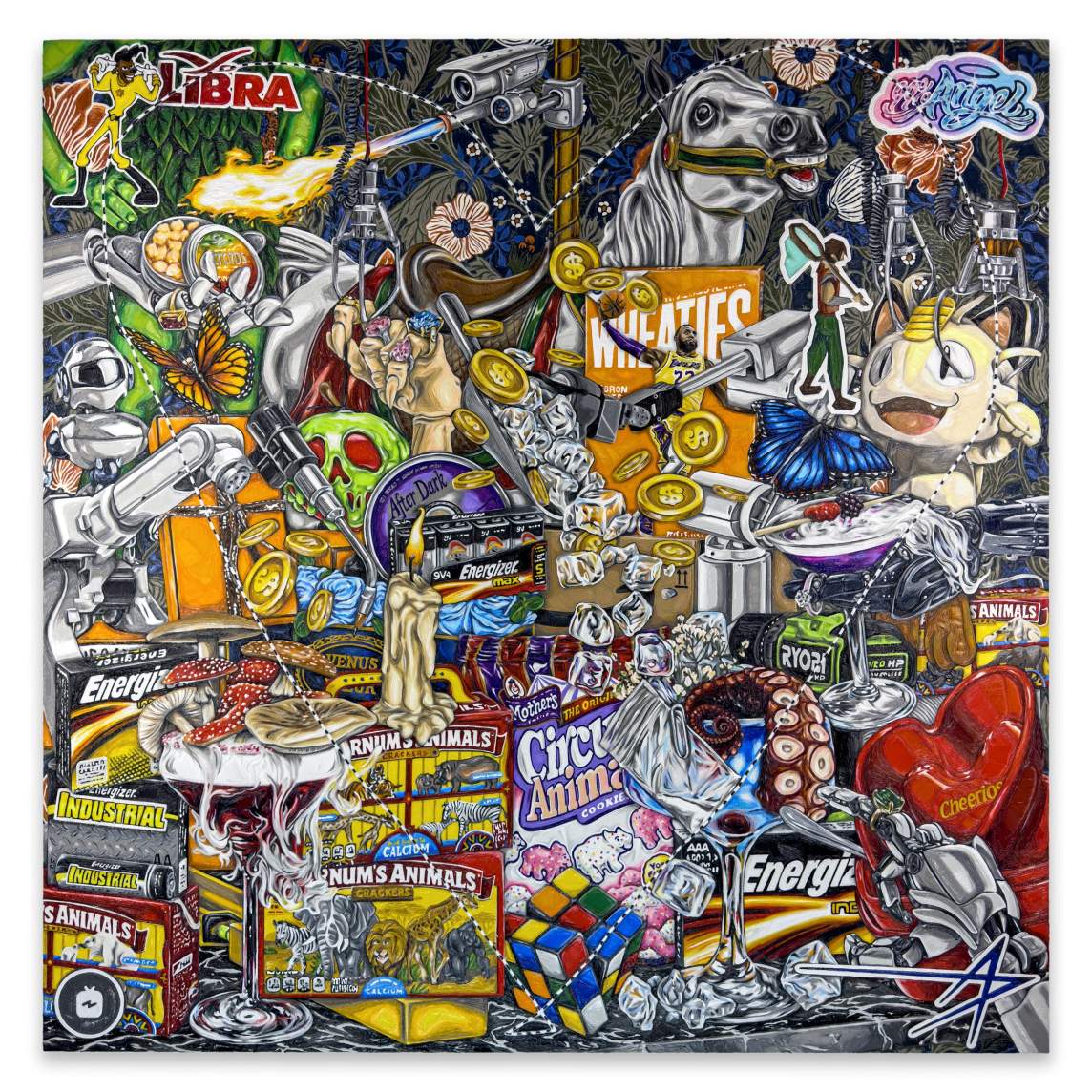
Like the work I'm inspired by, my work tends to have all of these layers, like you'd see on a screen or a browser window. Much of my day-to-day is data gathering—taking photos of things that essentially describe the situation that I'm in. On my walks to the studio, I snap photos of what is filling up the trash can that day, or if I'm at a friend's house, I’m looking at the tableau of objects that represent their identity. It's always nice when I'm able to capture something with a newspaper in it or a date because I like to include these sort of timestamps in the work that represent and signify where we're at in terms of history.
I live downtown, so I'm always walking past varying degrees of inequality and poverty, and the nit and grit of it all in the city. The other day, I saw this pair of jeans on the street and my mind immediately went to the denim wars that were happening in the media with Gap and American Eagle. And so I'm always finding ways to both tease and critique society itself, and also culture—what we're seeing online or on the news all day.
The photos that I take usually sit in a folder until I can find another object that has some sort of relationship to it, whether it's one that compliments it or contradicts it or creates a sort of controversy. I do a lot of mixing and matching to describe the times we're in.
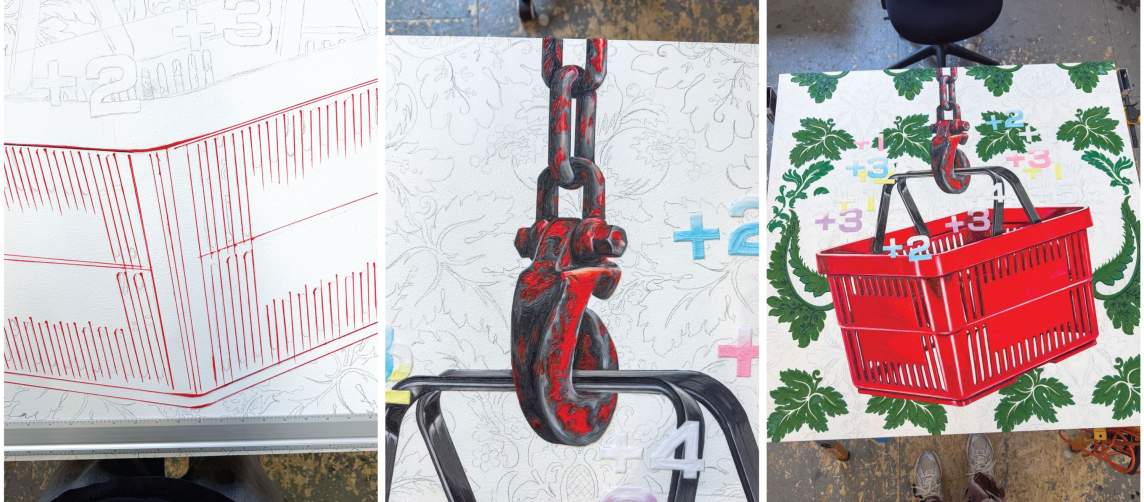
The material that I use, polylactic acid, is very interesting and conceptually aligned with my work. I came across it when I was in art school. I was doing a lot of sculpture at the time and the lab got a new 3D printer which used polylactic acid filament to build objects through very fine layers. I was curious about the way this printer could essentially make anything with proper input and data. Alongside that, I was new to Seattle, where there had been this really insane and impressive tech boom that changed the city. So I was thinking a lot about technology and how machines were sort of taking over the role of humans, replacing the hand in art, and taking over factory jobs. I wanted to find a way to use the polylactic acid by hand, sort of replacing that machine and giving it a bit more painterly, artistic, individual, genuine feel.
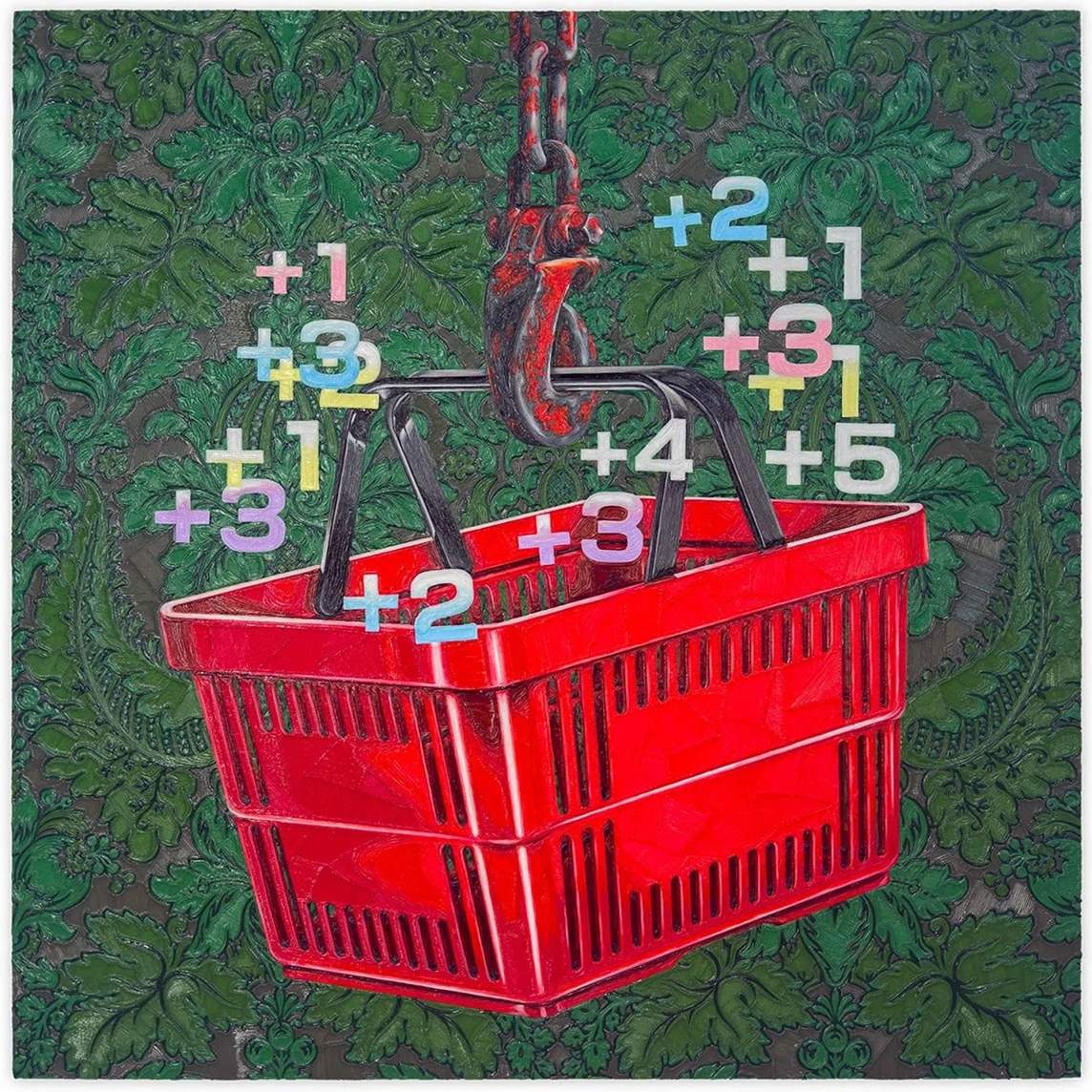
I've been using polylactic acid as my primary medium for eight years now and it keeps me interested because of its ability to create a really unique texture and hold its saturation and vibrancy. There's this one-to-one correlation between that material and the things that I'm critiquing within my work, because a lot of the objects that I'm replicating or producing in my work are made in real life with a similar material, but in a factory setting. So conceptually, and contextually, this material is very aligned. I also like that it’s organic and biodegradable.
I like to think of my work as a narrative way of making. It's like narrative storytelling. I don't think we'll ever stop telling stories, but I hope that the work encourages more storytelling from all points of view. And I also hope it encourages others to experiment with nontraditional materials, and to do so with intent.
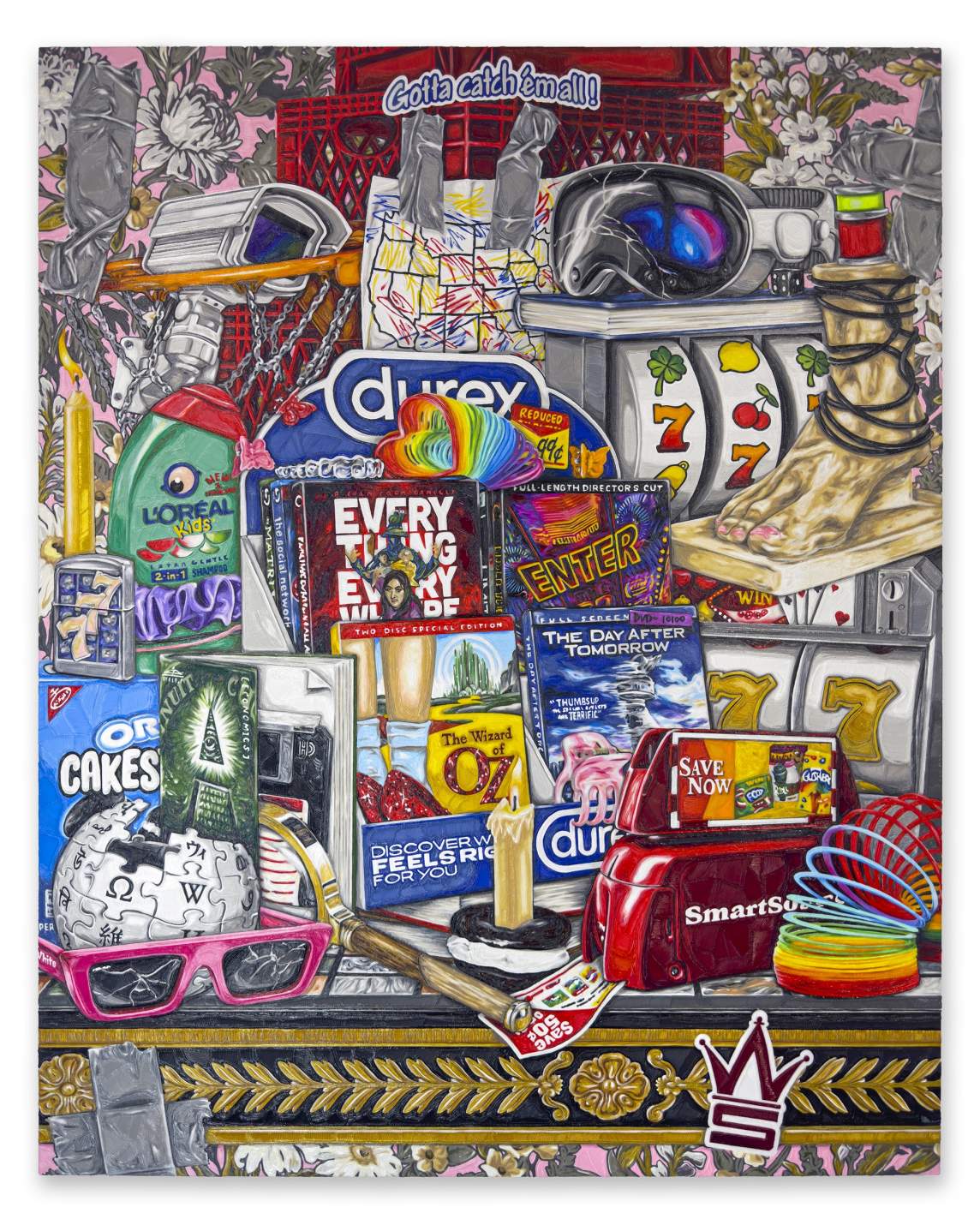
There's a piece called Director's Cut that is a good example of my still-life work, and how objects in my paintings, when paired together, start to create this narrative between themselves, creating conspiracies and having fun teasing geopolitics. At least for me, for the past couple of years, I've been intentional about how much news I take in and how much I pay attention to what's going on, not only in America, but in the world overall. And it's like every day everything continues to make less and less sense. There was this meme that was going around that was like, "This is what we understand of America right now," and it's this map of the US with scribbles all over the place—like, nothing really makes sense. Everything's really confusing. The question of why constantly remains.
And when I was looking at that, the Apple Vision Pro was coming out. It was this new tech toy that people were skeptical of, and it was supposed to be the hottest thing on the market and it didn't necessarily do well, but a lot of attention, research, and dollars were put behind it. The painting also depicts immediate gratification tools and toys like casino slot machines and roulette. When I was a kid, you'd go to grocery stores and they'd have those coupon machines right by products on the shelves, and my siblings and I would collect those coupons going down each aisle. It felt sort of like winning a prize, saving 50¢ on an item that we weren’t intending to buy. I included that object for its nostalgic quality, as well as to comment on capitalism, and the persuasive nature of the system.
Also, at the time I was working on this piece, the movie “Everything Everywhere All At Once” had just come out. I thought that was just a really great description of both how I see the world and how I'm trying to represent it through my painting—I wish I would've used that title before it was a movie. I had to include it in the painting because it made so much sense in terms of zeitgeist and what I am aiming to do within my practice.
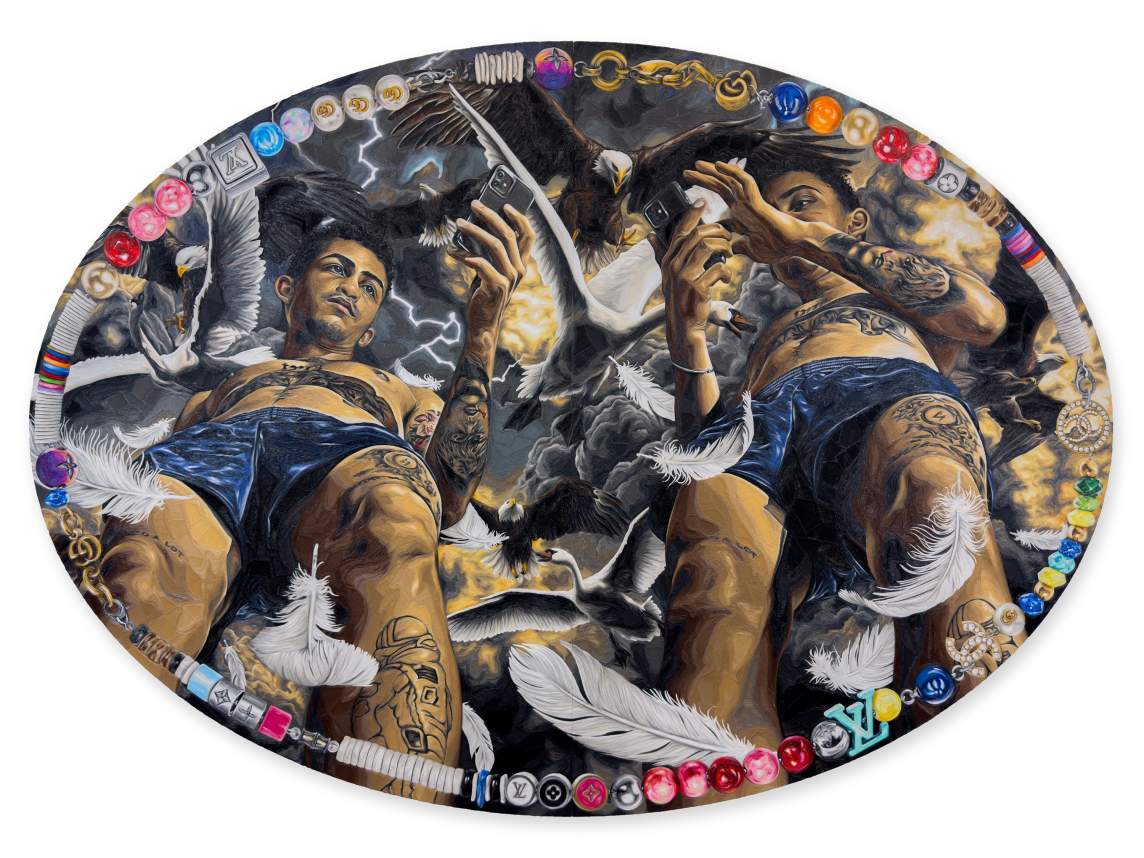
Alongside my still-life work, which I mentioned is very influenced by Vanitas paintings, I make figurative work that also incorporates these layers and objects that represent time and identity. But with these works, I’m more focused on the subjects within the painting. I made this painting recently called The Perfect Storm. As with the Vanitas, there's a lot of illusion and layer. I'm still tapping into the chaos of American life, the day-to-day, and it's representing how we're able to distract ourselves from everything that's going on in the world through the devices that we’re addicted to.
When my work leaves the studio and I put it out into the world, I think the highest compliment is just looking at it. When people take a moment with it, whether it's in a gallery setting or through printed material or online, I appreciate that. I want people to be able to see themselves within the work. I intentionally create these windows for access, and if the work is able to ask whoever's looking at it what their relationship to or participation with the world is, I think it does what it's supposed to. The surface quality, the texture, is one of the most surprising things for people when they see it in person. I'm just a huge advocate for seeing work in person if you can.
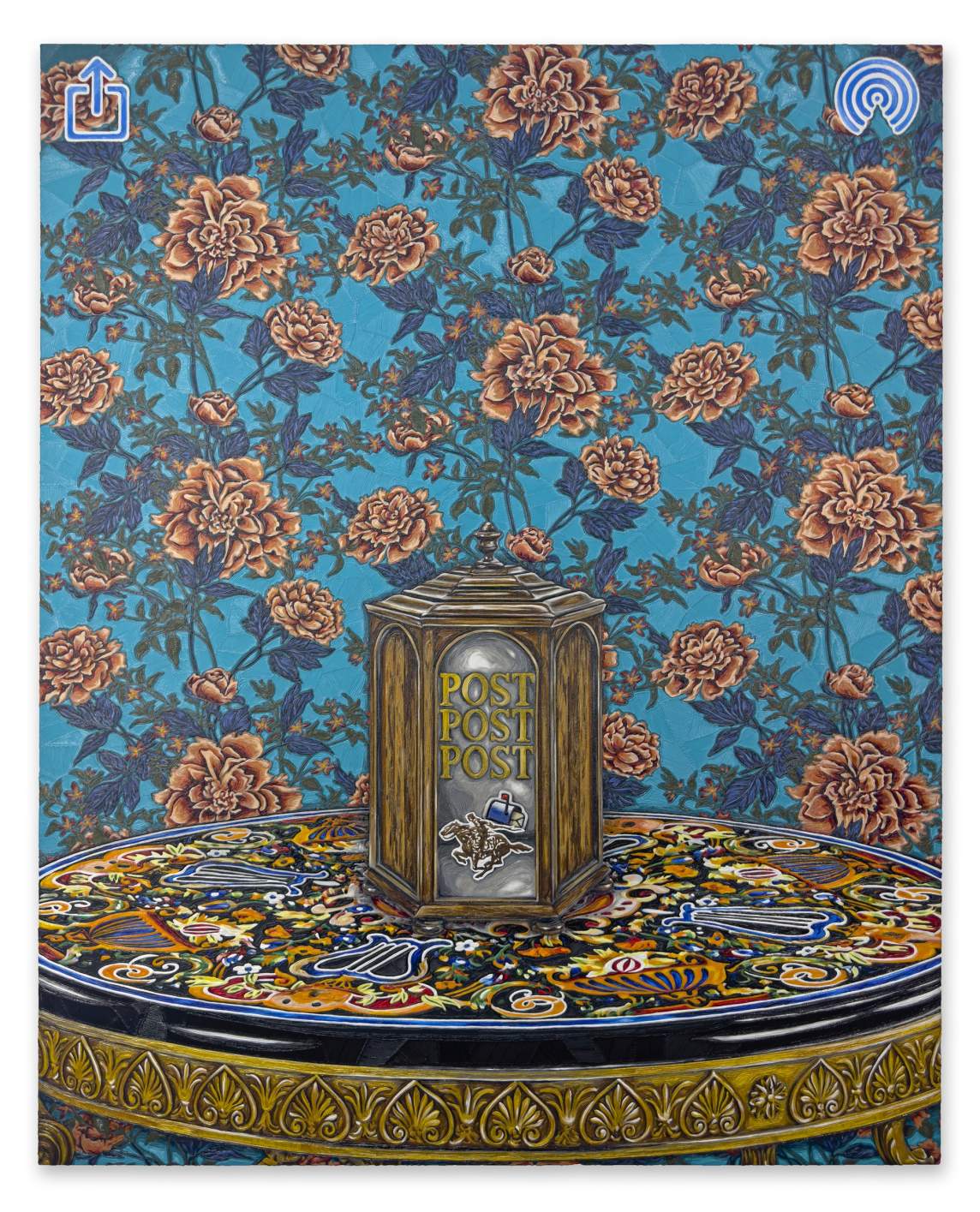
As an artist, I'm motivated by being able to ask questions and inquire about things that are often overlooked in everyday life. I have a studio where I'm able to bring research and inquiry and unpack it all without repercussion or judgment. Being able to do that is inspiring. I also find a lot of motivation in seeing and experiencing art in various capacities and forms, in galleries or museums or in studios.
Alongside my studio, I do a lot of community work. I sit on a couple of arts organization boards, and there is a curatorial element of my practice, which is very aligned with the way I approach art and research. It allows me to ask similar questions as I would in my own studio, but I get to display it through the lens of other artists. I see it as a responsibility of mine here in Seattle to show the Pacific Northwest what is happening outside of our corner of the world, bringing in work by artists who I think are excelling at what they do and portray it beautifully. And I love building bridges that can help us all better understand what the art world is, what it means to be an artist, and how we can expand our communities and work together. I see my volunteer work and my curatorial work as just another way of giving back to community, making sure that voices are heard and margins are represented.
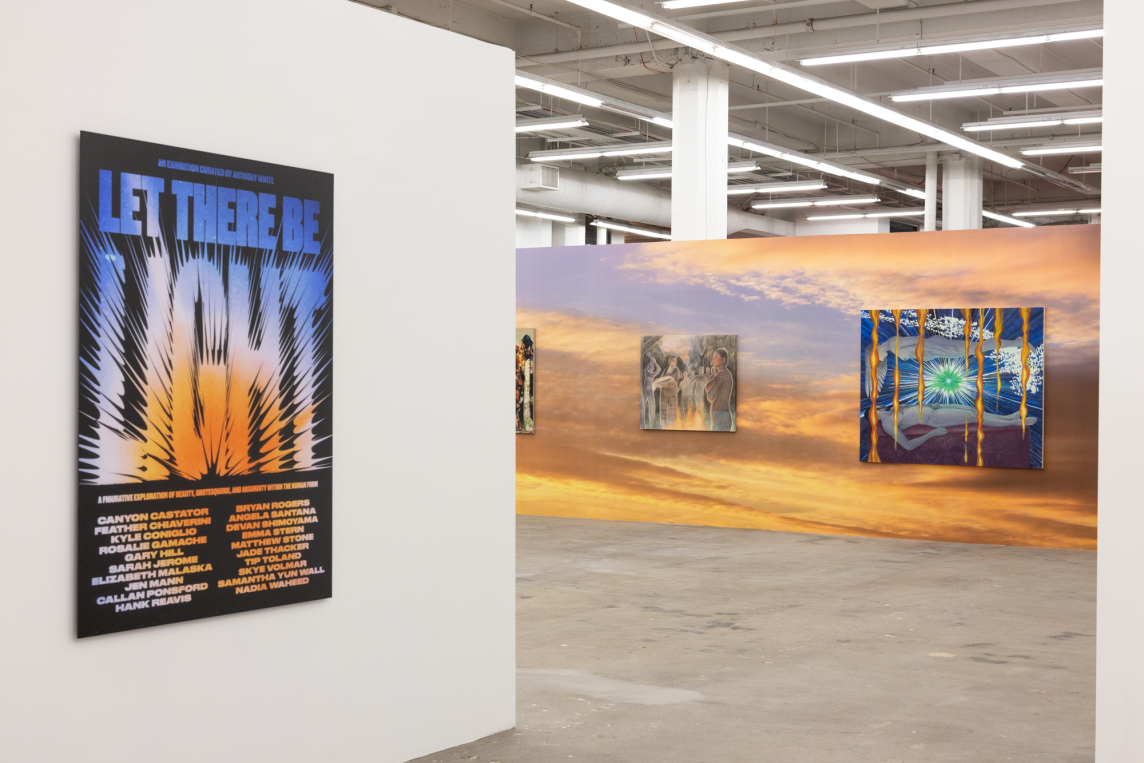
An exhibition that I curated, Let There Be Light, just opened at Cannonball Arts in Seattle (March 2026). It’s a show that highlights the body, featuring work by 20 artists from all around the world. It's asking questions about boundaries and shining a light on the beautiful things that are associated with the body, as well as the grotesque, absurd, and dangerous things, too. It's putting the body on display in a way that I think is timely and approachable. Figurative work has always been an interest of mine, and I make a lot of work that revolves around identity as well. These 20 artists are able to talk about the body in a way that I don't in my own studio, and that inspires me to continue making this kind of work, and also curating and providing opportunities for other artists.
It's not easy being an artist. It's gratifying, and fulfilling, but it's tough. Artists give their studio practice 100%, which is both a beautiful and toxic thing. We don't know what we're going to get out of it, but we're giving it everything we have.
For me, for my practice to work and to sustain itself, it relies on being able to place the work and show the work. What leaves the studio is what sustains the studio financially—working with galleries, having solo exhibitions, doing fairs. I'm in a place where things have worked out for me to be in the studio every day where I get to express ideas and concerns, and ask questions.
There's a business side to an art practice, and while that business side takes up only a small majority of my time every day, it has to be considered. It involves building relationships with different networks, different collectors, different galleries. And that's really rewarding. Showing with different spaces or doing fairs in different cities always allows me to meet new people, meet artists, and find like-minded individuals in different places.
Right now, I am getting ready to do the Dallas Art Fair with Jim Harris Gallery, which is a new gallery for me. Then I'll be doing a solo show with them in January, which provides enough time to actually make all the work for that.
I've been really happy with what I'm making right now and the amount of consideration I'm giving it. Somehow the world has given me a little bit more time in the studio without the immediate pressures of tight deadlines or images due. And that has been amazing because I'm really happy with what's happening in the studio.
Interview and editing by Jenny Gill. Learn more about Anthony White’s work at anthonywhite.studio.