In the Studio: Michael Arcega
“It's this kind of alchemical thing that happens when you abstract a word. It c...

Analia Segal is an interdisciplinary artist from Argentina, based in New York. We interviewed her about her work and creative practice in July 2026, during her residency at the Joan Mitchell Center in New Orleans. The following is edited and excerpted from that conversation.
I describe myself as an interdisciplinary artist. Trained in graphic design, I gradually moved into sculpture and eventually expanded my practice to encompass a range of media and processes. My studio practice is driven by research-based and conceptual concerns that unfold through sculpture, installation, photography, video, drawing, sound, and, more recently, performance.
I’m originally from Argentina and have been based in New York since 1999. When I first moved to New York, I was interested in materials and in the physical exchange I was having with my immediate surroundings. Given the lack of space in the city, I began thinking about how to translate my experiences into more site-specific or site-responsive work.
At the same time, I found myself living in a bilingual world. I moved from my mother tongue, Spanish, toward trying to understand how language could help me connect with my surroundings and develop a sense of belonging. My engagement with place gradually shifted from the physical to the linguistic, and I began to focus on language and on how words can become “vessels” within my practice. In Spanish, vasija evokes a container, while barca suggests a boat—a vessel that moves through space. This became a powerful metaphor for thinking about how we establish connections, carry knowledge, and move between places and languages.
In the last few years, particularly since COVID, my concerns have expanded toward the displacement we have experienced between the physical world we once inhabited and the accelerated digital world we have been compelled to enter. This tension has brought me back to questions of language, embodiment, and belonging and to what I call a mOTHER tongue—a concept that has been central to my practice in recent years.
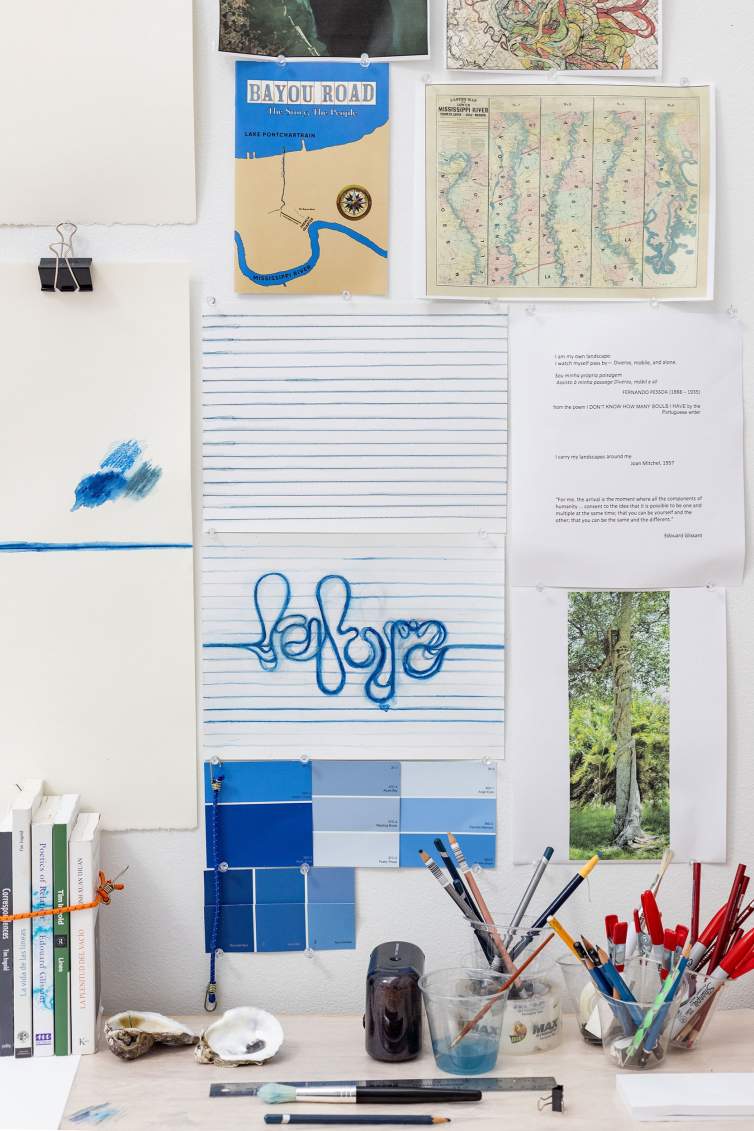
Coming into the residency at the Joan Mitchell Center, my interest was in the process of engaging with the city of New Orleans, its history, its community, and its landscape. I think of all these things together as what I call a “geography of encounter.”
My main work here has been a wall drawing made with blue watercolor pencil, through which I have been thinking about the relationship with water in the city and what it means to inhabit a place shaped by it. The physical experience of being both “above” and “below” sea level is particularly significant here—not simply as a form of geographic orientation, but as a condition that shapes the experience of the city. It creates a kind of liminal space that is constantly shifting. I have become increasingly aware of a consciousness around water that I never had before. It functions as an inner compass—a spatial awareness embedded in how people relate to and navigate their surroundings.
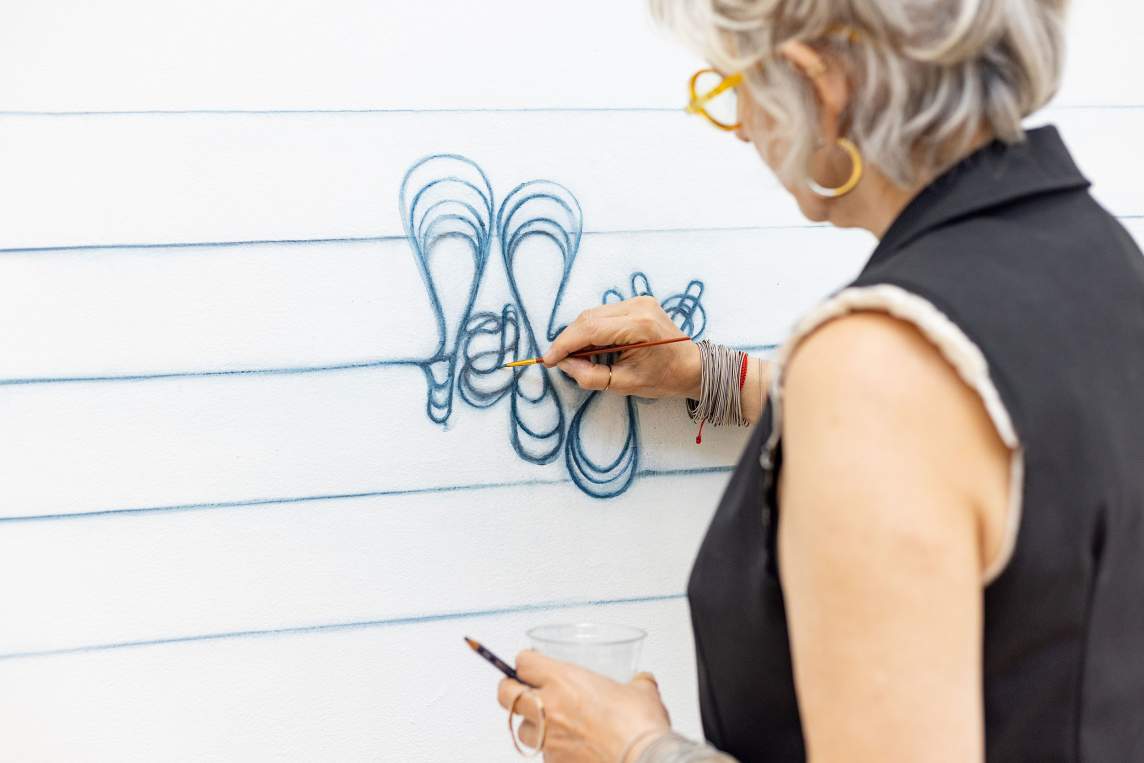
An important dimension of the work has been my engagement with local musicians who play brass instruments. I was particularly interested in horns as an amplifier of the human voice and as integral to the history of the city.
I think of the wall drawing simultaneously as traces left by floods, a page from a notebook, a map, and an open invitation—a visual score and a prompt where lines, words, and forms are intertwined. It connects the visual language I have been developing through pencil drawing in my ongoing exploration of the expanded notion of language, not limited to verbal and written forms.
The words “above” and "below" function not only as markers of geographic orientation but also as sonic forms, opening the drawing to interpretation and dialogue with musicians. They do not perform the drawing; rather, they enter into a “heart-to-heart” with it.
This has been an incredibly fruitful exchange, allowing the "mark" to extend beyond the wall and become audible—moving from a line to sound and from visual notation to an embodied experience. It was an honor to have Wes Anderson, Ryan Scott Long, Chloe White, and Stephen Lands respond to the prompt through musical improvisation.
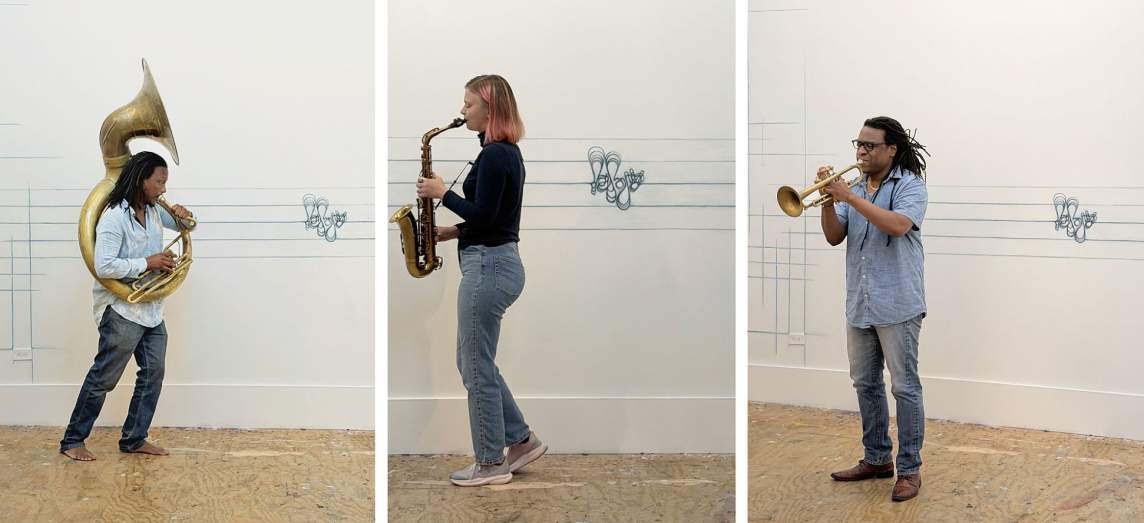
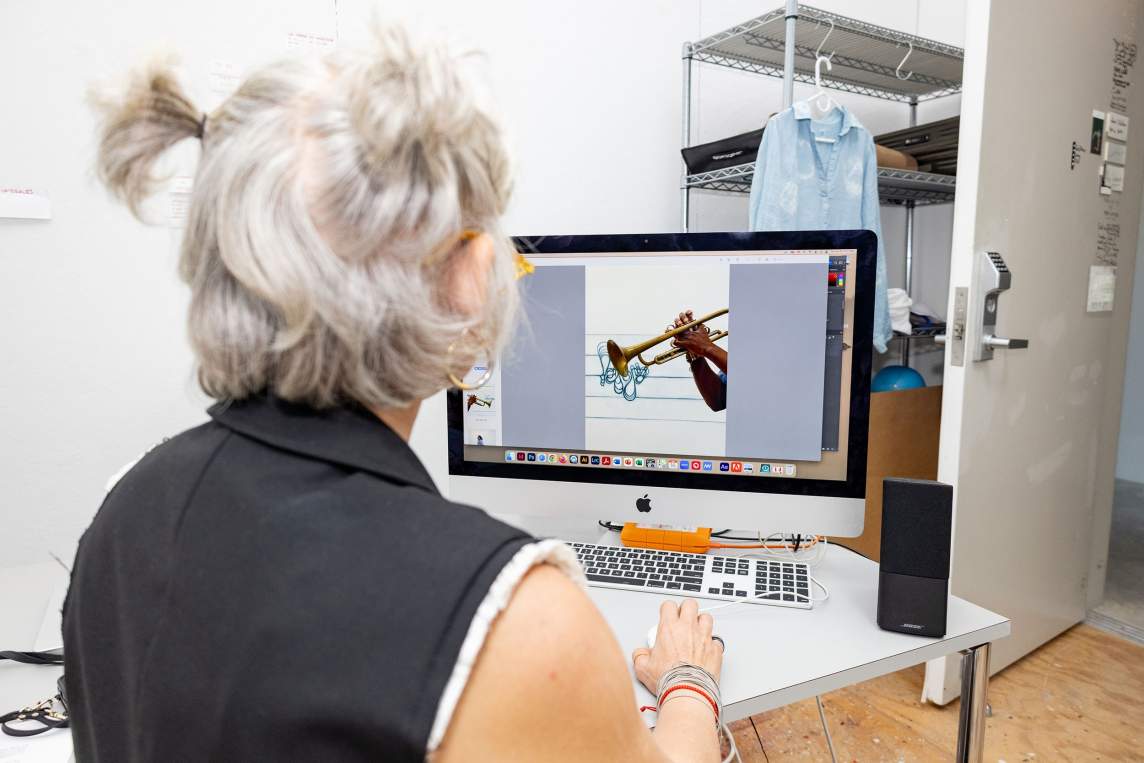
During the research process, I was not only interested in the complex history of New Orleans but also, in particular, in Bayou Road, where the residency is located, as a passage for movement, trade, and exchange. I am approaching my time in the city with the clear notion of being a guest and with the intention of trying to understand how my work can enter into a dialogue with the local people, histories, and traditions. I am interested in creating a space where different histories, forms of knowledge, and ways of listening can remain distinct while generating something new and unique through exchange.
Language is not only as a means of communication but also as something that mediates, shapes, and influences our relationship with the world.”
Analia Segal
This piece is strongly connected to my ongoing research, which is rooted in the personal experience of being bilingual and in trying to understand how language is rooted in the body. Language is not only as a means of communication but also as something that mediates, shapes, and influences our relationship with the world.
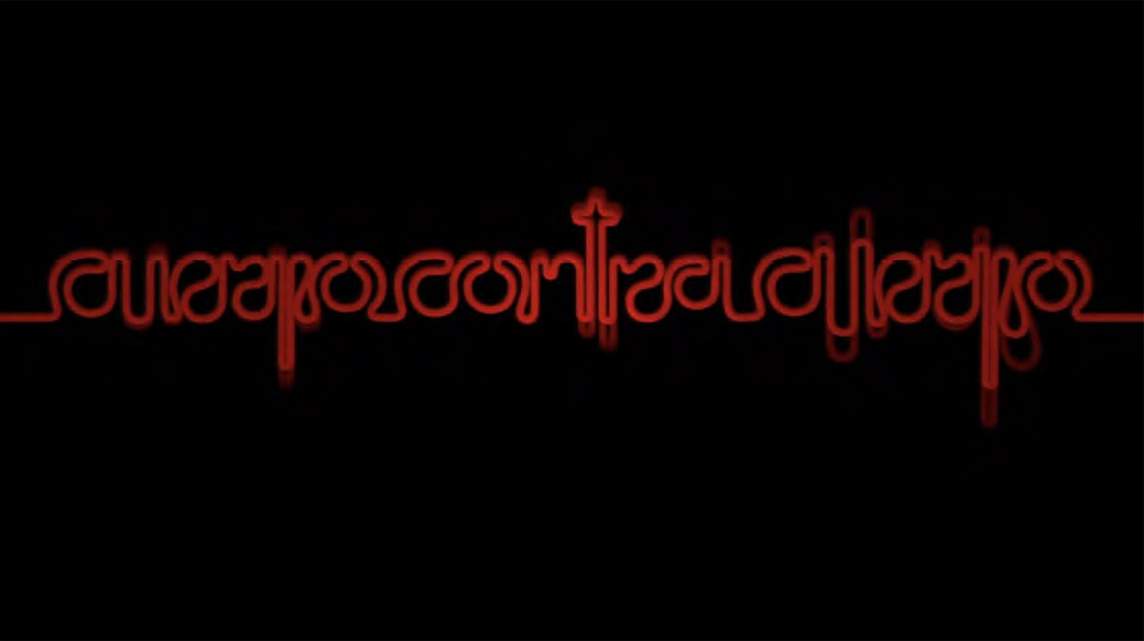
All these projects begin with hand-drawn marks that are translated into digital strokes, generating a rhythmic “typographical landscape” through video animation. The pulsating movement of each animated stroke becomes a flowing form that allows language to unmoor itself from the confines of reason. As words are combined and set in motion, resembling an electrocardiogram and/or a seismograph, their conventional meanings are disrupted and reconfigured, inviting us to consider other ways of being present.
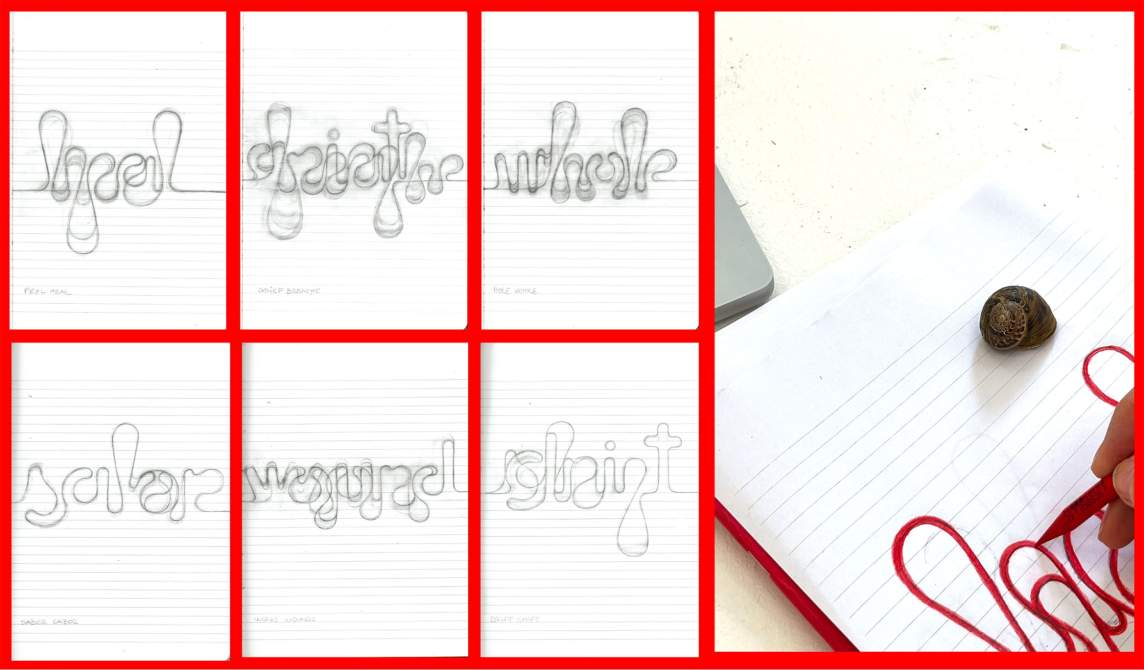
One of the projects I was developing in the studio before coming here, and closely connected to what I have explored during the residency, is a video animation of a manifesto I wrote during COVID. During those weeks of isolation, the deafening silence of the empty streets of Brooklyn allowed me to hear my heartbeat and my breath.
Although we knew that nothing had actually stopped, we experienced the world as if it had come to a standstill, particularly in terms of productivity. I became interested in thinking about how we relate to this consciousness of stillness. It is often during moments of profound upheaval that people gather to create rituals around rhythm and storytelling—around the sacred fire that generates an abundance of myths, stories, and unexpected juxtapositions of language cast toward an unknown future.
Moving from pencil to pixel through calligraphic gestures opened new possibilities for several series of video animations, including Digital Haikus and Cuaderno I: Linguistic Entanglements. The rhythmic movement of the words unfolds a poetic space in which we advance almost blindly, stumbling, losing our way, and trying again, as if searching for terms capable of holding what continually escapes us. There is no harmonious or stable relationship between words and the world; meaning slips, shifts, and remains incomplete. In this space of dissonance, image and sound become ways of navigating the gap between what we say, what we perceive, and what cannot be fully articulated.
We dwell among voices, and being bilingual means being aware of otherness—a constant state of undoing and of being un-housed. I am interested in the possibilities that emerge from displacement, understanding language as a device of inclusion and exclusion—one that can create connection but can also lead to misunderstanding and conflict.
That experience intensified questions that have been present throughout my life and work: the idea of “home,” how we inhabit physical space, and how we connect with one another, both environmentally and socially. Ultimately, I believe that what we strive for is to communicate, to be heard and to be understood.
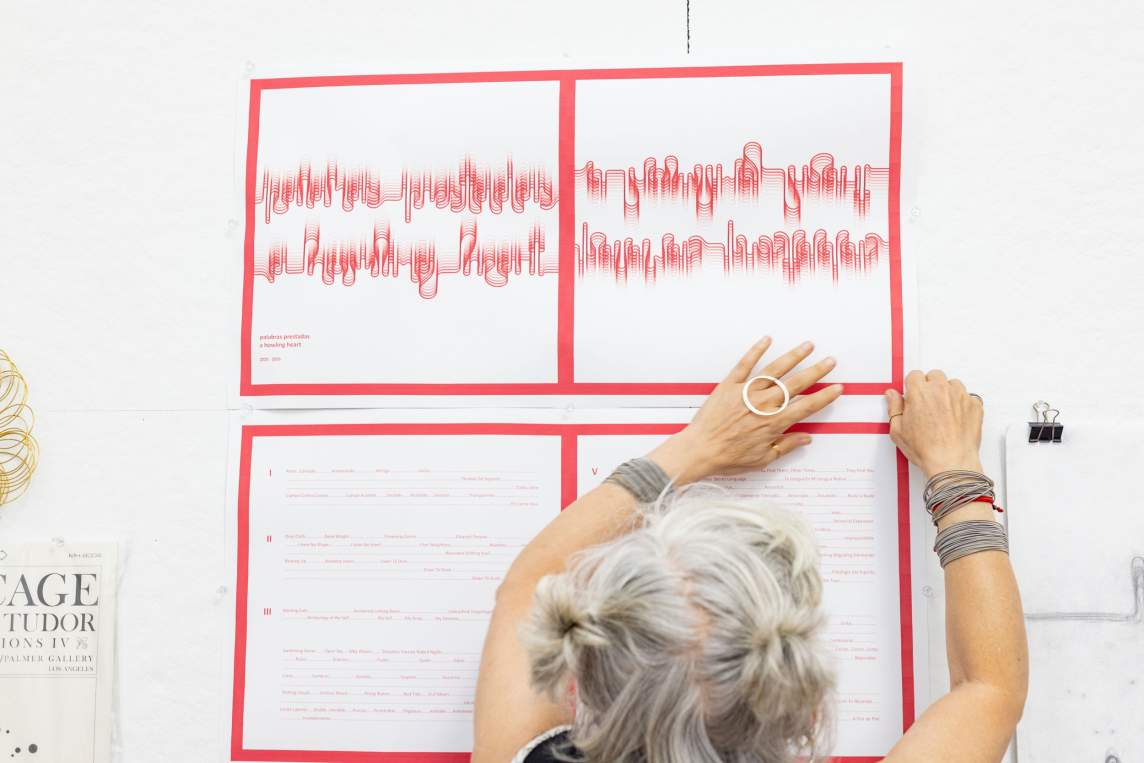
The text of Palabras Prestadas, a howling heart—“borrowed words, a howling heart”—emerged from gleaning and combining words I had highlighted in my collection of books accumulated over the past twenty years, in both English and Spanish. These words became an unruly mOTHER tongue—a language conscious of the other—bringing the two languages together through their phonetic proximity, without translation or grammar.
It epitomizes an evolution in my artistic practice, moving from formal and spatial concerns toward an exploration of the physical, cultural, emotional, and psychological dimensions through a variety of materials and processes. I understand it as a way of sculpting breath while discovering the rhythmic patterns of this idiosyncratic language.
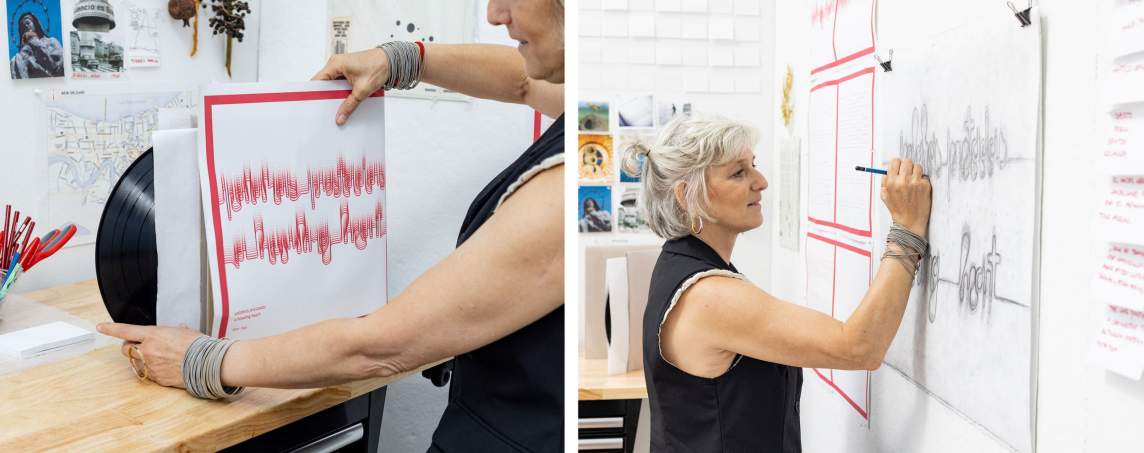
The process involved working for almost three years with the Brooklyn-based interdisciplinary performer, creator, educator, and producer Peter Sciscioli, who helped me train my voice. Until then, I had never really used my body as an instrument within my work, so this became an important turning point and a literal way of finding a "voice." This led to my collaboration with composer Devin Greenwood, with whom I recorded the manifesto.
Being in New Orleans also encouraged me to think again about how to translate a digital experience into a physical manifestation. While here, I visited a record-pressing company, which I hope will lead to a new project that allows me to continue this work in New Orleans by transforming the digital file into a physical record. I have also been designing the cover for a limited edition, bringing my background in graphic design back into my interdisciplinary practice.
Another project I have been working on during these six weeks is the editing of the video piece @en carne propia, an unearthing journey. The first part of this process involved shredding every piece of paper I had accumulated over the past twenty years, including copies of graduate school texts, tax returns, immigration paperwork, and other personal records that formed part of my history and my life as a citizen. I transformed these documents into paper pulp, which I am now using as the material basis for new pieces. Through this work, I have been exploring the tension between self and shelter, as well as the emotional, cultural, and political dimensions of citizenship, migration, and the female experience.
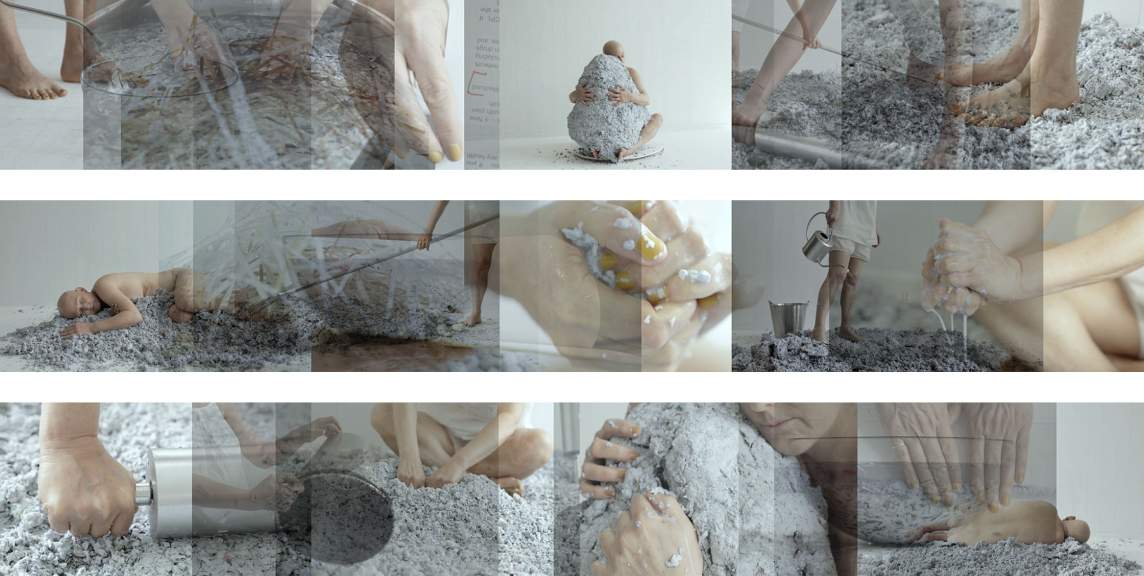
In the video, I physically engage with the paper pulp using both gardening and kitchen tools—a rake, a watering can, a rolling pin, and others—to knead, shape, move, and transform the material. These actions connect words and knowledge to the body, activating a process of care, cultivation, nourishment, and labor.
The multiple dimensions of paper pulp turn it into an archive containing what persists, what is erased, and what resists. The overarching principle of my process is one of transcription, mutation, transformation, and, in a sense, digestion, where each project becomes both a repository of experience and the material from which the next one emerges.
The overarching principle of my process is one of transcription, mutation, transformation, and, in a sense, digestion, where each project becomes both a repository of experience and the material from which the next one emerges.”
Analia Segal
One of Joan Mitchell’s phrases, “I carry my landscapes around with me,” printed on the wall, deeply resonated with me. I found myself returning to it as I continuously walked through the studios, carrying my own landscapes—personal, cultural, and material—with me and allowing them to enter into dialogue with this new place. It also brought me back to how I began working when I moved to New York, with an ongoing exploration of home and belonging. For me, home is a promise. It is a place where dreams begin but also where trauma can be triggered.
As an artist, I am always trying to explore the gaps, the edges, and those in-between spaces. I understand my work as a confirmation of intuition. This is why I often begin with a line drawn on paper—a lifeline that becomes a cord, one that I begin to follow like a funambulist, like the image of Philippe Petit walking between the Twin Towers in 1974 that I carry with me everywhere I go, moving between what is known and what is yet to be discovered.
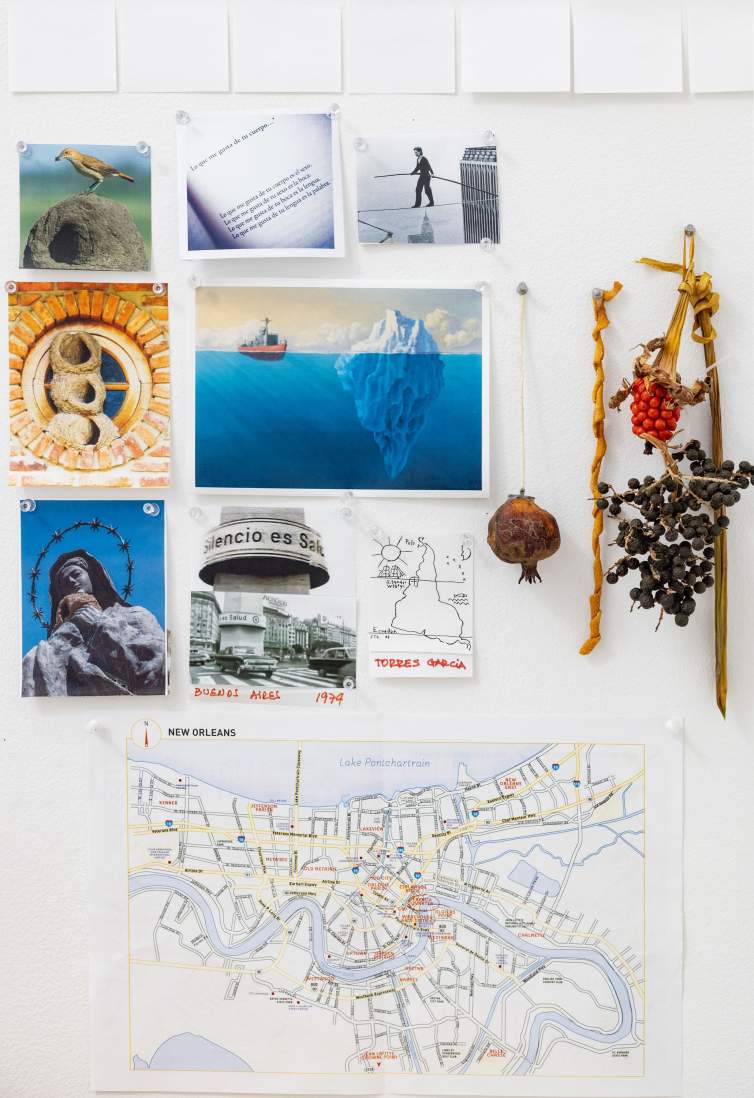
One of my initial goals coming to the residency at the Joan Mitchell Center was to remain flexible: to have enough time in the studio while also allowing myself to engage with the city.
The residency gave me the concentration of the studio while also opening a space for exchange—with the other residents, the staff, and the community—and for being attentive to the city itself. New Orleans became more than a setting for the residency; its vibrant cultural life, complex history, relationship to water, music, language, and landscape continually entered into my thinking and offered new ways of looking at my own work.
What I had hoped for was precisely this kind of dialogue between the interior space of the studio and the world beyond it. I feel that the residency allowed me to move back and forth between those two spaces, letting one inform the other. In that sense, I leave with more than the work I made here. I leave with new questions, new encounters, and a deeper understanding of how place can become part of a practice. This was my first time in New Orleans, but I know it will certainly not be my last.
Interview by Sly Watts, with editing by Melissa Dean and Jenny Gill, and photographs by Cfreedom Photography. See more of Analia Segal’s work at instagram.com/analiasegalstudio.