To form an artistic community.
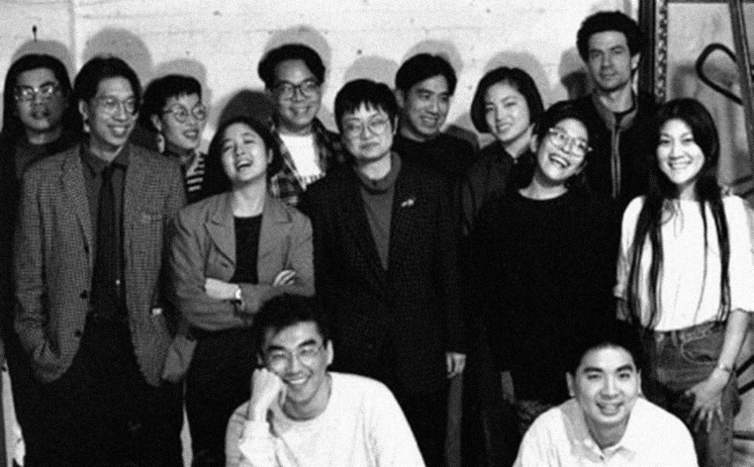
Godzilla began out of need. Artist and Godzilla member Arlan Huang, reflecting on his years of activism and art practice, says, "My whole life there have always been two roads: the community art road and the mainstream art world road. And I have never been able to integrate them as one. Godzilla was a good attempt at that."
Before it even had a name, a “Tuesday Lunch Club” including the artists Bing Lee and Ken Chu and curator and writer Margo Machida would meet, usually in Chinatown, and usually somewhere cheap. The three then gathered to hatch an organization. They made an intentional choice not to be a 501(c)(3), and not to institute membership dues. While some members note that this made fundraising and organizing hard, it also meant they never had much of the administrative and fundraising work of non-profits. The group, even as it expanded, remained open and artist-centered.
To build strength within the art world.
Co-Founder Ken Chu recalls assembling the Godzilla newsletters and being surprised by the multiple pages they filled with listings of exhibitions featuring Asian American artists. “We, as well as other arts professionals, were impressed with the extent of our engagement in contemporary arts. No one knew.” That is, the work of Asian American artists was already robust, but until Godzilla no one had gathered them.
In 1991, Godzilla wrote an open letter to David Ross, the director of the Whitney Museum, noting the lack of Asian American artists in the last Biennial. Ross and the Whitney responded by inviting several members to a meeting, and to send in slides of Asian American artists. The landmark 1993 Biennial included the work of Godzilla member Byron Kim; Eugenie Tsai, another Godzilla member, became a curator at the Whitney soon after, and showed other Godzilla members there. Just as importantly, Godzilla showed the Whitney that there was an organized community holding it accountable.
To make a different kind of work possible.
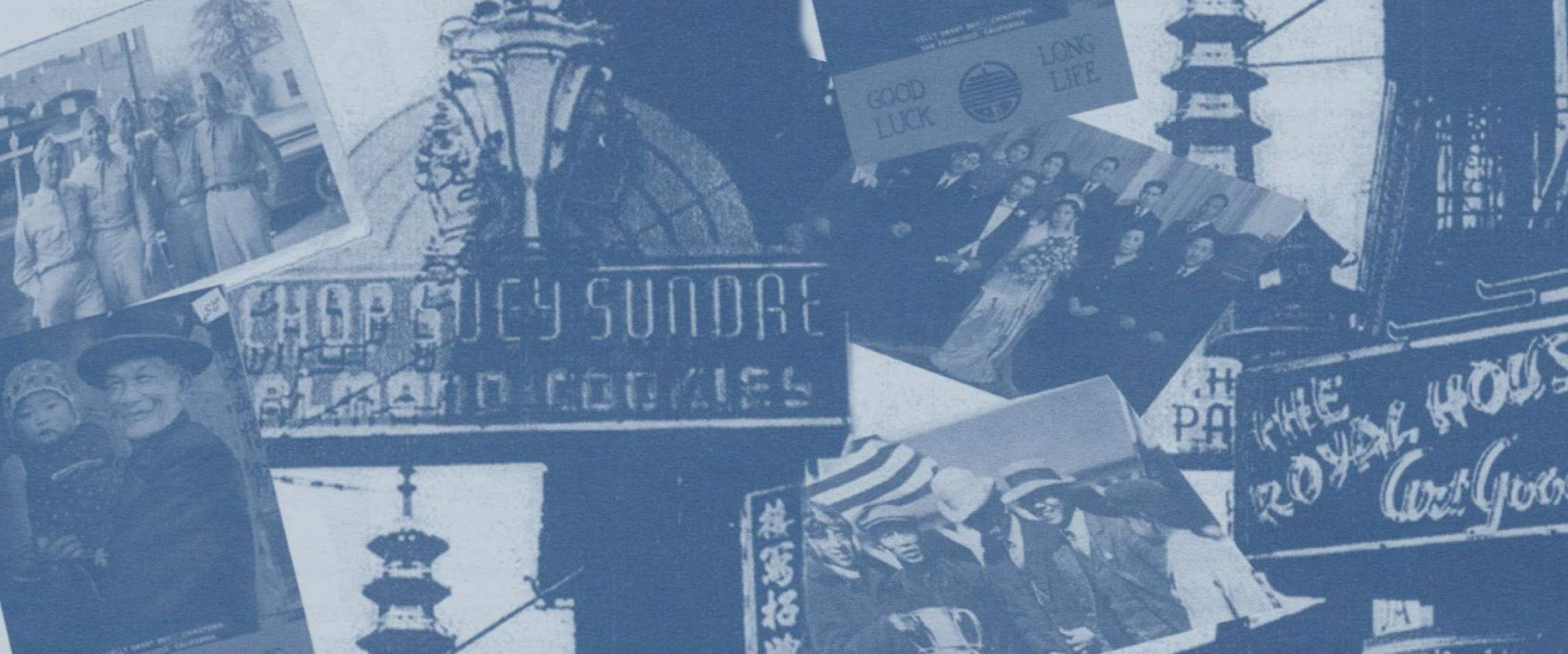
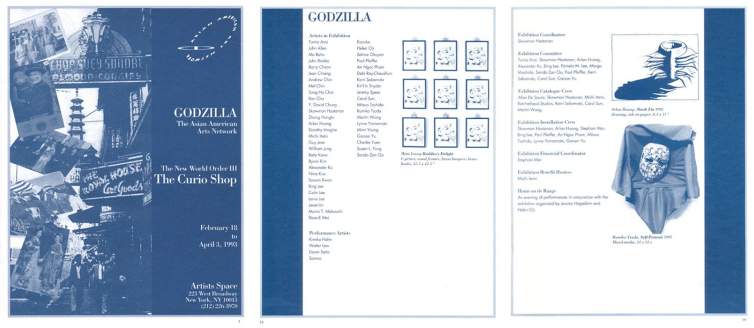
In 1993, Godzilla members co-organized the exhibition A New World Order III: The Curio Shop at Artists Space, a subversion of the Chinatown curio shops that catered to tourists. The artist Skowmon Hastanan, who helped organize the exhibition, recalls that the show’s idea, and the fact that it wasn’t ‘curated,’ pushed artists to “freely create or share subjects that turned out to be more personal or emotional than their usual work.” Artists were encouraged to turn towards subjects like war, orientalism, displacement, and sexuality—personal topics they might not have addressed directly before. By offering a radically open, Asian American-centered space, Godzilla freed its members to experiment, to be more vulnerable in their work.